TLDR
- In booteek's analysis of 10,983 Google review replies at 586 UK venues (measured September 2026), replies to 1- and 2-star reviews came a median 26 hours after the review, against 38 hours for 4- and 5-star ones. In our sample, bad reviews were not left waiting.
- Write the reply for the next person reading it. Thank the guest, name the specific problem, own your part, say what changed and give a named way to get in touch.
- You can't delete a customer's review on Google or Tripadvisor. You can report one that breaks the rules, and a review isn't fake just because you disagree with it.
Why does your reply to a 1-star review matter more than the review?
Your reply matters because it's written for every guest who reads the page after the reviewer has moved on. Google posts an owner's reply publicly under the review, and Tripadvisor shows each management response to anyone who opens the listing. The reviewer reads your reply once. Everyone deciding whether to book reads it for as long as it stays up.
On 4 April 2025 the Competition and Markets Authority published its guidance on fake reviews, and one line in it matters for every harsh review. CMA208, paragraph 2.7: "A review is not fake just because the trader who it is about does not like or agree with it, as long as it reflects the reviewer's genuine experience."
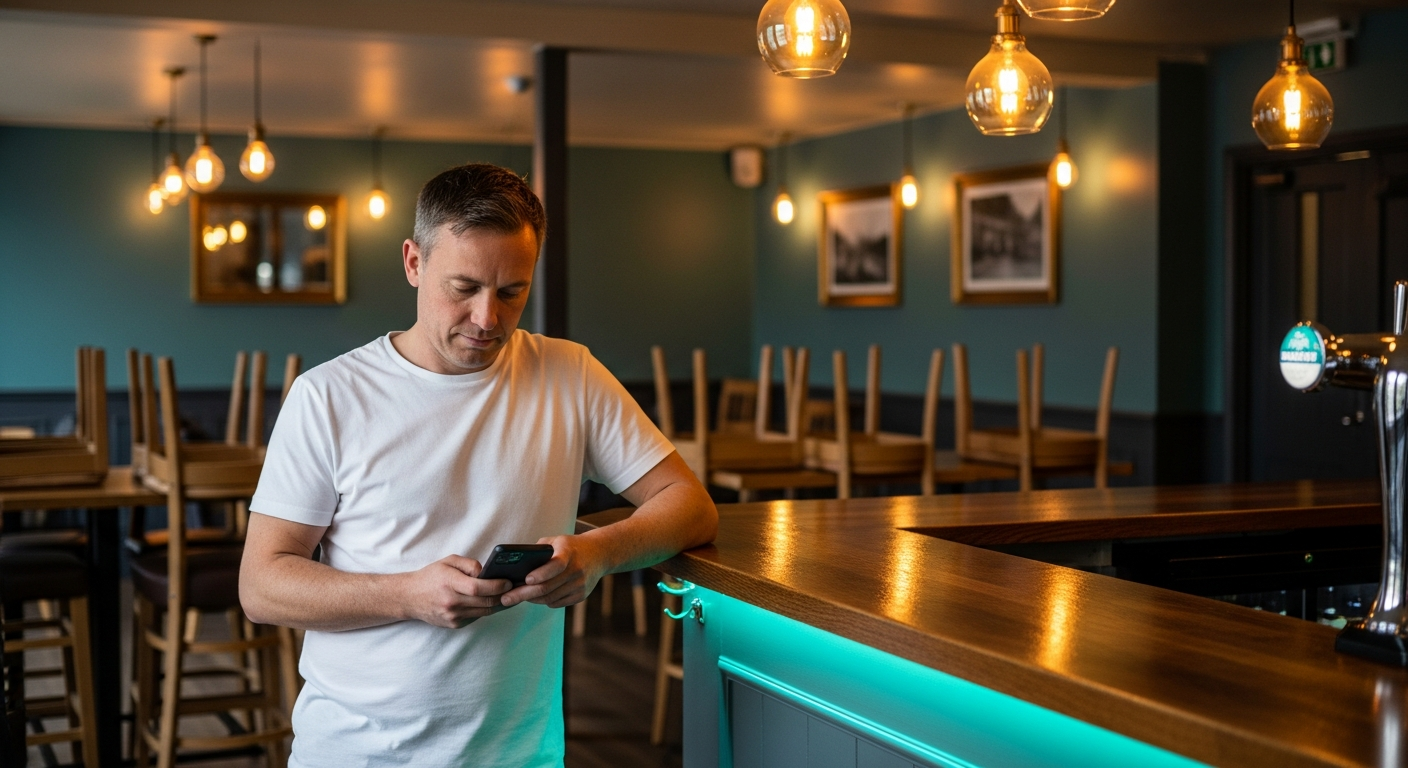
Take a bar in Leeds on a Friday. At 11.40pm, with the last glasses in the washer, the owner's phone shows a new Google review: one star, "Rude staff, never again." The owner was on the floor all night and saw nothing rude. The first draft of the reply writes itself, and it's the wrong one.
So the question owners and managers actually type is narrow and practical. How do you respond to a negative review without making it worse?
How quickly do UK restaurants and bars really answer bad reviews?
Not more slowly. In booteek's analysis of 10,983 owner replies at 586 UK restaurants and bars (measured September 2026), replies to 1- and 2-star reviews came a median 26 hours after the review, against 38 hours for 4- and 5-star ones. Across all star ratings, the median was 37.5 hours.
| Star rating (booteek study, measured September 2026) | Timed owner replies | Venues | Median time to reply |
|---|---|---|---|
| 1 or 2 stars | 763 | 323 | 26 hours |
| 4 or 5 stars | 9,829 | 533 | 38 hours |
Read it carefully. At the 156 venues that answered both kinds of review often enough to compare, low-star replies were faster at 82 and slower at 74 (booteek, September 2026). That's close to an even split. The honest reading is that bad reviews were not answered more slowly, and no more than that.
The limits matter just as much. The sample leans heavily on Manchester, it holds a share of each venue's reviews and never every review, and replies written weeks after we captured a review aren't counted. It also measures when owners reply, never whether the reply changed anything. The full method and the split by bars and restaurants are in how fast restaurants and bars reply to Google reviews.
What it does show is useful. In our sample, bad reviews were not left waiting. The hard part is what goes in it.
How do you respond to a negative review, step by step?
Thank the guest, name what went wrong in their words, own your part, say what you've changed and give a named way to reach you. Keep it to four or five sentences and sign it. Google's own tips on review replies ask for the same things: keep it short, apologise if needed, admit mistakes and sign with your name or initials.
- Wait until the adrenaline has gone, then write. A draft written at midnight gets read at breakfast by strangers. Reply the next morning, before service.
- Thank them and name the specific thing. "Thank you for telling us about Sunday's wait for mains" proves you read it. "Thank you for your feedback" proves nothing.
- Own what's yours, and only that. Google tells owners to admit mistakes but not to take responsibility for things outside their control. A late train isn't yours. A lukewarm roast is.
- Say what changed. One line. "We've moved a second chef onto the pass on Sundays" tells the next reader the problem has been dealt with.
- Give a door, with a name on it. Invite them to email or ring and ask for you by name. Then sign off with your first name and role.
Here's a reply that fails every step:
"Sorry you feel that way. We were fully booked and doing our best. Most guests love our Sunday roast. Hope to see you again."
And the same reply, rewritten:
"Thank you for telling us about Sunday, and I'm sorry. Forty minutes for a roast is too long, and the gravy should never have left the kitchen lukewarm. We've changed how plates are held at the pass on Sundays. If you'd email me at the address on our website, I'd like to hear the rest. Maria, owner"
The second version is longer, but every extra word tells the next reader something. It names the problem in the guest's own terms and says what changed, which gives the next reader a reason to book anyway. For more worked replies across different situations, see our review response templates.
Don't count on the reply winning back the reviewer. Write it for the readers who come after.
What should you never say when replying to a bad review?
Never accuse the reviewer of lying, never guess who they are, never offer anything in exchange for a changed review and never argue the facts line by line. Tripadvisor's management response guidelines remove replies that offer "gifts, services, or money", threaten the reviewer, make "accusations of review fraud" or speculate about "the identity of the reviewer".
| Say this | Never say this | Why |
|---|---|---|
| "Thank you for telling us about Saturday's wait." | "Thank you for your feedback." | Generic lines read as a template to the next guest |
| "The lamb went out cold, and that's on us." | "Nobody else has ever complained about the lamb." | Google asks owners to admit mistakes |
| "Could you email me so I can hear the rest?" | "We checked the bookings and you never ate here." | Tripadvisor removes accusations of review fraud |
| "I'm sorry the evening didn't match the occasion." | "You clearly don't understand Italian cooking." | Google tells owners not to attack reviewers personally |
| "We'd like the chance to put it right." | "Change your review and we'll refund the bill." | The CMA names this as a banned practice |
| "Ask for me by name next time. Maria, owner" | "Your next round is on us." | Tripadvisor removes replies offering gifts |
| "We've added a second bartender on Fridays." | "It was a Friday. What did you expect?" | An excuse tells the next guest it will happen again |
The refund row carries the most risk. The CMA's guidance lists "offering them a refund and/or a gift card if they change their review to remove the negative commentary (so that it is no longer reflective of their genuine experience)" as one of its own examples of a banned practice. You may still refund a guest who had a bad night. The line is making the refund depend on the review.
Tripadvisor adds one quieter rule worth borrowing on every platform. Its guide to management responses warns that responses "can be found by search engines" and asks owners to avoid repeating the negative in their reply. So write "Saturday's wait", never "our slow, disorganised service".
How do you respond to a 1-star review with no text?
Reply briefly and invite contact. With no words to answer, say you're sorry the visit fell short and give a named way to reach you. Keep it to two or three sentences. Don't guess who they are or what went wrong, and don't ask them to change the rating.
A blank 1-star is also the rarer case. In our sample of 3,798 one- and two-star Google reviews at 1,104 UK restaurants and bars (measured September 2026), only about 1 in 10 (9.5%) came with no written comment. For four- and five-star reviews it was nearly 1 in 4 (23.6%). That's a sample of captured reviews, not a census of every review, but it means most bad reviews tell you what went wrong, so your reply can answer the specific point.
A text-less star is mostly a Google problem. Tripadvisor's review guidelines set a minimum of 25 characters for every review, so a bare rating can't be posted there.
A reply that works:
"Thank you for rating us. I'm sorry your visit didn't go as it should have. If you'd email me at the address on our website, I'd like to know what happened. Tom, general manager"
Check your records, as Google suggests, but keep what you find out of the reply. Naming the guest in public is the identity-guessing Tripadvisor bans, and on Google it puts a stranger's private details in public, which Google's reply tips tell owners never to do.
Is it worth replying at all? Google says owners "don't need to thank every reviewer publicly", so the choice is yours. Our view: a run of unanswered 1-stars reads as silence to the next person scrolling the page, and a three-line reply is quick to write and fills that gap.
When should you take a bad review offline?
Take it offline as soon as the conversation needs details you shouldn't post in public: a booking, a bill, an allergy or a staff member's name. Reply publicly first, then move the rest to email or the phone. Google's reply tips say you can ask the reviewer to contact you "in person, email or phone to help resolve the issue".
The public reply stays short and gives a route. "I'd like to hear the rest. Please email me at the address on our website" is enough. Tripadvisor explicitly allows an email address in a response, while reminding owners that the response "is publicly visible to all Tripadvisor users".
Once you're talking privately, fix the problem for its own sake. Google notes that a guest can still change their review after reading your reply, and that a good follow-up "may encourage them to update their review". That's their decision to make. Asking for a changed review in return for a refund, a voucher or a free drink is what the CMA's guidance calls a banned practice, and Google's content policy bans offering anything for taking a bad review down.
What offline doesn't fix: the public page. Even if the guest never updates the review, your first reply is still there for everyone else. Write it as if the private conversation will fail.
What if the 1-star review is unfair or fake?
Reply to it anyway, and report it only if it breaks the platform's rules. Google says you "can report any review, but only those that violate Google policies are eligible for removal", and tells owners not to report a review "just because you disagree with it or dislike it". Neither Google nor Tripadvisor lets an owner delete a review.
On Google, report it from your Business Profile and track it in the Reviews Management Tool. Google's reporting help page says review evaluation "typically takes several days". If Google finds no breach, you get one appeal. Google's content policy sets out what counts, starting with its rule that a review or rating should reflect "an actual experience with a business".
On Tripadvisor, report it through the Management Center. The owner help page on reporting a review says moderators will notify you of the outcome "in the next 3-5 working days". Tripadvisor also advises owners to write a management response while a report is being assessed, so readers get your side in the meantime.
In the public reply, stay factual and never say the word "fake". "We'd like to understand what happened. Please email me with the date of your visit so I can look into it" is calm and truthful. "This is clearly a competitor" is the fraud accusation Tripadvisor removes. The full reporting routes, and the UK law on fake reviews, are in our fake review action plan.
The limit here is a little uncomfortable. A review that feels unfair can still be a genuine account of a bad night from the guest's side of the table. By the CMA's standard that review stays up, and the reply is your only tool.
Can an AI agent write your replies to bad reviews?
It can draft one, and you should rewrite it before it goes live. In BrightLocal's 2026 Local Consumer Review Survey of 1,002 US adults (a US-only sample), 80% said they were likely to use a business that replies to all its reviews, and half said generic, templated replies put them off. A machine draft posted unedited is exactly that template.
booteek works through your Google Business Profile with you, and its Chrome extension drafts the reply. On the review in front of you, on Google Business Profile, Tripadvisor and other review platforms, or on a review you paste in, it writes a draft. You edit that draft against the steps above, then copy and post it yourself. It does not post anything for you. What happened on Saturday is yours to add, which is why the edit matters. Plans and what each includes are on the pricing page.
The next step is one review. Open your Google Business Profile, find the most recent 1-star review you haven't answered, and reply to it using the five steps and the table above, signed with your name.
Where do these figures come from?
- booteek reply-time study (booteek, measured September 2026) — the reply times in this post. The sample is 10,983 timed owner replies at 586 UK restaurants and bars, taken from 44,910 reviews in scope. The reviews were posted between 1 January 2025 and 19 September 2026 and captured between 6 January and 27 September 2026. The data is Google reviews held in booteek's review data for UK restaurants and bars. It is a sample, not a census: we hold a share of each venue's reviews, never every review, and the sample is Manchester-heavy. Reviews captured less than a week after they were posted are left out, and replies written after we captured a review are not counted. It measures when owners reply, never whether the reply changed anything, and it says nothing about venues that never reply.
- booteek text-less review study (booteek, measured September 2026) — the share of reviews with no written comment. The sample is 3,798 one- and two-star Google reviews at 1,104 UK restaurants and bars, compared with the four- and five-star reviews in the same data. The reviews were captured between 6 January and 27 September 2026, whatever their posting date. The data is Google reviews held in booteek's review data for UK restaurants and bars. "No written comment" means the review holds no text at all. It is a sample, not a census, the sample is Manchester-heavy, and it does not show that the pattern holds at every venue.
- Fake reviews guidance, CMA208 (Competition and Markets Authority, 4 April 2025) — paragraph 2.7, that a review is not fake because the business disagrees with it, and the example that offering a refund or gift card to change a review so it no longer reflects the guest's genuine experience is prohibited. UK guidance. CMA fake reviews guidance
- Manage customer reviews (Google Business Profile Help, live page read 28 September 2026) — that an owner's reply is posted publicly under the review. Google: manage customer reviews
- Tips to write better review replies (Google Business Profile Help, live page read 28 September 2026) — keep replies short, apologise and admit mistakes, sign with a name or initials, check your records about the reviewer and their visit, never share private details or attack the reviewer, ask the reviewer to get in touch, no need to thank every reviewer, and that a good follow-up may lead a guest to update a review. Google: review reply tips
- Report inappropriate reviews (Google Business Profile Help, live page read 28 September 2026) — only reviews that break Google's policies can be removed, do not report a review because you disagree with it, evaluation typically takes several days, and the one-time appeal. Google: report a review
- Maps user contributed content policy (Google, live page read 28 September 2026) — a review should reflect an actual experience, and offering incentives for reviews is banned. Google: prohibited and restricted content
- Management Responses Guidelines (Tripadvisor, live page read 28 September 2026) — responses are removed if they offer gifts, services or money, threaten the reviewer, accuse the reviewer of fraud or speculate about who they are. Tripadvisor response guidelines
- How to add management responses (Tripadvisor, live page read 28 September 2026) — responses can be found by search engines, avoid repeating the negative, an email address is allowed, and a response is public to all Tripadvisor users. Tripadvisor guide to management responses
- Owners reporting a review (Tripadvisor Help Center, live page read 28 September 2026) — owners report through the Management Center and are told the outcome in 3 to 5 working days. Tripadvisor: reporting a review
- Owners reporting blackmail by traveler (Tripadvisor Help Center, live page read 28 September 2026) — used in the FAQ: a threat of a bad review in exchange for a refund, discount or other benefit counts as blackmail, and the evidence Tripadvisor asks for. Tripadvisor: reporting blackmail
- Review Guidelines (Tripadvisor, live page read 28 September 2026) — the 25-character minimum for every review. Tripadvisor review guidelines
- Local Consumer Review Survey 2026 (BrightLocal, 11 February 2026) — 80% likely to use a business that replies to all its reviews, and half put off by generic or templated replies. 1,002 US adults, no UK sample, stated intention and not measured behaviour. BrightLocal survey