TLDR
- 1. Restaurant and bar customers pick up on team tension, even if they can't name it. It changes how they experience the night and what they write in reviews.
- 2. Vague complaints like "atmosphere felt off" or "staff seemed stressed" usually point to real team problems underneath.
- 3. If you pay attention to your team and fix small issues early, you'll see better customer satisfaction and more people coming back.
Can Customers Really Sense Team Tension in Restaurants and Bars?
Yes. And they're better at it than most owners realise.
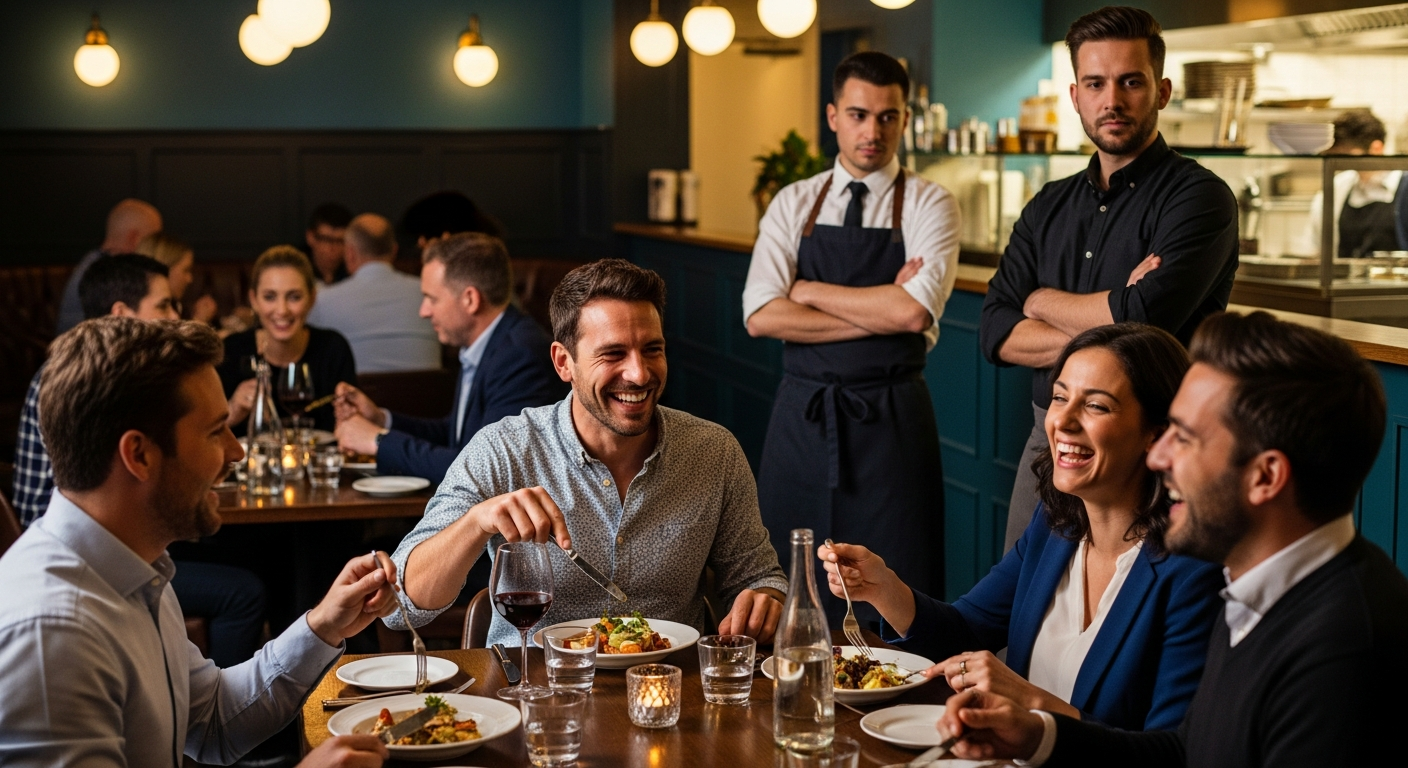
There's something in social psychology called emotional contagion – basically, people unconsciously absorb the moods of those around them. It happens everywhere, but hospitality is where it really matters. Your team isn't behind a screen or a phone line. They're there in person, making eye contact, handing over drinks and plates, reading customers while broadcasting their own stress without meaning to.
Research by Sigal Barsade at the Wharton School found that one person's mood can shift an entire group's vibe in minutes, without anyone saying a word. In a pub or restaurant, a server carrying tension from a kitchen argument doesn't need to explain it. The quick eye contact, the slightly-too-bright smile, the clipped "ready to order?" – it all comes through.
Customers don't think about this consciously. They just feel it. And what they feel ends up in their reviews. Mystery shopping data from Hgem, one of the UK's biggest hospitality mystery shopping providers, shows that "atmosphere" and "staff demeanour" account for 35% of overall experience scores. That's more than food quality in many cases. The atmosphere your team creates isn't a nice bonus; it's part of what you're actually selling. When your team's internal dynamics are off, that product breaks.
How Do Team Friction Issues Show Up in Customer Reviews?
Here's the thing: customers almost never write, "the staff were arguing," or "there were management problems." They describe what they felt, not what caused it.
Spend an hour reading 3-star reviews for any busy restaurant or bar, and you'll spot the same patterns again and again:
- "The food was good but the atmosphere felt a bit off." The customer can't quite explain it, but something wasn't right. Most of the time, that translates to: the team wasn't working well together. Someone was struggling, and it showed.
- "Our server seemed rushed and stressed." Maybe you're genuinely short-staffed. Or maybe it's a team dynamic problem. When two people aren't communicating, others pick up the slack and look frazzled. The customer sees a stressed server; what's really happening is a breakdown between front-of-house and kitchen.
- "We felt like we were interrupting." This language is a dead giveaway for internal tension. When your team's wrapped up in their own stuff – a quiet conflict, someone not pulling their weight, an awkward relationship – customers become an afterthought. Not on purpose. But attention is limited, and if your team's emotional energy is tied up in friction, there's less left for the people paying the bills.
- "Great on our first visit, not so great this time." Inconsistency reviews often hide team dynamic issues. First visit, the team was firing on all cylinders. Second visit? Maybe someone key left, or a new person threw off the balance, or two people who don't gel ended up on the same shift. The customer just knows it felt different, and not in a good way.
A 2024 analysis by GatherUp found that reviews mentioning "atmosphere" or "vibe" were stronger predictors of whether someone would return than reviews about food. So your team's internal dynamics aren't just about that one night; they're what brings people back.
Why Do Restaurant and Bar Owners Often Miss Team Dynamic Problems?
You're too close to it. Not as a criticism – that's just how it works.
Running a restaurant or bar means juggling a thousand things. The missing delivery. The double-booked table. The new cocktail menu that needs pricing. In that chaos, noticing that two team members have stopped talking to each other – not arguing, just gone quiet – is really hard. It's subtle. Silent. By the time it gets loud enough to notice, it's already affecting your service.
Then there's the owner effect. Your team behaves differently when you're watching. That simmering tension that surfaces the moment you step out for a supplier call? It disappears the second you walk back. You see the version performing for you. Your customers get the unfiltered reality.
This is where data helps. You need signals that don't depend on you being in the room.
How Can Restaurant and Bar Owners Monitor Team Dynamics Effectively?
You don't want to be the owner with cameras in the break room or analysing body language like a spy. That's not management; it's surveillance. It kills trust fast.
The better approach is building systems that bring team health data to the surface naturally, without anyone feeling watched.
booteek's Team Stability monitoring tracks things like staff turnover, how long people stay, and overall team balance over time. Research points to these as key indicators of healthy dynamics. When your stability score dips, it's time to pay attention. Not to interrogate anyone, but to check in. Have those quiet conversations. Ask questions that stop small tensions becoming big, review-damaging problems.
The Owner Knowledge Profile adds another layer. Over time, booteek's AI learns the specific patterns in your venue – including team quirks. If your review sentiment consistently drops when certain people work together, the system flags it. You might discover that your Thursday night team generates lower scores than Saturday, not because they're less skilled, but because that particular mix of personalities creates friction customers feel.
That's not micromanagement. That's real insight. The kind that stays invisible without solid data.
What Immediate Steps Can Restaurant and Bar Owners Take to Improve Team Dynamics?
You don't need software to start. You need awareness and a few deliberate human practices.
- Notice which shift combinations work. Stop paying attention to complaints; pay attention to energy. When you walk onto the floor and the team feels smooth, note who's on. When it feels forced or flat, note that too. Patterns emerge. (booteek's Team Composition tool can turn this into data, but your own awareness is the first step.)
- Have a quick team moment before service. Five minutes before doors open, everyone together, running through the plan. It sounds simple, but many independent places just start service with people arriving and getting on with it. A brief connection before the rush gives people a chance to flag issues, ask questions, and actually be humans before switching into service mode.
- Fix small things now. That server making passive-aggressive comments about the kitchen? The bartender refusing to clear tables? These tiny friction points become the bigger dynamic issues that end up in reviews. A quiet, honest conversation now saves you a public, damaging review later.
- Read your reviews for team health clues. When a review mentions atmosphere, demeanour, or consistency, don't just see customer feedback. See team intelligence. Share relevant reviews with your team – not to blame anyone, but to open a conversation about what might have been happening that night. (The B.E.S.T. Score Employee Excellence component tracks the relationship between team metrics and review sentiment automatically.)
- Understand your team beyond the rota. booteek's hospitality-specific talent framework gives you a new way to talk about team dynamics beyond "they just don't get along." When you can say, "We've got three energisers and no organisers on Tuesday nights," you've moved from vague frustration to actual diagnosis. And diagnosis is where real solutions start.
Want to see what's actually happening with your team dynamics? Get booteek Pro — see pricing – and see how your team composition connects to customer experience and reviews.