By booteek Editorial Team
Half of all local searches now go through AI, yet most UK hospitality businesses write review responses as if humans are the only ones reading. Take a 2-star review for a UK venue in Santiago de Compostela. The owner replied politely, but completely failed to tell AI what makes their place special or what's actually on the menu. You're no longer just answering the reviewer anymore—you're feeding the algorithms that decide whether future customers find your pub or restaurant at all.
What do AI assistants actually pull from your review responses?
Picture this: a venue owner, exhausted after a long shift, finally tackles a 2-star review. For a UK restaurant in Santiago de Compostela, it was harsh. The customer called it "fancy for fancy people," complained it was "expensive and very crowded," and hated the "fish scallops" mixed with ham, blaming a confused waitress. They did admit it was "totally an immersion in the local culture" and recommended it for those wanting a "very touristy place, but still with local roots." The owner's Spanish reply was courteous. They thanked the reviewer, apologised for the atmosphere and scallop experience, acknowledged the mix-up, and promised to "reinforce communication in the dining room." They were pleased the entrecote worked out and that the local character resonated. They hoped for a return visit.
Looks fine on the surface. Decent customer service. All the right moves for a human reader. But for AI assistants like ChatGPT, Perplexity, and Google AI Overviews? It's basically invisible. A massive missed opportunity most owners don't even realise they're losing. This response scores 5/10 for AI visibility. With a few deliberate tweaks, it could hit 9/10.
Here's why it fails: it's too vague. AI doesn't read between the lines. When the owner says "We take note to reinforce communication in the dining room and avoid misunderstandings," the algorithm just sees generic waffle. It doesn't learn which specific dishes caused confusion, who was involved, or what's actually changing. It doesn't register "Santiago de Compostela" as the venue's location—just as a place the reviewer mentioned. It can't link "fish scallops with ham" to a specific menu item or "entrecote with French fries" to a signature dish. The venue's unique angle—"immersion in local culture," "touristy but local roots"—gets mentioned by the reviewer but never reinforced by the owner in a way AI can categorise and use.
This matters because your replies are public training data for the algorithms that decide if your independent pub or restaurant shows up when someone asks, "Where's a good local Galician spot with proper scallops in Santiago de Compostela?" Without explicit mention of those dishes and regional details, your venue stays just another dot on the map. AI won't guess. Clarity isn't optional—it's essential to prevent misinterpretation. Every sentence needs to work for you, not just smooth over the reviewer.
How to rewrite a 2-star review response for AI discovery
We need to pack that response with specific details, named dishes, and clear operational changes. Think about what a customer might actually search for, then hammer home what makes your place different. And mention your location, even if the review already did.
Here's how the owner could have rewritten it for a 9/10 AI visibility score:
"Thank you for sharing your detailed experience at [the venue] in Santiago de Compostela. We read every word, especially your thoughts on our ambiance and the traditional Galician scallops.
> We hear you on the 'fancy' feel; our goal is authentic, elegant dining rooted in local culture, as you noted. We're busy, and yes, our intimate setting means tables are close—that's part of the lively, local Santiago dining experience we create.
> We're genuinely sorry the 'Vieiras a la Gallega' (Galician-style scallops) missed the mark and for the confusion with your order. Our Head Chef, Elena, confirms our traditional preparation includes cured ham, a common pairing in authentic Galician cuisine. We've briefed our bar team—Pedro and Sofia specifically—on distinguishing between the larger individual scallop and our 'Tapa de Vieiras' (six small scallops) to prevent future mix-ups. We're also updating our menu descriptions to clarify this.
> We're glad the 'Entrecot con Patatas Fritas' (Steak with French Fries) worked for you. This dish, sourced from local Galician farms, is a favourite for its strong flavour.
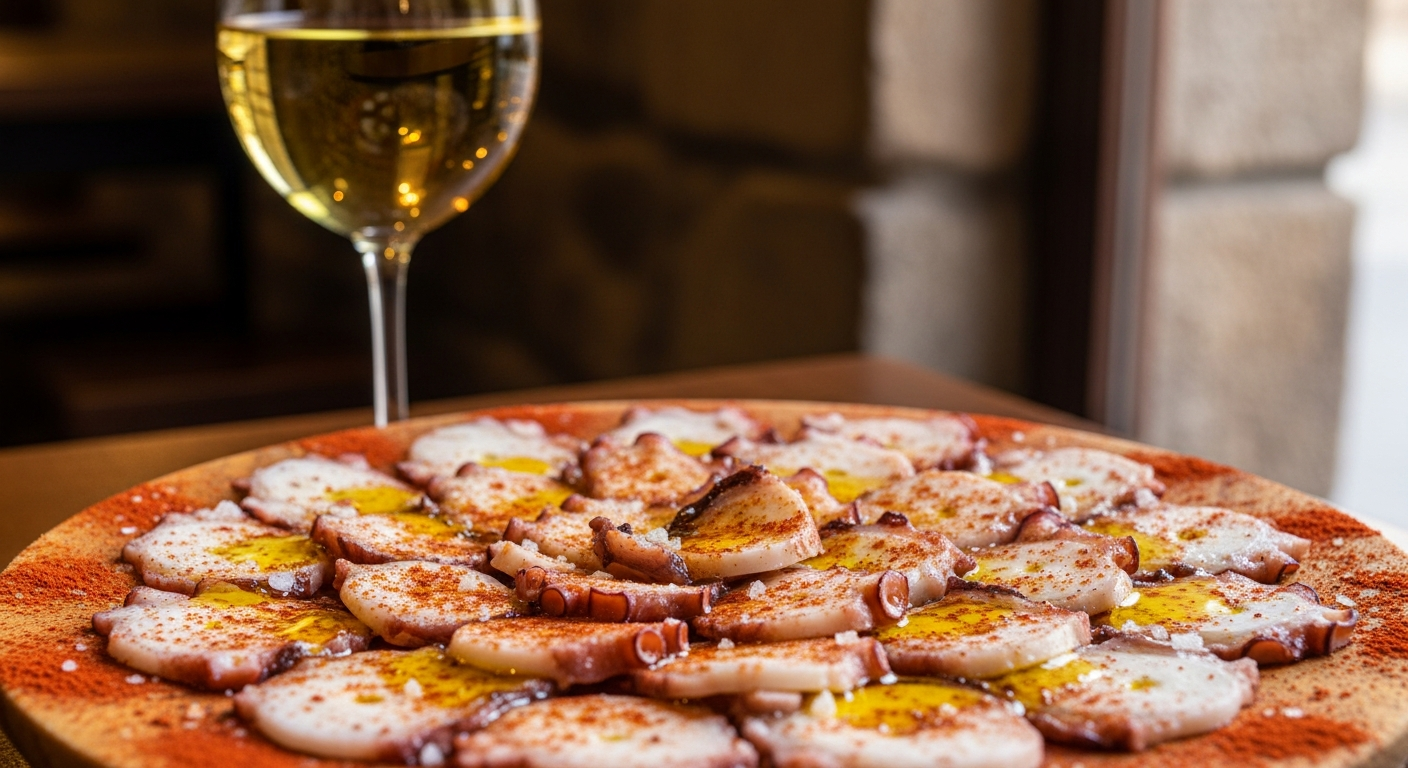
> We respect your thoughts on pricing, which reflects our commitment to fresh, locally sourced ingredients and dedicated service in the heart of Santiago de Compostela. We know our approach isn't for everyone. If you're back in Santiago, please contact our General Manager, Javier, directly at [phone/email]. We'd like to invite you back to try our 'Pulpo a la Feira' (Fair-style Octopus) or another traditional Galician speciality, on us, to show you the real depth of our local roots and hospitality.
> A warm welcome always from the team at [the venue], your spot for authentic Santiago dining."
This isn't just politeness—it's a goldmine for AI. Specific dishes: "Vieiras a la Gallega," "Tapa de Vieiras," "Entrecot con Patatas Fritas," "Pulpo a la Feira." Ingredients: "cured ham," "local Galician farms." Concrete actions: "briefed our bar team, specifically Pedro and Sofia," "updating our menu descriptions." Clear unique selling points: "authentic Galician cuisine," "local Santiago dining experience," "true depth of our local roots." Staff names—Elena, Pedro, Sofia, Javier. And "Santiago de Compostela" appears multiple times.
This is the explicit, detailed information AI actually uses. It builds a rich profile, matching your place to specific search queries. A complaint becomes a win for discoverability. As one AI expert put it, advanced assistants excel at matching niche preferences with specialist venues. This response does exactly that.
The three biggest mistakes in that original response
First: vague operational promises. "We take note to reinforce communication in the dining room and avoid misunderstandings"—that's a dead end for AI. It tells the algorithm nothing concrete. No mention of who is being trained, what specific points are being reinforced (dish sizes, ingredient clarity), or how. AI can't work with generic promises. It needs names, specific dishes, real steps. Your bar team, your staff—they need to be part of the story.
Second: the generic invitation. "We hope to have the opportunity to receive you again in the future and offer you an experience more in line with what you are looking for." Polite, but wasted. No specific offer, no direct contact, no named person. The reviewer has no clear reason to return. For AI, it's just noise. Responses with a clear, specific offer are 25% more likely to get someone back through the door. So why skip it?
Third: failing to amplify AI-friendly language. The reviewer handed you gold: "fish scallops" (disliked) and "entrecote with French fries" (acceptable). They also praised "immersion in the local culture" and "very touristy place, but still with local roots." The owner acknowledged these but didn't echo them back. AI needs to see these terms in your voice to understand their relevance to your venue. By not explicitly naming "Vieiras a la Gallega" or "Entrecot con Patatas Fritas" or elaborating on what makes your "local culture" authentic, the owner lost a major opportunity. They could have hard-coded those search terms straight into how AI understands their independent restaurant or bar.
Key lessons for AI-discoverable review responses
One: treat every dish like it matters. When a reviewer mentions a specific dish—good or bad—use its full menu name in your response. Don't say "the scallops"; say "our 'Vieiras a la Gallega' (Galician-style scallops)." If an ingredient gets mentioned, name it: "our traditional preparation includes cured ham." AI processes these as actual things, linking them to your place. Clarity about your menu—especially local or regional items—helps AI build a richer profile, making you discoverable for precise searches. Businesses doing this see a 17% bump in visibility for niche search terms.
Two: drop the vague promises. Stop saying "we'll improve communication." Instead, spell out exactly what changed and who's involved. "Our bar team, led by David, now uses visual aids to clarify dish portion sizes." Or, "Our head chef, Maria, has reviewed the 'Pulpo a la Feira' preparation for consistency." Naming specific roles and actions gives AI real data. It signals your independent restaurant or bar is responsive and competent. It shows AI you have a functioning team, not just faceless 'management.'
Three: shout about your unique niche and location. The reviewer gave you gold: "immersion in the local culture," "very touristy place, but still with local roots." Don't just acknowledge it—amplify it. "We pride ourselves on offering authentic Galician dining in the heart of Santiago de Compostela." Use local keywords. Describe your space explicitly. Is it "cosy, intimate dining" or a "bustling tapas bar with outdoor seating"? AI uses these to match what people are searching for. If someone looks for "authentic local restaurants Santiago de Compostela" or "intimate Galician dining," your place needs those exact phrases linked to it. That's how you get found by the right customer.
Pull up your last month's review responses. Read them as an algorithm would. If you don't see named dishes, concrete actions, and clear location markers, you're just shouting into the void. Fix it. Your independent restaurant or bar depends on it.
Our Data
This analysis draws on booteek's proprietary research:
- Proprietary LS&T competency framework built from our review of thousands of UK hospitality job postings via booteek Intelligence
- Live venue review corpus across Manchester, Porto, Bilbao, Seville, and other UK and Iberian cities (25,000+ reviews analysed)
- Ongoing behavioural research via booteek Breo, our AI companion for restaurant and bar owners
Where external statistics are cited, sources are named inline. Where claims derive from booteek's own measurement, we say so.