I used to think I had a handle on everything in my venue. Seriously, I’d seen it all, dealt with it all, probably even written a rough draft of the definitive guide to running a busy restaurant and bar. Then came that Friday night. A new face on the bar team, a mistake that wasn't hers, but unequivocally mine. It forced me to take a long, hard look at how I managed my people, and frankly, what I thought I knew about hospitality.
That night was a painful lesson, but here’s the gist of what it hammered home: you can’t just assume everyone learns or communicates the same way. You’ve got to actually invest the time to understand individual needs, especially with new staff. You need a culture where asking questions isn’t just allowed, it’s actively encouraged – no one should ever feel stupid for seeking clarification, especially when the place is heaving. And finally, your team, the people on the ground day in, day out, often see things you, the boss, completely miss. Listen to them.
*
What went wrong that Friday night?
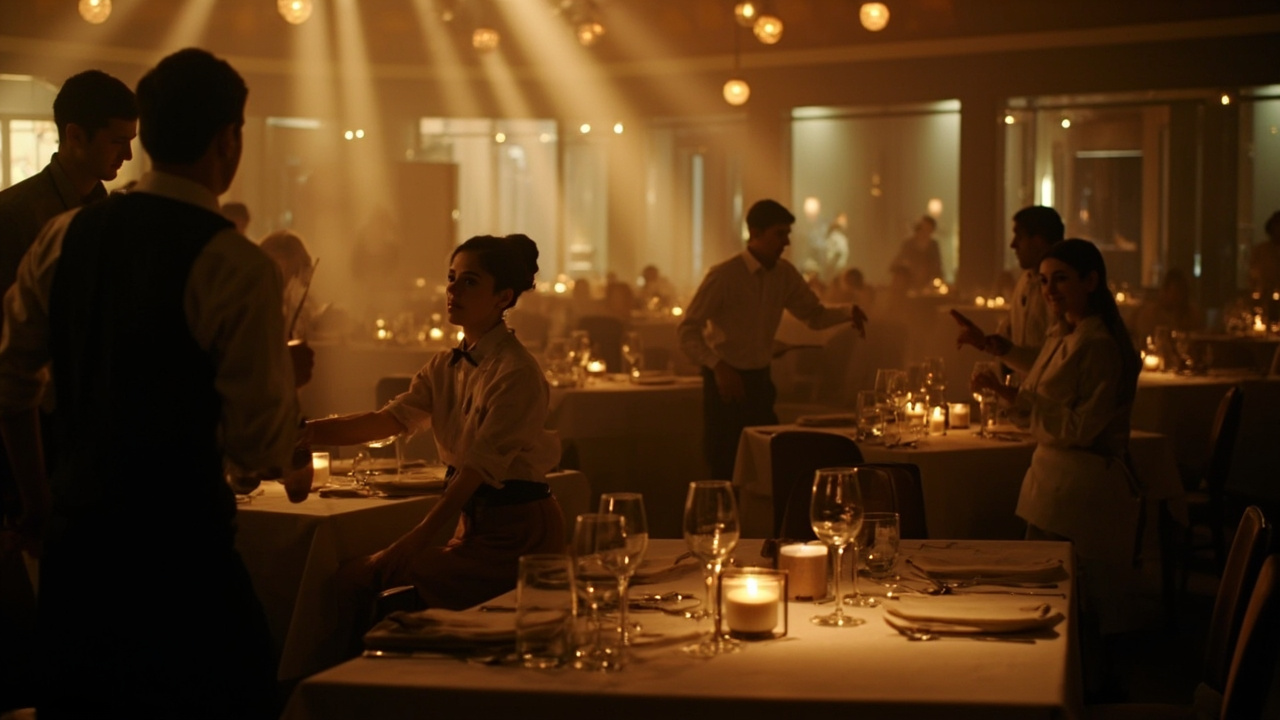
It was a classic pre-Christmas Friday. The kind where the air practically crackles with anticipation, and the booking system is rammed tighter than a sardine can. We’d just launched a new cocktail menu, a bit more experimental than usual, and I was feeling pretty smug about it. The place was buzzing, the kitchen was flying, and the bar was, well, the bar. Controlled chaos, as it always is when we’re at full tilt.
We had Anya on for her third shift. She’d come to us from somewhere completely different – a quiet, family-run spot in another country, where service was slower, more formal. You could see she was keen, always early, always taking notes. But she was quiet. Very quiet. I’d put it down to nerves, maybe a bit of a language barrier with some of the slang we throw around. I figured she’d find her feet, everyone does eventually. Liam, my assistant manager, a solid guy who’s been with me since we opened and has a real knack for reading people, had mentioned a couple of times that Anya seemed a bit lost sometimes. “She just needs to ask, Liam,” I’d probably snapped back, a bit too dismissively. “We don’t have time for hand-holding on a Friday.”
My focus that night was on throughput. Get drinks out, turn tables, make sure the new menu items were hitting the mark. I was watching the pass, checking the floor, occasionally jumping behind the bar to help with a rush of espresso martinis. I saw Anya moving, always moving, but sometimes she’d hesitate, look around, then just carry on. I interpreted it as her thinking things through, being meticulous. God, I was wrong.
The new menu had a drink called 'The Smoked Fig Sour'. It was a bit of theatre – a smoked glass, a particular type of fig liqueur, a specific garnish. It needed explaining to the customer, and it needed careful preparation. We’d briefed everyone, or so I thought.
Mid-service, a table of six came in. Hen party. Loud, happy, ordering a round of these Smoked Fig Sours. Anya took the order. I saw her write it down, saw her start making them. A flicker of pride, she was getting stuck in. I moved on to deal with a complaint about a steak being too rare, which, honestly, felt like the bigger problem at the time.
Ten minutes later, my stomach dropped. A commotion at the hen party table. One of them was waving me over, looking absolutely furious. "What is this?" she demanded, stabbing a finger at her glass. "It's meant to be smoked! It tastes like… like cheap cordial!"
I looked at the glass. No smoke. No specific garnish. Just a vaguely purplish liquid. Anya had made them, but she hadn’t smoked the glasses. She hadn’t even used the right fig liqueur, opting for a standard cassis because the fig bottle was tucked away on a higher shelf, out of easy reach for her. And she hadn't said a word.
How did I miss the signs?
The mistake wasn't just the drinks. It was the whole build-up. It was my arrogant assumption that my training, delivered in a typical British, fast-paced, 'just get on with it' manner, would land the same way for everyone. Anya hadn't asked. Not because she was trying to hide anything, but because she hadn't felt she could ask. Or perhaps, she hadn’t understood how to ask in a way that would be heard in our environment.
Liam pulled me aside a few minutes later, after I’d profusely apologised to the table and remade the drinks myself. “I told you,” he said, quietly. “She just doesn’t… she doesn’t pipe up. She gets flustered. I saw her looking for the fig stuff earlier, and I saw her pause at the smoker, but then she just moved on. I think she didn’t want to bother you.”
That hit me like a punch to the gut. Didn’t want to bother me. I, the owner, the one who constantly preached about teamwork and communication. I’d somehow created an environment where a new member of my restaurant staff felt she couldn't ask a fundamental question about an item on our brand-new menu. My relentless focus on 'efficiency' had completely blinded me to the human element, the subtle, important differences in how people learn and operate.
I’d just assumed everyone knew our unwritten rules: that you must ask if you don’t know, even if it feels like a stupid question, especially in the middle of a Friday night rush. But Anya, coming from a different background, might have interpreted 'don't bother the boss' completely differently. She might have seen my busy-ness as a clear sign to figure it out herself, to avoid interrupting, to appear capable even when she wasn't sure. It was a cultural gap I hadn't even considered. I’d been so fixated on the outward metrics of service – speed, accuracy, customer satisfaction – that I’d utterly neglected the internal mechanisms that make those things possible: clear, empathetic communication and a truly inclusive team culture.
What did I learn about my team?
That night changed everything about how I approach my team. I realised that my job isn't just about managing operations; it’s fundamentally about understanding the individuals within those operations. I stopped seeing my restaurant staff and bar team as one homogenous unit that would all respond to the same management style. That was a foolish oversight.
The first thing I did was sit down with Anya. Not to tell her off, but to understand. I asked her about her previous experience, about how she preferred to learn, about what she found difficult in our venue. It took time, and a lot of gentle prompting, but she eventually opened up. She admitted she found our direct communication style daunting, that in her old job, you’d never interrupt a manager unless it was a genuine emergency. She also confessed she hadn’t been able to reach the fig liqueur bottle comfortably and hadn't wanted to ask for help with something so simple. Simple to me, perhaps, but a genuine physical barrier to her.
I also sat down with Liam. I told him I’d been an idiot. I asked him to be my eyes and ears, to come to me with any concerns, even if I seemed buried in work. I started to actively listen to him, and to other reliable members of the bar and kitchen staff, about their observations on new starters or existing team members who might be struggling.
Now, our onboarding process is completely different. We still do the practical training, of course, but we also spend a dedicated hour, one-on-one, just chatting. I ask about their previous workplaces, their comfort levels, how they prefer to receive feedback. We talk openly about our communication style, about the absolute importance of asking questions, and I make it unequivocally clear that there's no such thing as a 'stupid' question in a busy service environment. We even have a 'check-in' system for new starters, where a dedicated mentor (often Liam, because he’s brilliant at it) checks in with them at the start and end of every shift for the first two weeks, specifically to ask what they’re unsure about.
I’ve made physical changes too. The fig liqueur bottle is now on a lower shelf. It sounds small, insignificant even, but it was a symptom of a much larger problem I’d overlooked: accessibility and practicality for all my staff, not just me. I now walk through the venue, trying to see it from the perspective of someone new, someone shorter, someone who might not speak English as a first language. I look for potential barriers.
That Friday night, I thought I was just dealing with a customer complaint about a drink. What I was actually dealing with was a fundamental flaw in my entire approach to managing people. I learned that truly understanding your team – their backgrounds, their communication preferences, their individual challenges – isn't some fluffy 'soft skill'; it's the absolute bedrock of a successful hospitality venue. Ignore it at your peril. I certainly won't make that mistake again.
Our Data
This analysis draws on booteek's proprietary research:
- Our proprietary Life Skills & Talents matrix for hospitality teams, built from our review of thousands of UK hospitality job postings via booteek Intelligence
- Live venue review corpus across Manchester, Porto, Bilbao, Seville, and other UK/Iberian cities (tens of thousands of reviews analysed)
- Ongoing behavioural research via booteek Breo, our AI companion for restaurant AND bar owners
Where external statistics are cited, sources are named inline. Where the claim is derived from booteek's own measurement, we say so.
See Breo work with your team
booteek's AI companion Breo can help your team identify, grow, and apply skills like team excellence in real shift-by-shift practice. Start a 5-minute Breo session →