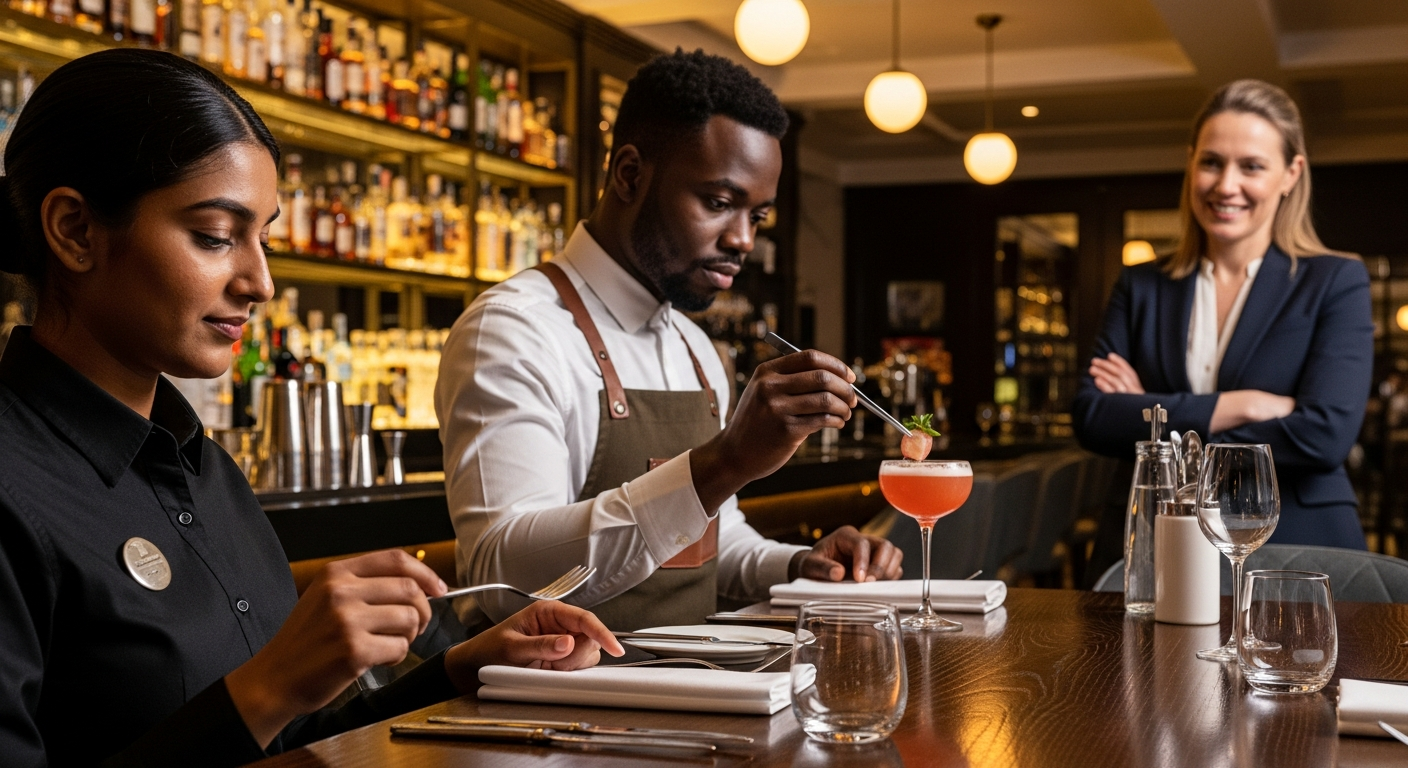
Running a hospitality business in the UK? You know the drill. It’s a relentless merry-go-round of trying to give guests an experience they’ll rave about, all while operational costs climb higher than the Shard and the competition nips at your heels. There’s barely any wiggle room for error these days. Excellence isn’t just a nice-to-have; it’s what keeps the lights on and the doors open. Guests aren't just after decent grub and a drink anymore; they want those little moments that stick with them, put together with real thought.
The Daily Grind for Restaurant and Bar Owners
Let’s be honest, successfully running a restaurant or bar in the UK feels like a constant juggling act. You’re trying to keep quality sky-high, costs in check, and everyone happy. Owners face a daily barrage of challenges: finding and keeping good staff is a never-ending headache, and the price of ingredients and utilities just keeps going up, up, up. Then there are online reviews – a single slip-up can trash your hard-earned reputation faster than you can say "sticky table." The pressure is immense.
Too many places end up in a desperate scramble, slashing prices or chasing fleeting trends, rather than focusing on what really lasts: a truly outstanding experience. Guests are savvier now; their loyalty isn't just handed out. They spot the details – the smudged glass, the forgotten condiment, the slow reply, that slightly sticky table. These aren't minor things. They chip away at trust and make people wonder if they’re getting their money's worth.
It’s genuinely tough to stand out, to build a unique identity that really connects with people. If you don't have a clear plan to make every interaction and every dish or drink feel special, you risk becoming just another option in an already packed market. Owners need to figure out how to not just meet, but consistently smash expectations, turning every visit into something worth coming back for and shouting about. And that, my friends, means taking a fresh look at everything we do, starting right at the heart of service.
What Our Data Tells Us
We often champion skills like problem-solving, team building, and active listening in our industry – and absolutely, these are important. But booteek Intelligence looked at nearly 600 independent UK hospitality job postings, and what we found was a bit of a shocker: the absolutely vital skill of "Attention to Detail" was explicitly mentioned in only 19.5% of them. This low number suggests we often assume people have it, rather than actively looking for it, training for it, or truly valuing it as a real differentiator.
Let’s dig a little deeper into our analysis of over 1,000 UK hospitality roles. For a line cook (we looked at 55 listings), the top skills are problem-solving, team building, and planning. They’re looking for people who are committed, responsible, and organised. Notice anything missing? Yep, attention to detail isn't in their top three. Bartenders (from 86 listings) prioritise problem-solving, active listening, and building rapport, valuing responsible, listening, and organised traits. Again, attention to detail isn't a primary focus in their listed strengths.
Even in roles where you’d think meticulousness would be a given, like a pastry chef (10 listings), planning and problem-solving are top skills, and being responsible and excellent are top talents. "Focused" is the closest talent to attention to detail, but it’s still not explicitly named as a primary skill. For a bar manager (17 listings), initiative, problem-solving, and time management lead the skills list, with confidence, responsibility, and organisation as key talents. The explicit emphasis on attention to detail just stays low across the board.
This data from booteek Intelligence points to a big blind spot. If we aren't clearly asking for, training for, and valuing "attention to detail" when we hire and develop our teams, how on earth can we expect it to be a consistent feature of our service? This disconnect between what we silently expect and what we actually cultivate means we're missing a massive opportunity to make guest experiences truly special.
Why Attention to Detail Really Matters
The fact that "attention to detail" barely gets a mention in job ads stands in stark contrast to its huge impact on how guests feel. This isn't just about spotting a mistake after it’s happened; it’s about a proactive, almost obsessive commitment to getting things right at every single point a guest touches your business. It’s the difference between a good experience and one they won't forget, the thing that turns a casual visitor into a genuine fan.
Think about the kitchen: a line cook who consistently makes sure every plate looks perfect, wiping away drips or smudges before it even leaves the pass, completely improves the meal. A pastry chef who meticulously measures ingredients and perfects detailed garnishes isn't just baking; they're creating a little edible masterpiece. Even an often-unseen kitchen porter, whose careful eye keeps equipment spotless and floors gleaming, provides the safe, hygienic, and efficient foundation the whole operation relies on. These small, deliberate actions stop errors, cut down on waste, and ultimately give the customer a far better product.
In the bar, attention to detail shows up in countless ways. A bartender who remembers a guest’s favourite garnish, makes sure every glass sparkles, and measures spirits with precision shows a level of care that genuinely connects. A barista who consistently nails the perfect milk texture and latte art, no matter how slammed they are, turns a simple coffee into a moment of craft. Even a barback, carefully restocking, cleaning, and organising, keeps service flowing smoothly, stopping those annoying delays and frustrations before they start.
Front-of-house staff are equally important. That waiter who spots an empty glass and offers a refill before being asked, or discreetly fixes a wobbly table, is a hero. A host who remembers a regular’s name or preferred spot makes them feel instantly at home. A restaurant manager whose sharp eyes catch a misplaced chair or a slightly dim light, and sorts it out straight away, makes sure the ambience is always spot on. These seemingly small actions add up to an overwhelming feeling that your venue genuinely cares.
So, attention to detail isn't just a nice trait; it’s a smart business move. It cuts down on operational faff by catching errors early, reduces waste, and makes your offering look and feel better. More importantly, it directly shapes how guests see you, building trust, satisfaction, and yes, loyalty. It’s the invisible thread that ties every single part of your operation together into one seamless, high-quality experience.
Building Attention to Detail in Your Team
Cultivating attention to detail isn't about breathing down everyone's necks; it's about baking a culture of meticulousness right into your team. Here are three straightforward ways to do it:
First, make it visible and valued. Don't just assume your team knows what "attention to detail" actually means for their role. Create clear, visual standards and make them a core part of daily work. For a bartender, this could be a pre-shift checklist for bar setup, with specific instructions for cleaning optics, polishing glassware, and arranging garnishes. For a line cook, it might involve photographic plating guides displayed at the pass, showing exactly how each dish should look. Make sure you regularly point out and celebrate examples of staff showing exceptional attention to detail in your pre-shift briefings or team meetings. Make it something that gets noticed and rewarded.
Second, help and train for ownership. Attention to detail really takes off when staff feel they own their areas and can proactively sort out problems. Offer complete training that goes beyond just ticking off tasks. Encourage staff to understand why each standard matters. For example, a waiter shouldn't just be trained to clear tables; they should learn to actively scan their section for empty glasses, stray napkins, or wobbly chairs, and feel helped to fix these things without needing to ask a manager first. Similarly, a barback should be trained to anticipate stock needs and proactively refill, rather than waiting for an empty bottle to be flagged. This builds a real sense of responsibility and pride in keeping standards high.
Third, set up feedback loops and recognition. Consistent feedback and recognition are key to reinforcing good habits. Set up regular, constructive check-ins, maybe short one-on-ones, focusing on specific examples of detailed work. Use booteek Intelligence data to spot team members who consistently shine in areas needing high attention to detail, and make sure you recognise their contributions publicly. Encourage peer-to-peer feedback, creating an environment where colleagues help each other uphold standards. And don't forget guest reviews – specifically looking for mentions of small details (good or bad) can give you brilliant insights and concrete examples for team discussions, turning feedback into a proper learning moment.
The Loyalty Mindset Shift
Baking attention to detail into your venue’s very fabric is far more than just a procedural tweak; it’s a powerful spark for a real shift in loyalty, both within your team and among your guests. This isn't about robotic box-ticking; it’s about nurturing an "Excellence Culture" where every team member truly understands their vital part in delivering a top-notch experience. When meticulousness becomes a shared value, rather than just another rule, it transforms the entire working atmosphere.
Staff who are trained and helped to pay attention to detail feel a deeper sense of purpose and pride in what they do. They’re not just going through the motions; they’re actively contributing to a shared standard of excellence. This inner drive genuinely boosts morale, cuts down on the frustration of avoidable errors, and builds stronger team bonds. When a team consistently delivers high standards, they develop a collective sense of accomplishment, leading to increased job satisfaction and, importantly, better staff retention. They become genuine ambassadors for your brand, living up to the quality you promise.
For guests, an "Excellence Culture" means an experience that feels truly special and deeply considered. They notice the consistently spotless environment, the perfectly presented food, the precisely made cocktails, and the proactive, thoughtful service. These details send a clear message: "We care." This level of care builds deep trust and appreciation, turning casual visitors into regulars, and regulars into loyal advocates. They don't just come back for the food or drink; they return for the consistent, reliable quality and that wonderful feeling of being truly looked after.
This lovely give-and-take – happy, proud staff delivering brilliant experiences that delight and keep guests coming back – creates a virtuous cycle. It lifts your brand, strengthens your ties to the community, and establishes your venue as a leader, not just another option on the high street. This loyalty mindset shift is about building a solid foundation of quality that pays off in every single part of your business.
What This Means for Your Venue
Embracing and actively building attention to detail in your restaurant or bar brings real, measurable benefits that directly affect your bottom line and your long-term success. It’s not some fancy extra; it’s absolutely essential in today’s demanding hospitality market.
First off, you'll see a clear jump in guest satisfaction. When every part of their visit is handled with care – from a spotless table to perfectly timed service and beautifully presented dishes – guests feel valued and are much more likely to return. This means people spend more per visit and you get a significant boost in repeat business, which is the absolute bedrock of a strong customer base.
Secondly, your online reputation will shine. Positive reviews, often highlighting those small, thoughtful details, become your most powerful marketing tool. Word-of-mouth recommendations, both online and in person, will naturally attract new customers who are specifically looking for places known for their consistent quality and exceptional service. In a crowded market where trust and authenticity are everything, this is priceless.
Operationally, a team that's focused on detail means fewer errors, less waste, and greater efficiency. Imagine fewer re-dos in the kitchen, fewer spilled drinks at the bar, and more accurate inventory. This directly translates into lower costs and improved profitability. Your team will also become more professional, more motivated, and more able to work independently, freeing up management to focus on strategic growth instead of constantly putting out fires.
Ultimately, by truly prioritising and nurturing attention to detail, your venue will develop a distinctive brand identity that genuinely sets it apart. It sends a message of commitment to excellence that resonates with both staff and guests, building a culture of pride and loyalty. Start embedding this important skill into every operational procedure, training module, and recognition programme today, and just watch your business flourish.
booteek helps restaurant and bar owners track team development automatically. Our AI Business Brain transforms how you understand and grow your team.