In an increasingly competitive UK hospitality landscape, where staff retention and guest loyalty are paramount, many restaurant and bar owners are grappling with how to truly stand out. While grand gestures and flashy marketing grab headlines, booteek Intelligence reveals a subtle yet profoundly impactful differentiator often overlooked: attention to detail. Our analysis shows that this critical skill is explicitly mentioned in only 19.5% of UK hospitality job postings, yet its mastery is central to delivering the exceptional experiences that build lasting success.
The Reality for Restaurant AND Bar Owners
Every restaurant and bar owner in the UK understands the relentless pressures of the industry. From navigating unpredictable supply chains and escalating operational costs to attracting and retaining a skilled workforce, the challenges are formidable. We're constantly striving to create memorable experiences, to earn those coveted five-star reviews, and to build a loyal customer base that keeps coming back. Yet, achieving true consistency, that seamless blend of service and product excellence, often feels like chasing a moving target.
The tight margins mean every plate, every pour, every interaction counts. A single oversight can quickly unravel an otherwise perfect evening, leading to a negative online review that impacts future bookings. Staff turnover further compounds this, as new team members require extensive training to uphold your venue's standards. The gap between 'good enough' and 'truly exceptional' is often narrow, but it's where the most successful businesses thrive. It's about recognising that every touchpoint, no matter how small, contributes to the overall guest perception and, ultimately, your bottom line.
What the Data Shows
booteek Intelligence analysis of nearly 600 independent UK hospitality job postings reveals a compelling paradox: 'attention to detail' is explicitly listed as a desired skill in just 19.5% of roles. This low mention rate is striking when you consider its undeniable impact on guest satisfaction and operational efficiency. It suggests that while owners intuitively value precision, they may not be explicitly articulating it in their hiring criteria or internal training.
However, dig deeper into the skills and talents our data highlights as top priorities for various roles, and you'll find 'attention to detail' woven into the fabric of success, even if it's not named directly. For instance, Line Cooks (n=55) value 'Problem-solving, Team Building, Planning,' and are sought for being 'committed, responsible, organised.' Each of these requires meticulousness and a keen eye for detail. A 'responsible' line cook ensures ingredients are fresh and plates are consistent. An 'organised' prep cook (n=8), who also values 'Active Listening' and 'Self-accountability,' is inherently detail-oriented in their setup and execution.
Similarly, for front-of-house roles like Bartenders (n=86), top skills include 'Problem-solving, Active Listening, Building Rapport,' alongside talents like being 'responsible, listening, organised.' How can one actively listen or solve a problem effectively without paying close attention to guest cues or order specifics? A 'friendly' barista (n=28) who is also 'responsible' and 'enthusiastic' ensures the coffee is perfect every time, down to the foam and temperature.
Even leadership roles, from Head Chef (n=28) prioritising 'Problem-solving, Planning, Initiative' to Bar Manager (n=17) with 'Initiative, Problem-solving, Time Management,' hinge on a detailed understanding of operations and team performance. The 'responsible' and 'organised' talents consistently appearing across roles – from Kitchen Porter (n=26) to General Manager (n=40) – are direct indicators of the underlying need for detail-oriented execution. This data suggests that while not always explicitly stated, attention to detail is the silent powerhouse skill underpinning many of the competencies we do value.
The Attention to Detail Connection
So, if 'attention to detail' isn't explicitly top of the list for most roles, why is it the 19.5% differentiator? Because it's the invisible thread connecting every successful operation to an exceptional guest experience. It's the difference between a good meal and a memorable one, a quick drink and a perfectly crafted cocktail, a pleasant visit and one that inspires rave reviews. It's the foundation upon which consistency, efficiency, and ultimately, guest satisfaction are built.
Consider the Line Cook: their 'problem-solving' often involves noticing a slight deviation in a dish before it leaves the pass, a clear act of detailed observation. Their 'planning' ensures every ingredient is prepped precisely, preventing last-minute rushes or quality compromises. For a Barista, 'Active Listening' isn't just hearing an order; it's noticing if a regular wants their latte extra hot or if a new customer seems unsure, allowing for a personalised recommendation. This level of observation transforms a transactional exchange into a genuine connection.
Attention to detail extends beyond the immediate task. A 'responsible' Kitchen Porter, a top talent for that role, doesn't just clean; they notice a potential slip hazard or a piece of equipment needing maintenance, preventing larger issues. A 'focused' Pastry Chef (n=10), whose top skills include 'Planning' and 'Problem-solving,' meticulously measures ingredients and monitors oven temperatures, knowing that precision is paramount for delicate creations. Their excellence relies entirely on pinpoint accuracy.
When a Bar Manager (n=17) demonstrates 'Initiative' and 'Time Management,' it’s often through detailed oversight of stock levels, staff rotas, and service flow, pre-empting busy periods and ensuring smooth operations. This proactive approach, born from keen observation, prevents problems before they arise, enhancing both staff morale and guest satisfaction. It’s about anticipating needs, spotting discrepancies, and maintaining standards without being prompted – a hallmark of an 'excellent' team member, a talent prized by Head Chefs and Pastry Chefs alike. The waiter (n=7) who excels at 'Time Management' and 'Building Rapport' does so by paying close attention to their tables, anticipating needs, and observing guest cues.
The cumulative effect of these small, detailed actions is immense. It builds trust with guests, reduces waste, improves efficiency, and elevates the overall quality of your offering. It's the silent hero that turns first-time visitors into loyal regulars.
Building Attention to Detail in Your Team
Cultivating a team with a strong attention to detail requires more than just telling them to "be careful." It demands a structured approach that integrates this skill into training, daily operations, and feedback.
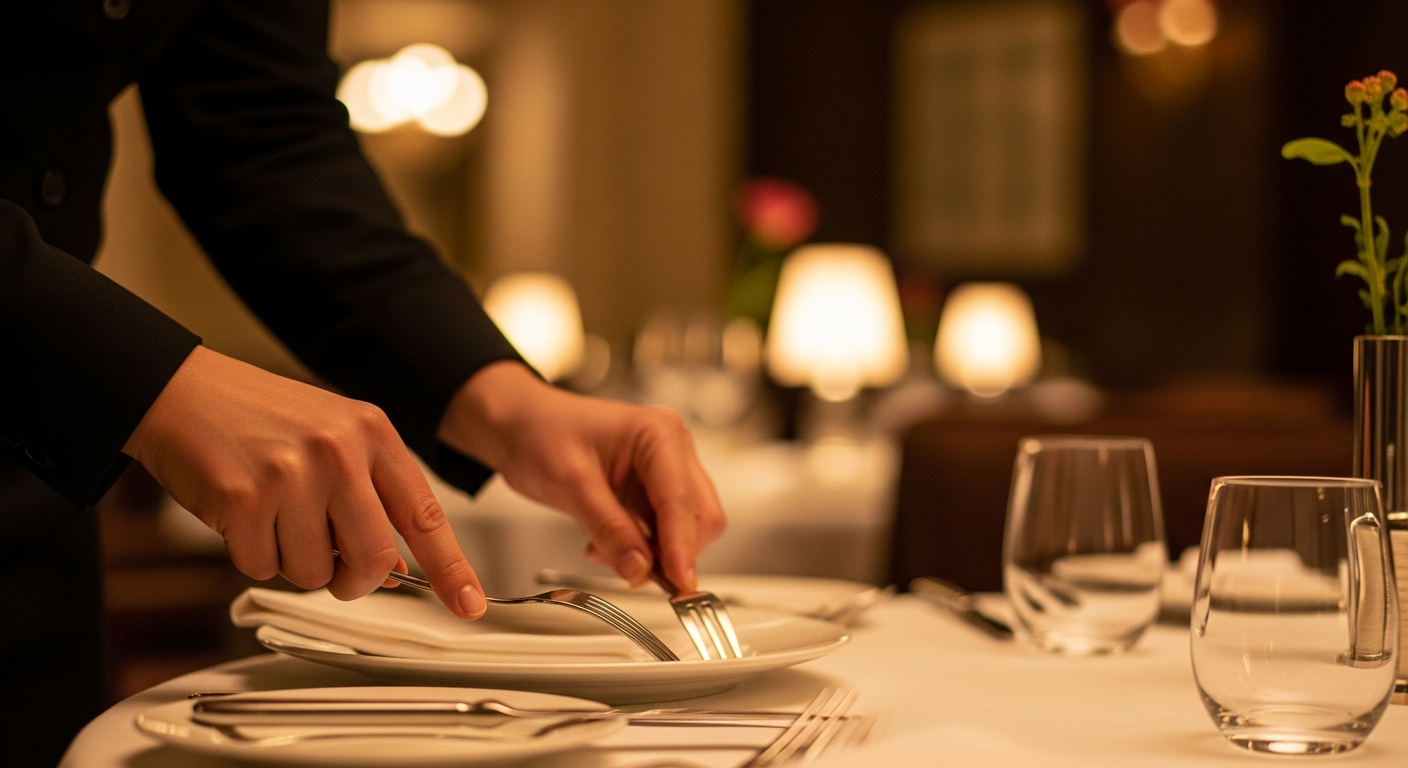
- Develop 'Why-Driven' Standard Operating Procedures (SOPs): Don't just list steps; explain the impact of each detail. For a Barista, explaining why the milk temperature is crucial for foam texture and taste, not just "heat to X degrees," fosters understanding. For a Waiter (n=7), explaining why checking table settings for cleanliness and correct cutlery is vital for first impressions and contributes to their 'Time Management' helps them own the process. When staff understand the 'why' behind a detail, they are far more likely to adhere to it consistently and recognise its importance.
- Implement Regular 'Spot Checks' and Constructive Feedback Loops: Make observation and feedback a standard, non-punitive part of the daily routine. A Head Chef doing a 'pass check' for consistency or a Bar Manager (n=10) reviewing a bartender's station for setup and cleanliness are great examples. Provide immediate, specific feedback, focusing on what was observed and its impact. This aligns with 'Performance Management' (Assistant Manager) and 'Learning from Experience' (Bar General), turning every interaction into a growth opportunity. Encourage peer-to-peer feedback too, fostering a collective commitment to excellence.
- Empower Ownership and Curiosity: Foster a culture where every team member feels empowered to notice, report, and even rectify small issues. Encourage staff to be curious about how things work and how they could be improved. A Kitchen Porter noticing a chipped plate and proactively removing it, rather than waiting for a manager, is a testament to this empowerment. A Barback (n=10) with strong 'Initiative' noticing low stock before it runs out prevents service interruptions. Reward proactive observation and problem-solving. This cultivates a team that is 'accountable' (General Manager, Bar General) and 'committed' (Line Cook, Sous Chef, Prep Cook), taking genuine pride in their meticulousness.
The Loyalty Mindset Shift
Shifting your team's focus to a 'loyalty mindset' through the lens of attention to detail is about cultivating an 'Excellence Culture.' It's moving beyond simply performing tasks to understanding the profound impact of every action on the guest experience and, by extension, on the success of the venue. When every team member, from the Kitchen Porter to the General Manager, recognises that their meticulousness contributes directly to a seamless operation and delighted customers, their commitment deepens.
This isn't just about avoiding mistakes; it's about proactively seeking perfection. When a Sous Chef (n=17), valued for being 'responsible, reliable, committed,' ensures every dish is plated perfectly, they're not just following a recipe; they're upholding the venue's reputation and building guest trust. When a Barista, known for being 'friendly' and 'enthusiastic,' remembers a regular's specific order, they're not just serving coffee; they're fostering a personal connection that encourages repeat visits. This level of personalised detail is what transforms a casual diner into a loyal advocate.
An Excellence Culture, powered by attention to detail, creates a virtuous cycle. Guests experience consistently high standards, leading to loyalty and positive word-of-mouth. Staff, in turn, feel a greater sense of pride and purpose in their work, knowing their contributions are valued and directly impact the venue's success. This sense of shared purpose and high standards reduces staff turnover, as team members are more engaged and invested. They become 'accountable' (a top talent for General Managers and Bar Generals) and 'committed' (Line Cooks, Sous Chefs, Prep Cooks), because they see the tangible results of their collective precision. It transforms a job into a craft, fostering a team that is not just present, but truly dedicated to delivering outstanding hospitality.
What This Means for Your Venue
Embracing the 19.5% differentiator means more than just ticking boxes; it means embedding a culture of meticulousness into the DNA of your restaurant or bar. It begins with recognising that while 'attention to detail' might not always be explicitly listed, it's the invisible force driving the 'Problem-solving,' 'Planning,' and 'Organisation' that our booteek Intelligence data shows are universally valued. It’s about making the implicit explicit, transforming a hidden skill into your venue’s most powerful competitive advantage.
Practically, this translates into tangible benefits: fewer complaints, higher average spend due to enhanced perceived value, improved online reviews, and a stronger, more engaged team. Imagine a waiter (n=7) whose 'Time Management' and 'Building Rapport' are underpinned by noticing a guest's empty glass before they ask, or a Bar Manager (n=10) whose 'Planning' ensures every shift runs flawlessly. These are the moments that define a truly exceptional venue and keep guests returning.
By actively training, coaching, and rewarding attention to detail across all roles – from the precise knife work of a Pastry Chef to the welcoming vigilance of a Host (n=4) – you're not just improving individual performance. You're elevating your entire operation, building a reputation for excellence that will attract and retain both the best talent and the most loyal customers. It’s about cultivating a team that sees the beauty and impact in every small act of precision, turning every visit into an unforgettable experience.
booteek helps restaurant AND bar owners track team development automatically. Our AI Business Brain transforms how you understand and grow your team.