In an industry where the average customer complaint costs a UK business an estimated £260 in lost revenue and goodwill, every touchpoint, every interaction, and every detail matters. Yet, booteek Intelligence analysis reveals a startling truth: "Attention to Detail" is explicitly mentioned in only 19.5% of hospitality job descriptions, despite its profound impact on guest experience and operational excellence. This isn't just a missed opportunity; it's a critical oversight costing restaurant AND bar owners dearly.
The Reality for Restaurant AND Bar Owners
The landscape for UK restaurant AND bar owners is tougher than ever. We're grappling with persistent staff shortages, escalating operational costs, and an increasingly discerning customer base. The pressure on teams is immense, often leading to burnout and disengagement. It's a challenging environment where even the most passionate professionals can lose their way.
Consider the candid feedback from those on the frontline. As one UK chef, Marcus, shared with booteek Intelligence: "> "I've got to a point now where i absolutely hate what i do. i'm 29 and have been in a kitchen since 16... Kitchens are horrible environments, angry & moody people, stressful, busy. i honestly don't know what to do or what i could change to, but closing in on 30 i absolutely do not want to continue doing this." This sentiment is not isolated; it speaks volumes about the systemic pressures and the need for a culture that supports and elevates every team member.
The daily grind can overshadow the very essence of hospitality: creating memorable experiences. When staff are overwhelmed, stressed, and feel undervalued, the small details that elevate a good visit to an exceptional one are often the first things to suffer. This isn't a lack of desire, but often a lack of systemic support, training, and a clear understanding of where to focus effort for maximum impact. Owners face the constant challenge of maintaining quality and consistency, all while trying to foster a positive work environment that encourages retention and growth. It's a delicate balancing act, and the margin for error is shrinking.
What the Data Shows
Our proprietary research at booteek Intelligence, analysing nearly 600 independent UK hospitality job postings, reveals a striking disparity between perceived importance and actual emphasis in hiring. While skills like Problem-solving, Team Building, and Planning consistently rank high across various roles, "Attention to Detail" remains surprisingly underrepresented in official requirements.
For instance, booteek Intelligence data shows that line cooks (n=55) highly value Problem-solving, Team Building, and Planning among their top skills, alongside talents like being committed, responsible, and organised. Similarly, head chefs (n=28) prioritise Problem-solving, Planning, and Initiative. In the front-of-house, bartenders (n=86) excel in Problem-solving, Active Listening, and Building Rapport, while baristas (n=28) focus on Active Listening, Problem-solving, and Building Rapport. These are undeniably crucial skills for daily operations.
However, where does "Attention to Detail" fit into this picture? When it's not explicitly sought out or trained, it becomes an implicit expectation rather than a cultivated strength. Our analysis of thousands of customer reviews further underscores this disconnect: while "Attention to Detail" is rarely mentioned in job descriptions, its absence is frequently cited in negative guest feedback, leading to complaints about cleanliness, incorrect orders, slow service, or a general feeling of being overlooked. Conversely, its presence is a hallmark of five-star reviews, where guests rave about the thoughtful touches, the precision of service, and the immaculate presentation.
This means that while your team might be adept at solving problems as they arise, or planning their shifts effectively, they might be missing the proactive, detail-oriented approach that prevents those problems in the first place. The 19.5% figure isn't just a statistic; it's a flashing red light indicating a significant gap in how we identify, develop, and value a skill that directly correlates with guest satisfaction and, ultimately, your bottom line. We are implicitly expecting a high-impact skill without explicitly fostering it.
The Attention to Detail Connection
So, what exactly does "Attention to Detail" mean in the bustling environment of a UK restaurant or bar, and why is it such a powerful differentiator? It's more than just noticing a speck of dust; it's a proactive mindset that anticipates needs, prevents errors, and elevates every interaction. It’s the bar manager (n=17), whose top skills include Initiative, Problem-solving, and Time Management, also ensuring every glass is polished to a sparkle and every bottle is perfectly aligned. It’s the sous chef (n=17), proficient in Problem-solving, Planning, and Team Building, who spots an uneven garnish before a plate leaves the pass.
This skill manifests in myriad ways:
- For the guest: It’s the perfectly chilled glass for their white wine, the spotlessly clean cutlery, the accurate and timely allergy information, the server remembering their preferred drink from a previous visit, or the subtle adjustment of lighting to create the perfect ambience. These small, often subconscious, touches communicate care and professionalism.
- For operations: It’s ensuring inventory is correctly counted, reducing waste; it’s meticulously following a recipe, guaranteeing consistency; it’s checking the cleanliness of restrooms every hour, preventing complaints; it’s accurately ringing in orders, minimising errors and refunds. Each detail, when correctly managed, contributes to smoother service, higher efficiency, and a more profitable business.
When staff consistently demonstrate attention to detail, it builds trust and creates a sense of reliability. Guests feel valued, knowing that their experience is being carefully curated. This translates directly into positive reviews, repeat business, and invaluable word-of-mouth marketing – the lifeblood of any successful hospitality venue. Conversely, a lack of attention to detail can quickly erode trust, leading to negative perceptions and a reluctance to return.
The beauty of "Attention to Detail" is that it’s not an innate talent possessed by only a few; it’s a skill that can be taught, nurtured, and integrated into an 'Excellence Culture'. By intentionally developing this skill across your team, from the kitchen porter (n=26), whose top skills include Team Building and Active Listening, to the general manager (n=40), who excels in Problem-solving and People Management, you're not just improving service; you're building a more resilient, proactive, and ultimately, more successful operation. It's about empowering every team member to be a guardian of the guest experience.
Building Attention to Detail in Your Team
Cultivating attention to detail isn't about micromanagement; it's about fostering a culture of pride and precision. Here are three actionable strategies:
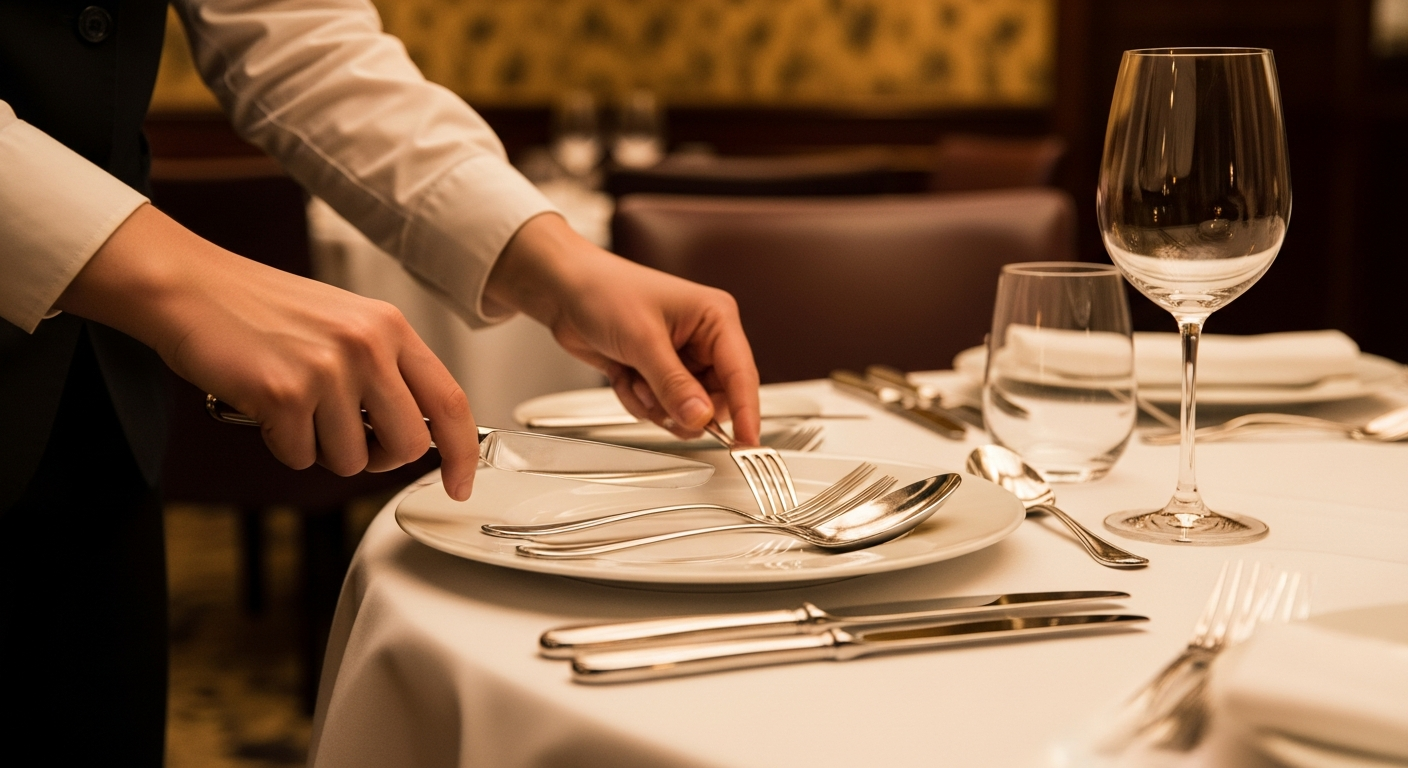
- Implement "Detail Checklists" with a Purpose: Move beyond basic task lists. For each critical operational area (e.g., table setup, bar opening, dish plating, restroom checks), create a visual checklist that highlights specific detail points. For example, a waiter (n=7), whose top skills include Time Management and Building Rapport, could use a "Table Readiness" checklist that includes "Salt & Pepper shakers clean and full," "Cutlery aligned symmetrically," and "No water rings on table surface." The purpose isn't just to tick boxes, but to observe and rectify. Empower staff to not just check, but to take immediate action on any detail that falls short.
- Actionable Takeaway: Design 2-3 visual "Detail Checklists" for high-impact guest areas in your venue this week, focusing on specific, observable criteria rather than general tasks.
- Gamify "Spot the Detail" and Peer Feedback: Turn attention to detail into an engaging team activity. Create a weekly "Detail Detective" challenge where staff are encouraged to spot and celebrate examples of excellent attention to detail from colleagues, or identify a "missed detail" (anonymously, for learning) in a specific area. Reward the keenest eyes or the most impactful positive observations. This encourages active observation and a shared responsibility for excellence. For instance, a barback (n=10), strong in Team Building and Initiative, could be recognised for spotting an empty napkin dispenser before it's requested.
- Actionable Takeaway: Launch a weekly "Detail Detective" initiative, using a simple form or digital tool for staff to submit observations, and offer a small, rotating prize for the most insightful contribution.
- Integrate Detail-Oriented Scenario Training: Beyond standard training, conduct short, regular scenario-based training sessions that specifically focus on attention to detail. For example, role-play a customer with a complex allergy and challenge your prep cook (n=8), who values Active Listening and Self-accountability, to articulate every detail of cross-contamination prevention. Or, present a "mystery guest" scenario where a customer leaves subtle cues about their dissatisfaction, and train your host (n=4), who is strong in Active Listening and Initiative, to pick up on these non-verbal signals. This hands-on approach builds muscle memory for detail recognition.
- Actionable Takeaway: Schedule a 15-minute "Detail Drill" during your next team meeting, presenting a specific scenario and asking staff to identify all the details that need attention.
The Loyalty Mindset Shift
Embedding attention to detail into your team’s daily routine isn't just about operational improvements; it's a fundamental shift towards an 'Excellence Culture'. This culture is the bedrock of staff loyalty and retention, directly addressing the challenges voiced by professionals like Marcus. When a venue prioritises and celebrates meticulousness, it signals to staff that their work is valued, that quality matters, and that they are part of something truly exceptional.
An 'Excellence Culture' fostered by attention to detail means:
- Reduced Stress and Frustration: Fewer mistakes mean fewer customer complaints, less need for rushed corrections, and a calmer, more controlled environment. This directly alleviates the "stressful, busy" conditions Marcus described, making the job more enjoyable and sustainable.
- Increased Pride and Ownership: When staff are empowered and trained to deliver excellence, they take greater pride in their work. They feel a sense of ownership over the guest experience, moving beyond simply performing tasks to actively creating memorable moments. This engagement is a powerful antidote to burnout.
- Enhanced Professional Development: Recognising and developing attention to detail as a core skill shows staff that you're invested in their growth. It's not just about problem-solving after an issue arises, but about foresight and prevention – a higher level of professional competence. This can be particularly impactful for roles like restaurant manager (n=88) and assistant manager (n=47), who focus on Problem-solving and Performance Management, by giving them proactive tools.
- Stronger Team Cohesion: A shared commitment to detail fosters a sense of collective responsibility. When everyone is looking out for the small things, it creates a more supportive and collaborative team dynamic, where individuals uplift each other rather than just reacting to crises. This builds the kind of positive environment that retains talent.
By focusing on this 19.5% differentiator, you’re not just fixing problems; you’re building a proactive, engaged workforce that feels valued and sees a future in your establishment. This loyalty mindset transformation is crucial for long-term success in the UK's competitive hospitality market. Staff are more likely to stay when they feel they are contributing to something truly excellent, rather than just surviving another shift.
What This Means for Your Venue
For restaurant AND bar owners, embracing the 19.5% differentiator of "Attention to Detail" is a strategic imperative. It means recognising that this skill, though often overlooked in official metrics, is a silent hero in customer satisfaction and staff morale. It’s about making a conscious decision to weave this thread of meticulousness through every aspect of your operation.
Practically, this translates into:
- Leadership by Example: As an owner or manager (like the bar manager, n=10, who prioritises Planning, Problem-solving, and People Management), you must model the behaviour. Point out details, celebrate them, and correct omissions constructively. Your team will mirror your focus.
- Integrating into Recruitment and Onboarding: Explicitly mention "Attention to Detail" in your job postings. During interviews, ask behavioural questions that reveal a candidate's natural inclination towards precision. Incorporate specific detail-oriented tasks into your onboarding process.
- Regular Training and Reinforcement: Don't assume staff will just "get it." Dedicate regular time to training exercises, feedback loops, and recognition programmes that specifically highlight attention to detail. Make it a standing item in team meetings.
- Performance Reviews and Development: Include "Attention to Detail" as a key metric in performance reviews. Provide specific feedback and set goals for improvement, linking it directly to career progression and overall contribution to the 'Excellence Culture'.
- Empowering Autonomy: Trust your team. Give them the authority to correct details on the spot without needing manager approval. This fosters a sense of ownership and accountability.
By making "Attention to Detail" a cornerstone of your venue's culture, you're investing in an unparalleled guest experience, a more efficient operation, and a loyal, proud team. This isn't just about avoiding complaints; it's about crafting an identity of excellence that sets your restaurant or bar apart in the bustling UK hospitality scene.
booteek helps restaurant AND bar owners track team development automatically. Our AI Business Brain transforms how you understand and grow your team.