TLDR
- Run solid pre-shift checks and clear communication before peak service begins to set a calm tone.
- Empower your bar staff and servers to make autonomous decisions so small issues do not escalate.
- Foster a culture of real teamwork where team members instinctively help each other under pressure.
You ever wonder what actually happens when your restaurant is completely slammed and everything just… breaks? I’ve seen it more times than I can count. And every time, it shows you something real about the people who work in hospitality, and what it takes for owners to build a truly resilient team.
What makes a busy restaurant and bar night successful, even when things go wrong?
Getting ahead of problems is key for restaurant and bar owners. It starts with solid pre-shift checks and clear communication. That sets the stage for calmer service, even when things get hectic. Trust your team. Really, let them make decisions. If your bar staff and servers feel confident handling unexpected issues on their own, little things don't blow up into huge messes. Guests stay happy. Finally, and this is big: real teamwork. When the pressure's on, the difference between a place that just scrapes by and one that thrives is whether your team instinctively jumps in to help each other, no questions asked. The Gilded Spoon aims for this foundation every Saturday.
How do effective restaurant and bar teams prepare for peak service?
At 3 PM, The Gilded Spoon is quiet. Tables are spotless, chairs tucked in. You can still catch a faint whiff of yesterday's cleaner. Sarah, the Assistant Manager, paces through her section. She's eyeing everything: cutlery perfectly straight, water glasses gleaming, reservation cards lined up. On her tablet, the bookings confirm it: packed tonight. A typical Saturday. There's a 10-top at 7 PM – apparently, they're known for being a bit particular – plus a couple of other big groups later. She mentally reviews the staff, making sure every section has enough hands. Liam, one of the newer servers, is on tonight. Sarah makes a note to keep an eye on him once things get busy. She always does.
Mark, the Senior Bartender, walks in a few minutes later. He goes straight to the bar, no need for instructions. His routine is automatic: check stock, slice lemons and limes, top up the ice, polish every single glass. He tests the beer lines, primes the coffee machine. This bar is his domain, and he treats it that way. A bar that's ready to go makes the whole service smoother. It’s not the flashy part of the job, but it really counts.
What happens when a restaurant and bar service unexpectedly hits a crisis?
The rest of the front-of-house team trickles in. From the kitchen, you can hear the low hum of pans and voices starting up. Sarah calls the servers together for their briefing. She doesn't just rattle off specials; she walks them through potential tricky spots. "Table 7, that ten-top, they're celebrating. Make them feel special, yes, but be ready for anything. And Table 12, that's Mrs. Henderson, a regular. She's particular about her wine temperature." She assigns sections, putting Liam with a more experienced server to start. "Any questions?" She notices a flash of nerves on Liam's face. Okay, she thinks, I'll definitely check on him early. Mark gives his bar team a quick update on new drinks and any stock issues. "Keep those dockets moving," he tells them. "We don't want any jams at the pass." It's in this quiet moment, before the doors open, that the team really starts to gel.
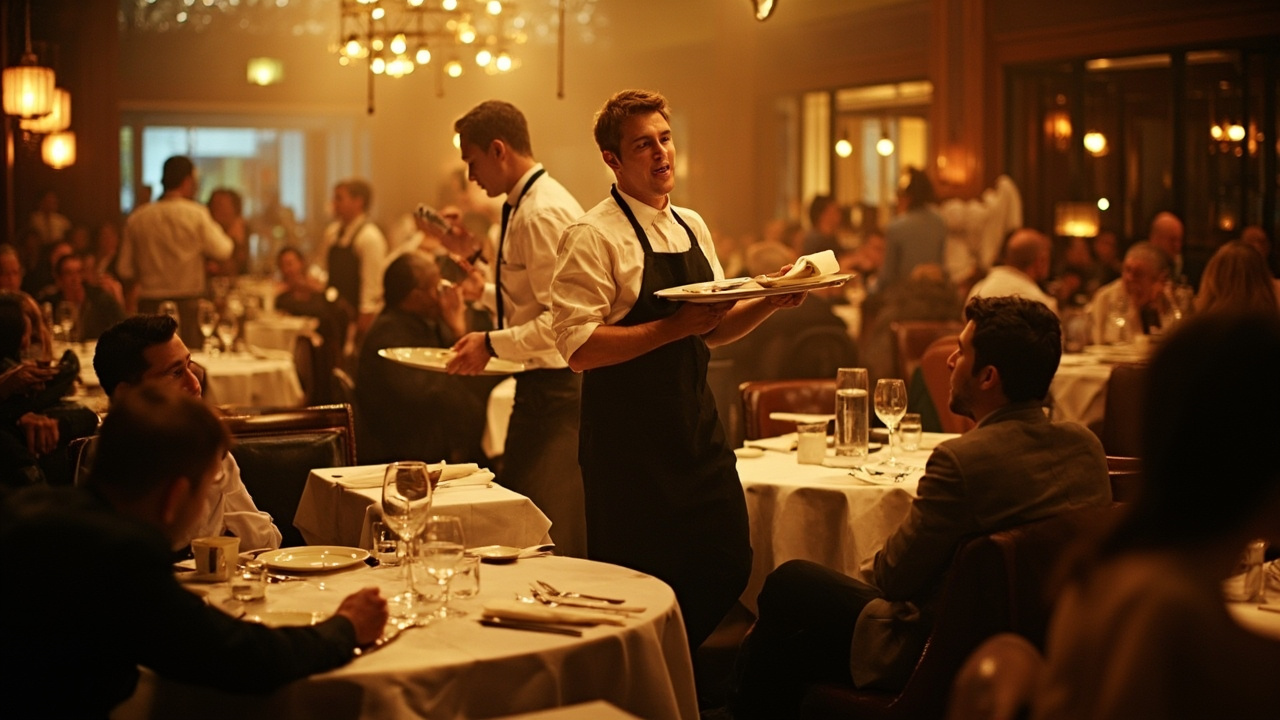
First guests arrive. A couple, then a small family. Slowly, the place finds its rhythm. The Gilded Spoon starts to fill with chatter and the clink of cutlery. Liam takes his first orders, a bit rigid, but he's getting through it. Sarah glides through the room, observing, always a step ahead. When a guest asks about dietary needs, she steps right next to Liam, offering a suggestion instead of just taking over. Mark's already a whirlwind behind the bar, shakers blurring. The bar team moves in perfect sync; drinks seem to materialise the moment the tickets print. It’s pretty satisfying to watch when it all clicks.
Then, Table 7, the ten-top. They arrive twenty minutes late. They’re a mess, loud, and half of them still haven't decided on mains, even though they pre-ordered. Liam, clearly flustered, is struggling with their endless demands. One guest is adamant their pre-ordered steak should be medium-rare, not rare, despite what the ticket says. You can see the kitchen pass starting to jam. Dockets pile up. The whole flow just… stops. Sarah spots Liam's rising panic from across the room and starts heading towards the table, her jaw set.
Then, a shout from the back: "Water! In the ladies'!" A pipe has burst in the downstairs toilet. Water is spreading fast, threatening to spill into the main dining area. Two massive problems, all at once. This is the moment when a place really shows what it's made of, and a true test for any restaurant and bar owner.
How can restaurant and bar owners manage multiple service crises simultaneously?
Sarah's focus instantly splits: the demanding table and that growing puddle. She makes a snap decision. "Mark!" she calls out, cutting through the din. "Ladies' loo, burst pipe. Bucket, towels, cordon it off. Can you find a porter?" Mark doesn't even pause. He hands off his current drink order, grabs a wet floor sign, and vanishes.
Sarah turns back to Table 7. She tackles the steak complaint head-on. Her voice is firm, but she sounds genuinely sorry. She offers a fresh steak, but also points out the kitchen is absolutely swamped right now. She takes new orders, gently pushing them towards quicker dishes. Liam, she sees, is completely frozen at the bar pass — the kind of frozen that happens when a junior server's queue suddenly trebles and they don't know what to drop. Sarah's call: "Liam, leave the cocktail list for now, run the food orders only. Mark's covering drinks. Go." It's blunt, but it gives Liam a single thing to do, and that's what unlocks him.
What that 8 PM moment shows isn't heroism. It's about a senior team member who can split attention, tell each person their next move, and trust the rest of the team to execute without a second prompt. None of those skills are on a CV. All of them get measured in how a Saturday night ends — or doesn't. The lesson for restaurant and bar owners: hire for adaptive judgment, not just experience. The venues that recover from a burst pipe at 8 PM aren't the ones with the most-trained staff. They're the ones with one or two people who can see the whole room and reorder the priorities in real time.