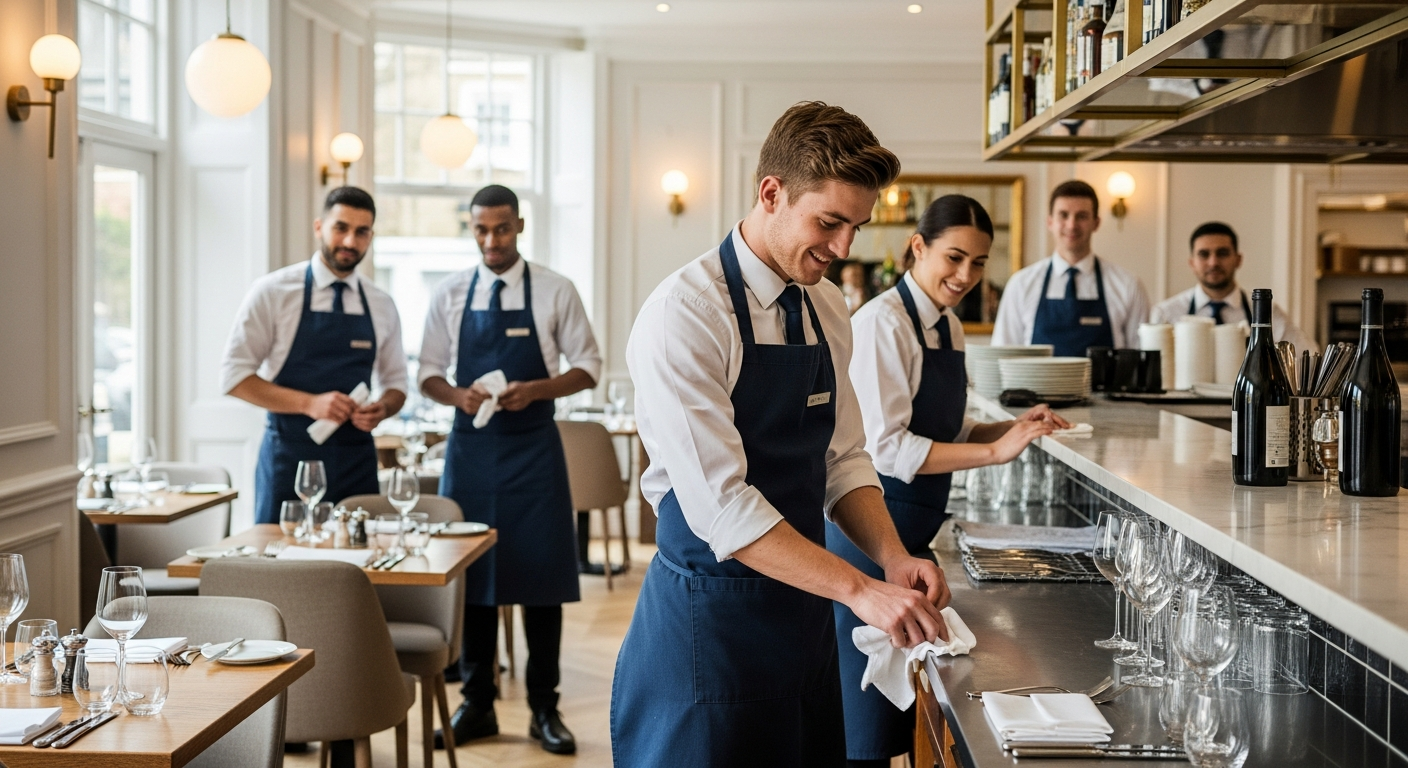
In hospitality, staff turnover feels like a revolving door. UK restaurant and bar owners wrestle with a stubborn problem: how do you build a stable team when work itself is becoming gig-based and temporary? The answer isn't just about paying well. It's about creating a workplace where people actually want to stay, where they feel they belong.
The Double-Edged Sword
For many UK restaurant and bar owners, the gig economy cuts both ways. Yes, it gives you flexibility during rushes or when someone calls in sick. But it costs you consistency. It costs you the knowledge that comes from people staying around. When staff are constantly changing, managers spend half their time training newcomers. Service quality bounces around. Guests notice.
The financial hit is real. Recruitment costs, training, lost productivity—it adds up fast. But there's something harder to measure: the damage to morale. When people are always leaving, the ones who stay get burned out. They resent picking up the slack. The whole operation becomes fragile. It's incredibly hard to deliver the kind of experience guests expect when your team is constantly shifting.
Breaking this cycle means thinking differently. Stop just filling vacancies. Start building a workplace where people invest in the work because they feel valued, because they're connected to what the venue is trying to do. That's the real challenge.
What the Numbers Tell Us
Reliability matters most in hospitality kitchens. According to booteek Intelligence, 80% of hospitality jobs demand it as a core attribute. This isn't just about showing up. It's about consistent performance, keeping to schedules, taking ownership. Their analysis of nearly 600 independent UK hospitality job postings confirms this.
Look at specific kitchen roles and the pattern is unmistakable. Kitchen porters (n=26) list "responsible," "reliable," and "organised" as their top qualities. Sous chefs (n=17) say the same thing: "responsible," "reliable," and "committed." Head chefs (n=28) are valued for being "responsible," "organised," and "excellent," alongside problem-solving and planning skills. You can't plan or solve problems if your team doesn't show up.
Line cooks (n=55) need to be "committed," "responsible," and "organised" to handle problem-solving and teamwork. Even prep cooks (n=8), valued for active listening and self-accountability, are defined by being "disciplined" and "committed." The thread running through every role is the same: personal accountability and dependability. Reliability isn't optional. It's the foundation everything else sits on. Without it, even talented people can't perform as a unit.
Why Reliability Actually Matters
A reliable team member shows up. They perform consistently. They understand their role matters—whether they're cleaning equipment or plating desserts. When someone is reliably there, doing their job well, it takes pressure off everyone else. People can focus instead of constantly covering gaps.
When reliability breaks down, everything cascades. Someone calls out and suddenly the remaining staff are drowning. Food gets rushed. Service slows. Guests leave bad reviews. The team starts to resent each other. Management gets frustrated. The whole place feels unstable.
Think about what it does to people psychologically—constantly covering for unreliable teammates. It breeds anxiety. It burns people out. Good staff leave for venues that feel more stable. And the money? Overtime to cover shifts, slower service means lost revenue, and a stressed workforce is an unhappy one. According to booteek Intelligence, replacing a single kitchen staff member costs upwards of £3,000 when you factor in recruitment, training, and lost productivity.
There's another problem nobody talks about enough: the culture around sick days in kitchens is broken.
"I hate the culture around calling in sick in kitchens... 'If I call out sick im going to fuck everyone over and they'll give me shit' / 'I cant afford to have a day off' / 'If I come in ill make everyone ill and everyone will be pissed'"
> — From a thread where 273 hospitality workers agreed
This is what booteek Intelligence found in their qualitative research. Staff feel trapped. They come in sick because they're scared of the fallout or feel guilty. That's not real reliability. That's a broken system where people don't feel supported. It creates presenteeism—people at work but not well—which actually makes things worse. Fixing this means genuinely supporting your team, not just demanding they show up.
How to Build a Reliable Team
1. Be Clear About What You Expect
Reliability starts with clarity. From day one, make sure everyone knows their schedule, their responsibilities, and why timely communication matters. Use a decent digital scheduling system so staff can see their shifts and request changes in advance. Hold regular team meetings—short, focused ones—to talk about busy periods, menu changes, and staffing challenges. Transparency builds trust. It lets people plan their lives.
2. Actually Train People
A reliable team is a confident team. Give new hires proper training. Make them feel competent. Don't just throw them in. Go further with cross-training: teach a line cook some prep work, get a kitchen porter learning mise en place. It makes your team more flexible when absences happen. It also shows you believe in them, which makes people stick around.
3. Create a Culture Where People Feel Safe
Real reliability happens when staff feel supported. Have an open-door policy. Let people talk about what's going on without fear. Offer mental health resources. Make it clear that taking a sick day when genuinely ill is fine—it's encouraged. This stops the presenteeism problem. When people feel cared for, they're far more likely to be reliable and committed.
Belonging, Not Just Work
Moving beyond reliability to actual loyalty means a shift in how you think about your team. In the gig economy, work feels temporary and transactional. The antidote is belonging. It transforms temporary workers into people who genuinely care about your venue and each other.
This isn't just about being friendly. It's about psychological safety. It's about respect and shared purpose. When people feel they're part of something, that their work matters, that someone cares about them—their commitment changes. They become reliable not out of fear but because they want the team to succeed. They're proud to work there. That's loyalty.
Build this by being inclusive, celebrating wins, and being fair and transparent. Listen to feedback and actually act on it. When staff see their ideas happen or their concerns get addressed, they feel heard. That shift from "I work here" to "I belong here"—that's what keeps people around. It's what the gig economy can't offer.
What This Actually Changes for Your Business
This isn't just nice to do. It's smart business for UK restaurant and bar owners. When you build reliability and belonging, you get real advantages. Staff turnover drops, which saves you serious money on recruitment and training. Your service becomes consistent. Your kitchen runs more smoothly. Operations become predictable.
A loyal team means better service for guests. Engaged staff remember regulars, create a warm atmosphere, get people coming back. Your reputation improves as somewhere worth visiting and somewhere worth working. In a competitive market, that matters.
Strong team culture also builds resilience. When people feel secure and valued, they suggest improvements, take initiative, and support each other through tough times. That collective strength is invaluable in hospitality. The time to invest in your people is now. Turn your team from a revolving door into something that actually lasts.
booteek helps restaurant and bar owners understand and develop their teams automatically. Our AI Business Brain changes how you see your team.