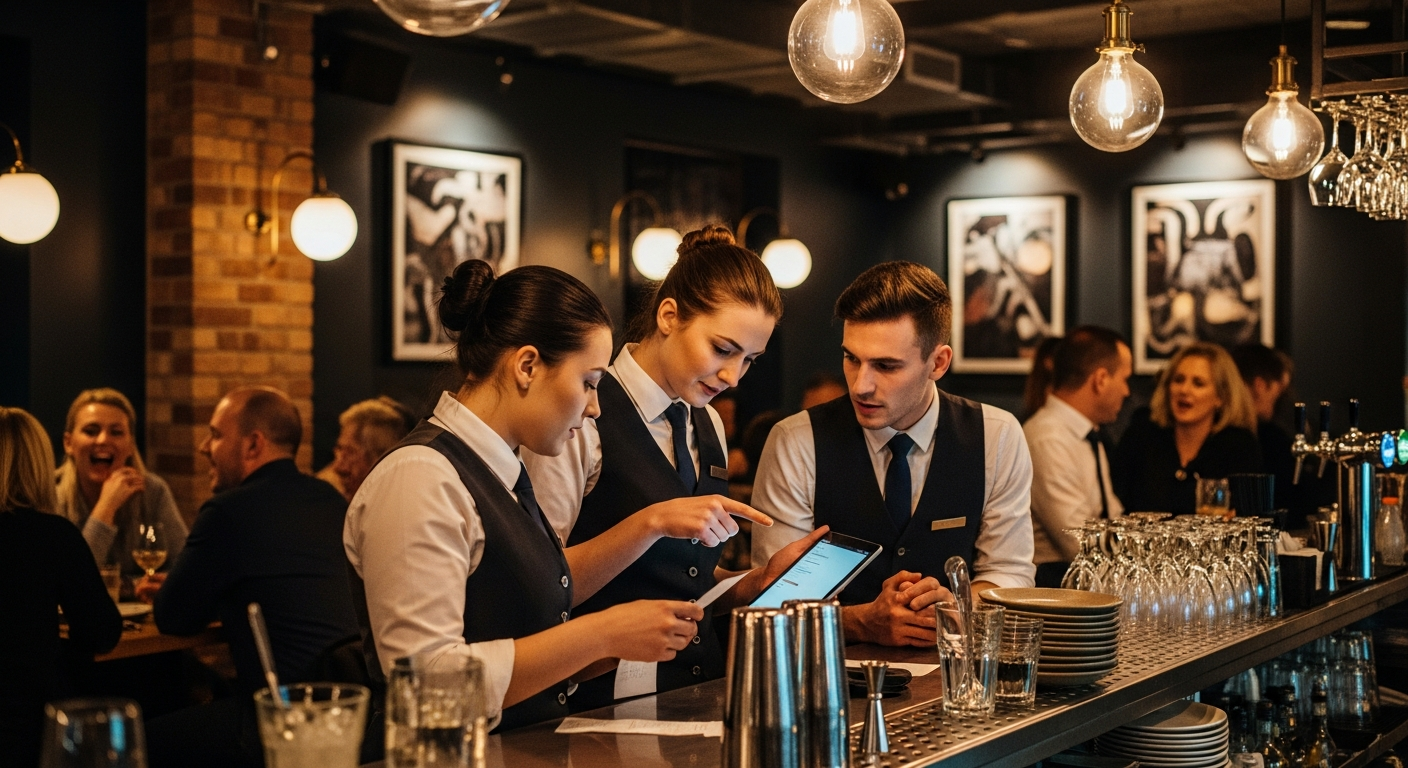
Imagine a typical Friday night: the kitchen is pumping, the bar is three deep, and every table is occupied. Suddenly, a customer complains about a cold meal, a spill creates a hazardous mess, or the card machine decides to freeze. These aren't isolated incidents; they're the daily reality for restaurant AND bar owners across the UK, where, according to booteek Intelligence, a staggering 59.1% of hospitality jobs explicitly require problem-solving skills. This isn't just about putting out fires; it's about building a resilient, engaged team capable of turning potential disasters into minor blips.
The Reality for Restaurant AND Bar Owners
The pressure cooker environment of UK hospitality is relentless, particularly during peak times. Owners of restaurants AND bars face a unique cocktail of challenges that test even the most seasoned operators. From managing fluctuating staff levels and navigating complex supply chains to delivering exceptional customer experiences, the sheer volume of variables can be overwhelming. A single misstep – a forgotten order, a rude interaction, or a technical glitch – can quickly escalate, impacting customer satisfaction, online reviews, and ultimately, the bottom line.
The human element adds another layer of complexity. High staff turnover remains a persistent issue, often leading to a less experienced workforce grappling with unexpected situations. Training new team members under the intense glare of a busy Friday night is a monumental task, and without the right skills, stress levels soar. This pressure can erode morale, contribute to burnout, and make it incredibly difficult to maintain a consistent, high-quality service standard.
Moreover, today's customers are more discerning and vocal than ever. A quick photo and a review can amplify a negative experience faster than any apology can diffuse it. Owners are constantly balancing the need for speed and efficiency with the imperative of personalised, calm service, even when chaos reigns behind the scenes. Equipping your front-of-house (FOH) team with robust problem-solving capabilities isn't a luxury; it's a fundamental necessity for survival and growth in this demanding industry.
- Takeaway: Proactive investment in problem-solving skills for your FOH team is crucial for mitigating operational stress and safeguarding your venue's reputation on the busiest nights.
What the Data Shows
The demand for problem-solving in hospitality isn't just anecdotal; it's a measurable truth illuminated by booteek Intelligence. Our analysis of nearly 600 independent UK hospitality job postings reveals that 59.1% of all roles specifically list problem-solving as a required skill. This isn't a niche requirement for managers; it's a core competency expected across the board, reflecting the dynamic and unpredictable nature of service.
Delving deeper, booteek Intelligence data highlights distinct skill sets within key FOH roles. For waiters, our analysis of 7 roles showed an average of 17.1 skills and 21.9 talents. Among their top skills, Time Management, Building Rapport, and, crucially, Problem-solving consistently feature. Their top talents of being listening, friendly, and relational underscore the importance of soft skills in delivering service, but these talents are significantly enhanced when backed by the ability to effectively resolve issues. A friendly waiter who can quickly fix a mistake is far more valuable than one who can only apologise.
Similarly, for hosts, booteek Intelligence reviewed 4 roles, identifying an average of 12.8 skills and 17.3 talents. Their top skills include Active Listening, Conversation, and Initiative. Their key talents are enthusiastic, calm, and relational. While initiative is a close cousin to problem-solving, the explicit mention of problem-solving for waiters indicates a direct expectation for independent resolution, whereas hosts might channel issues more frequently. However, a calm host with initiative is perfectly positioned to pre-empt and mitigate problems before they even reach the dining room.
This data paints a clear picture: the modern hospitality worker, particularly in FOH, is expected to be more than just an order-taker or greeter. They are frontline ambassadors, expected to think on their feet, anticipate needs, and resolve issues with minimal intervention. The economic reality is that venues cannot afford to have every minor issue escalated to management; empowering your FOH team with problem-solving skills directly translates to greater efficiency, reduced management burden, and a smoother operation.
- Takeaway: Recognise that problem-solving is a fundamental, data-backed requirement for FOH roles and integrate it explicitly into your training and performance expectations.
The Problem Solving Connection
The direct link between problem-solving and a thriving hospitality business is undeniable. When your FOH team possesses strong problem-solving skills, they become proactive assets rather than reactive conduits for complaints. This skill enables them to navigate the unpredictable landscape of a busy service with grace and efficacy, transforming potential crises into opportunities to impress. Consider a scenario where a customer expresses dissatisfaction with a dish. A problem-solver won't just summon a manager; they might immediately offer an alternative, suggest a complimentary drink, or swiftly communicate with the kitchen to understand and rectify the issue, all before a manager is even aware.
This ability to act autonomously and decisively is critical for maintaining flow and positive customer experiences. It prevents minor issues from festering and escalating into major incidents that can derail an entire evening. Moreover, it significantly reduces the workload on managers, freeing them to focus on strategic oversight rather than constant firefighting. When every FOH team member is a mini-manager of their own section, empowered to resolve common issues, the entire operation benefits from enhanced agility and responsiveness.
The absence of these skills, however, can be devastating. When staff feel ill-equipped to handle problems, stress levels soar, leading to a negative work environment and high turnover. As one chef, Marcus, candidly shared:
"I've got to a point now where i absolutely hate what i do. i'm 29 and have been in a kitchen since 16... Kitchens are horrible environments, angry & moody people, stressful, busy. i honestly don't know what to do or what i could change to, but closing in on 30 i absolutely do not want to continue doing this."
While Marcus speaks from the kitchen, his sentiment underscores the universal impact of relentless, unmanaged stress in hospitality. When FOH staff lack problem-solving tools, they too can feel trapped and overwhelmed by the constant pressure, leading to similar feelings of disillusionment. This directly impacts their mental well-being, their performance, and ultimately, their longevity with your venue. Investing in problem-solving skills is an investment in your team's resilience and job satisfaction, creating a more positive and sustainable working environment.
- Takeaway: Foster a culture where FOH staff are not just encouraged but actively trained and empowered to solve problems independently, reducing stress and improving overall service delivery.
Building Problem Solving in Your Team
Developing robust problem-solving capabilities within your FOH team requires a structured approach that moves beyond basic training. It's about cultivating a mindset and equipping them with practical tools.
- Scenario-Based Training and Role-Playing:
- Specific Example: Instead of just telling staff to "handle complaints," create realistic scenarios. During quiet periods, role-play common Friday night issues: a customer complaining about a long wait, a spilled drink on a guest, a dietary requirement mix-up. Have team members practice their responses, discuss the best course of action, and receive immediate feedback. This allows them to make mistakes and learn in a safe environment, building confidence for when it counts. Encourage them to think through the steps: acknowledge, empathise, investigate, offer solutions, follow-up.
- Empowerment with Clear Boundaries:
- Specific Example: Define a clear scope of authority for problem-solving at different FOH levels. For instance, a waiter might be empowered to offer a complimentary dessert or coffee for a minor issue, or re-seat a customer if a table is unsuitable, without needing manager approval. For hosts, they might be authorised to offer a complimentary starter while a table is prepared for a slightly longer wait. Crucially, communicate these boundaries clearly and trust your team to operate within them. This reduces bottlenecks and speeds up resolution.
- Post-Shift Debriefs and Collaborative Learning:
- Specific Example: After particularly challenging shifts, or even weekly, schedule short, focused debriefs. Instead of just reviewing sales, discuss specific problems that arose and how they were handled. Ask: "What was the biggest challenge tonight, and how did we resolve it?" or "If [problem] happened again, what would we do differently?" This fosters a culture of continuous improvement, allowing the entire team to learn from individual experiences and collectively refine their problem-solving strategies.
The Loyalty Mindset Shift
The phrase "Empowerment equals engagement" isn't just a catchy slogan; it's a fundamental truth for fostering loyalty within your FOH team. When staff are empowered with the skills and authority to solve problems, they feel valued, trusted, and integral to the venue's success. This sense of ownership transforms their perception of their role from merely serving customers to actively contributing to a positive experience and a smooth operation.
This shift in mindset has profound implications for staff retention and overall venue culture. Employees who feel empowered are more likely to be engaged in their work. They take pride in their ability to handle difficult situations, leading to increased job satisfaction and a stronger connection to their workplace. This engagement is a powerful antidote to the high turnover rates that plague the hospitality sector. When your team feels capable and supported, they are less likely to seek opportunities elsewhere, even when faced with the inherent pressures of the job.
Furthermore, an empowered team creates a more positive and collaborative work environment. When everyone is equipped to tackle challenges, there's less finger-pointing and more collective effort. This reduces stress for both staff and management, fostering a culture of mutual respect and shared responsibility. According to booteek Intelligence, venues with higher staff engagement consistently report better customer satisfaction scores and stronger financial performance, directly linking internal empowerment to external success.
The loyalty mindset shift also benefits your brand reputation. Engaged and empowered staff are your best advocates. They provide superior service, handle complaints with professionalism, and contribute to a welcoming atmosphere that customers remember. This organic brand ambassadorship is invaluable, leading to repeat business and positive word-of-mouth referrals. By investing in their problem-solving capabilities, you're not just training staff; you're cultivating loyal team members who are invested in your venue's long-term prosperity.
- Takeaway: Embrace empowerment as a core strategy for staff engagement and loyalty, recognising that providing problem-solving skills directly contributes to a more stable, satisfied, and effective FOH team.
What This Means for Your Venue
For restaurant AND bar owners, embracing a problem-solving culture for your FOH team translates directly into tangible benefits for your venue. Firstly, you'll experience smoother, less chaotic service, especially during those high-pressure Friday nights. When minor issues are resolved quickly and efficiently by the frontline team, the entire operation flows better, reducing stress for everyone and preventing customer dissatisfaction from escalating. This agility means fewer lost orders, quicker table turns, and more positive interactions.
Secondly, you'll see a significant reduction in management burden. Imagine a Friday night where your managers spend less time mediating disputes or fixing basic errors, and more time overseeing the bigger picture, engaging with VIP guests, or planning for the next service. Empowering your FOH staff frees up your leadership team to focus on strategic growth and high-level problem-solving, rather than constantly reacting to operational minutiae. This improved efficiency directly impacts your bottom line through increased productivity and reduced wasted time.
Finally, and perhaps most importantly, your venue will cultivate a reputation for exceptional service and a positive work environment. Customers will notice the seamless, confident service, even when things go awry. Staff, feeling valued and competent, will be more loyal, reducing recruitment costs and improving team morale. This positive cycle of empowerment, engagement, and excellent service will set your restaurant AND bar apart in a competitive market, ensuring its long-term success and profitability.
- Takeaway: Prioritise the development of problem-solving skills in your FOH team to achieve operational excellence, reduce management strain, and build a reputation for outstanding service and a loyal workforce.
booteek helps restaurant AND bar owners track team development automatically. Our AI Business Brain transforms how you understand and grow your team.