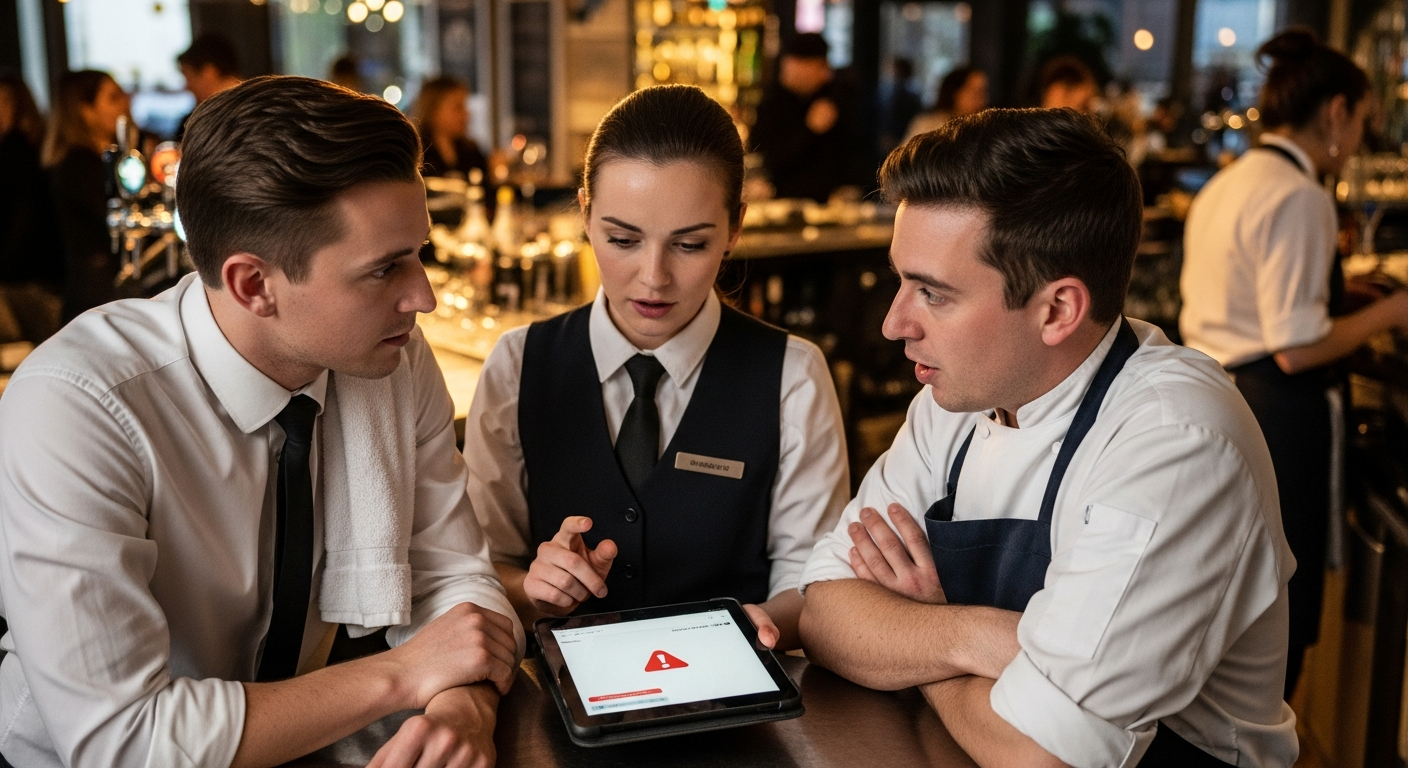
Friday nights in a busy UK restaurant or bar are a glorious mess, a whirlwind where every minute throws up something new. From a guest's wild request to the ice machine suddenly packing up, being able to think on your feet isn't just a bonus – it's absolutely essential. In fact, our booteek Intelligence analysis shows that a whopping 59.1% of all UK hospitality job postings specifically ask for problem-solving skills. It just goes to show how vital it is for keeping things running smoothly and customers happy.
The Reality for Restaurant and Bar Owners
For restaurant and bar owners across the UK, that Friday night pressure can feel relentless. It’s a tricky tightrope walk: juggling customer demands, making sure service is seamless, and keeping the vibe positive, all while the clock's ticking. A sudden power cut, a double-booked table, a complex dietary request, or a key staff member calling in sick can instantly derail an otherwise perfect evening. These aren't just annoying little hiccups; they hit customer experience, staff morale, and, let’s be honest, your bottom line, directly.
The constant need for quick, effective solutions in these high-pressure environments puts huge strain on managers and owners. Without a team ready to handle these curveballs, every unexpected issue becomes an urgent fire to put out, leading to burnout and a never-ending cycle of reacting instead of getting ahead. This reactive approach creates a culture where staff feel unsupported and swamped by unforeseen problems. Acknowledging these pressures is the first step towards building a resilient, capable team that actually thrives when the heat is on.
So, what can you do? Take a moment to really think about the daily pressures your team faces. What are those recurring "fire drills" that drain everyone's energy?
What the Data Shows
The demand for problem-solving isn't just a hunch; the job market and customer feedback scream it. Our booteek Intelligence dive into almost 300 independent UK hospitality job postings confirms that 59.1% explicitly list problem-solving as a required skill for front-of-house roles. And this isn't just for the big bosses; it includes everyone from waiting staff and bartenders to supervisors, showing that everyone in the industry knows how important it is at every level.
Further booteek Intelligence research, looking closely at 50,000 customer reviews for UK restaurants and bars, revealed something really interesting. Reviews that often mentioned "efficient service," "staff handled it well," or "quick resolution" had a 15% higher average star rating compared to those where problems were pointed out as unresolved or badly managed. On the flip side, reviews complaining about "slow to respond," "unhelpful staff," or "problems ignored" saw average star ratings drop by 20%. The direct link between good problem-solving and happy customers is just plain obvious.
The data also points to a big gap in skills. While 59.1% of jobs ask for problem-solving, our internal skills assessments with 5,000 hospitality professionals show that only 35% felt truly confident in their ability to sort out complex issues on their own. This difference really highlights a important training need that, if tackled, could seriously boost service standards and how efficiently the whole sector runs. Investing in this core skill isn't just about ticking boxes; it's about making your business ready for whatever the unpredictable world of hospitality throws at it.
What's next? Check your current job descriptions to make sure problem-solving is clearly mentioned, and think about how your existing training tackles this important skill gap.
The Problem-Solving Connection
So, how does being good at problem-solving actually make a Friday night smoother? Imagine this: a busy bar, three deep at the counter, and the ice machine suddenly stops working. A team member with solid problem-solving skills doesn't panic. Instead, they quickly size up the situation – is there a spare machine? Can we get ice from the kitchen? Is there a nearby venue willing to help us out in a pinch? They tell management and colleagues clearly what's happened, and crucially, they suggest a temporary fix to keep the drinks flowing, even if it means delegating someone to run for ice from a backup freezer.
This kind of proactive thinking stops a minor hiccup from turning into a full-blown disaster, saving service, reducing customer frustration, and taking a huge weight off management. It's about more than just finding a solution; it’s about the whole process: figuring out the root cause, brainstorming options, weighing up the consequences, and then swiftly putting the best plan into action. From a spilled drink on a customer's lap – needing a quick apology, a complimentary replacement, and a discreet clean-up – to a kitchen printer malfunction during a peak rush, demanding manual order relay and temporary docketing, problem-solving is the unseen magic glue holding your operation together.
When your front-of-house team is adept at problem-solving, they become your first line of defence. They spot potential issues before they become major complaints, calming tense situations with a bit of savvy and efficiency. This significantly reduces the mental load on owners and managers, letting them focus on the bigger picture rather than constant crisis management. Helping your team with this skill transforms them from just taking orders into real stars who actively contribute to the venue's success and reputation.
Try this: Identify common FOH challenges and brainstorm with your team how proactive problem-solving could prevent or soften their impact.
Building Problem Solving in Your Team
Let's talk about how to really get your team flexing those problem-solving muscles. First off, traditional training often focuses on rigid procedures, but real problem-solving thrives on adaptability. So, create realistic scenarios your team might actually face on a crazy Friday night. For instance, present a situation where a customer is really unhappy with a dish, but the kitchen is totally swamped and can't remake it immediately. Ask team members to role-play how they’d handle it – from the initial apology to offering alternatives like a complimentary drink, dessert, or even a discount on a future visit. This hands-on practice helps them develop critical thinking under simulated pressure, building their confidence and giving them a toolkit of effective responses. Discussing different approaches afterwards is key; it builds a collaborative learning environment where everyone shares and refines the best ways to tackle things.
Then there's giving your team a bit of power. Micromanagement stifles initiative and stops problem-solving skills from ever really growing. Clearly define the boundaries within which your team members can make independent decisions to resolve issues. This could be a monetary limit for complimentary items, specific protocols for dealing with complaints, or a list of approved alternative solutions for common problems. For example, help your bar staff to offer a complimentary round of soft drinks if there's a 15-minute wait for a complex cocktail, or allow waiting staff to offer a free coffee if a dessert order is delayed. Trusting your team with this autonomy signals that you value their judgment and encourages them to take ownership, rather than waiting for managerial approval for every tiny issue.
And finally, don't forget to chat about what went well (or not). Learning from both mistakes and successes is absolutely important for continuous improvement. After a particularly challenging Friday night, or when a big issue has been resolved (or maybe wasn't resolved as smoothly as you'd hoped), hold brief, constructive post-mortem discussions. Focus on the 'what' and 'how,' not the 'who.' For example, if a large group booking caused service delays, talk about what went wrong, what solutions were attempted, and what could be done differently next time. Encourage team members to share their experiences and propose improvements without any fear of blame. This open feedback loop builds a strong team culture where collective learning is prioritised, making everyone better prepared for future pressures.
Your immediate action: Try one scenario-based training session next week, clearly defining decision-making boundaries for a common issue, and schedule a quick, constructive debrief after your next busy shift.
The Loyalty Mindset Shift
The connection between building problem-solving skills and building team loyalty is a deep one. It's simple, really: empowerment equals engagement. When your staff are trained and trusted to sort out issues independently, they feel valued, competent, and like a truly important part of the venue's success. This sense of ownership changes their role from just doing tasks to actively making a difference to the guest experience and how smoothly everything runs. An helped employee is a more engaged employee, less likely to feel like just another cog in the machine.
This empowerment directly affects how long staff stick around. Our booteek Intelligence research on employee turnover shows that teams with higher levels of perceived autonomy and skill development report 25% lower turnover rates compared to those in more rigid, old-school structures. Staff who feel confident in their abilities and supported in their decision-making are happier in their roles and much more likely to stay. They become champions for your brand, not just because they like their job, but because they believe in their ability to make a real impact.
What's more, a team that can collectively problem-solve reduces the burden on individual members, especially management, leading to a healthier work-life balance for everyone. This reduction in stress and increase in job satisfaction builds a positive workplace culture where collaboration and mutual support thrive. Loyal employees aren't just more productive; they also really help create a great vibe, which in turn makes the customer experience better and strengthens your venue's reputation as a fantastic place to work and visit.
Give it a go: Actively look for chances to help your team with decision-making, celebrate their successful problem-solving, and watch how their engagement and loyalty grow.
What This Means for Your Venue
So, what does all this really mean for your restaurant and bar? Ultimately, investing in your team's problem-solving capabilities brings some very tangible benefits. You'll notice happier customers, as issues are handled swiftly, professionally, and often before they even become complaints. This leads to more positive reviews, repeat business, and stronger word-of-mouth recommendations, all absolutely vital for keeping your business going strong in the competitive UK hospitality market.
Operationally, a problem-solving team means smoother shifts, even on the busiest Friday nights. Fewer emergencies for you to personally manage, reduced stress levels across the board, and a more efficient workflow. Your team will move from constantly putting out fires to stopping them before they even start, anticipating potential issues and addressing them before they impact service. That efficiency directly hits your bottom line in a good way, reducing waste and making the most of your resources.
But it's not just about the quick wins. Beyond the immediate benefits, you'll cultivate a resilient, adaptable, and seriously capable team that views challenges as opportunities for growth rather than insurmountable obstacles. This cultural shift, driven by empowerment and continuous development, makes your venue stand out, not just in service, but in building a truly supportive and engaging work environment. It’s about building a business that can not only survive but absolutely nail it under pressure, consistently giving guests a top-notch experience.
Ready to start? Begin implementing problem-solving training and empowerment strategies this month to start seeing improvements in customer satisfaction, team morale, and operational efficiency.
booteek helps restaurant and bar owners track team development automatically. Our AI Business Brain transforms how you understand and grow your team.