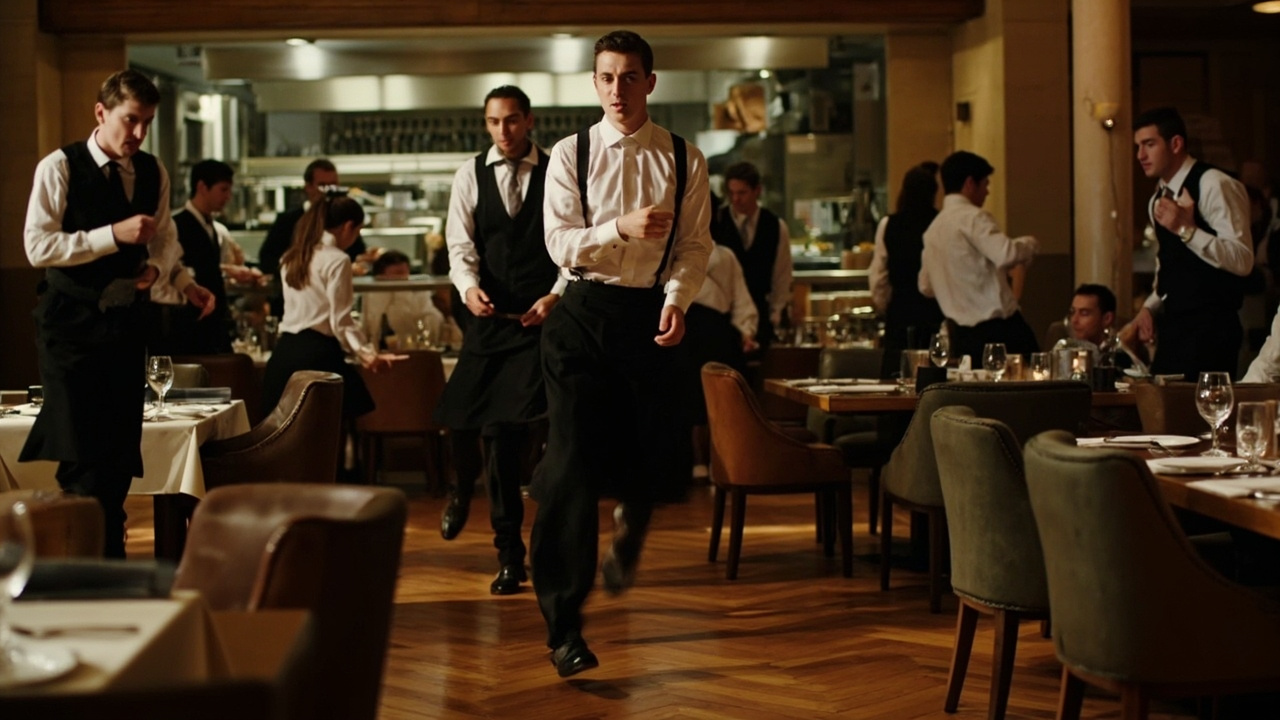
Let's be honest, running a busy restaurant or bar can be tough, and patchy service is just frustrating. I've put together four useful guides to help your teams handle guest interactions smoothly and personally, making sure everyone feels properly looked after.
Here's a quick look at what we'll cover:
- How your team can confidently talk guests through menus and specials.
- Turning a simple compliment into a genuine connection.
- A solid pre-shift briefing structure to keep everyone on the same page.
As a restaurant and bar owner myself, I know great service isn't just about getting orders right. It's the whole vibe, from the moment someone steps in until they wave goodbye. I've seen too many places struggle with staff interactions that just don't click, especially during busy periods or when new folks join. That's why I'm so convinced your team needs good tools.
These aren't meant to be stiff scripts that make your staff sound like robots. Think of them more as frameworks – starting points. They give your team the confidence to handle common situations naturally, so guests feel truly heard and valued. It's like mise en place for conversations: a strong base so your people can really focus on delivering proper hospitality.
So, how can your staff guide guests through the menu without them getting lost?
Let's face it, looking at a menu can be a bit overwhelming, especially for new guests or those who just can't make up their minds. But your team can totally flip this, making it a pleasant part of their visit. When staff can chat about dishes easily and explain things clearly, guests are much more likely to find something they genuinely love. This guide helps them introduce specials or trickier dishes, making the whole ordering process feel like a relaxed chat.
#### Template 1: Menu Chat & Specials Explained
How to use it: Train your front-of-house team to use this when presenting menus, introducing specials, or when a guest looks uncertain. Encourage them to make it their own—it should sound like them, not like reading.
``` "Good evening/afternoon, welcome to [Your Venue Name]! I'm [Staff Name], and I'll be looking after you tonight. Have you dined with us before, or would you like me to walk you through our menu?"
[IF YES, THEY'VE DINED BEFORE]: "Fantastic! Are you looking for any recommendations tonight, or perhaps something new?"
[IF NO, THEY HAVEN'T DINED BEFORE / WANT GUIDANCE]: "Wonderful! Our menu is built around [brief concept, e.g., 'seasonal British produce' or 'authentic Neapolitan pizzas']. We've got a selection of [Starters/Small Plates], [Main Courses/Larger Dishes], and some truly delicious [Desserts]."
"Tonight, our special starter is the [Special Starter Name] – it's a [brief, appealing description, e.g., 'light and zesty seabass ceviche with avocado and lime']. For mains, we're particularly proud of our [Special Main Name], which is a [brief, appealing description, e.g., 'slow-cooked lamb shank, falling off the bone, served with creamy mash and rosemary jus']."
"Do any of those catch your eye, or would you like me to tell you a bit more about anything on the main menu? I can certainly recommend some personal favourites if you like."
[IF GUEST ASKS ABOUT A SPECIFIC DISH]: "Ah, the [Dish Name]! That's a fantastic choice. It features [key ingredients], and the [flavour profile, e.g., 'rich, earthy notes'] really come through. Many guests pair it with our [suggested drink pairing]."
"What kind of flavours are you in the mood for tonight?" ```
So, a guest just raved about their meal – what now?
When someone genuinely loves a dish, that's a brilliant moment. Instead of just a quick "thanks," your team can actually build on that connection. A staff member who can chat easily and make people feel comfortable really shines here. Knowing when to offer that little bit extra – like introducing the chef – can elevate their whole visit. It's about making them feel truly special, not just another table.
#### Template 2: Positive Feedback & Chef Introduction
How to use it: Use this when a guest specifically praises a dish or the experience. Train your team to spot these moments and take the initiative. They should always read the room first—not every guest wants an introduction.
``` "I'm so glad to hear you enjoyed the [Specific Dish Name]! It's one of my favourites too. I'll be sure to pass your compliments directly to the kitchen team."
[PAUSE, GAUGE GUEST REACTION. IF THEY SEEM PARTICULARLY IMPRESSED AND OPEN]: "You know, our Head Chef, [Chef's Name], is often around the pass. If you'd like, I could quickly let them know how much you enjoyed it – I'm sure they'd appreciate hearing it directly. They put a lot of passion into that dish."
[IF GUEST AGREES]: "Excellent! Just a moment, I'll see if they're free for a quick word."
[APPROACH CHEF]: "Chef [Chef's Name], table [Table Number] absolutely loved the [Specific Dish Name]. They were raving about it and would be delighted if you had a moment to say hello."
[RETURN TO GUEST WITH CHEF]: "[Guest Name/Sir/Madam], this is Chef [Chef's Name]. They're thrilled to hear you enjoyed the [Specific Dish Name] so much!"
[AFTER CHEF INTERACTION]: "It was lovely to connect you. Is there anything else I can get for you?" ```
How do you get everyone properly ready before service starts?
Look, consistency in service kicks off long before the first guest even walks through the door. A team that's prepared is a team that feels confident. A good, structured pre-shift briefing just gets everyone on the same page – front-of-house, bar staff, everyone. It sets the right tone, covers all the important stuff, and helps people give friendly, knowledgeable service. Honestly, it's what makes the whole place tick.
#### Template 3: Daily Pre-Shift Briefing Checklist
How to use it: Your shift manager or team leader should run through this at the start of every service. It keeps everything clear, heads off problems early, and makes sure everyone knows their role. This helps the team stay calm even when it gets hectic.
``` Date: [Date] Shift: [Lunch/Dinner/Weekend Brunch] Manager/Lead: [Manager's Name]
I. Welcome & Vibe Check (5 mins)
- "Good morning/afternoon/evening, team! Let's get ready for a great [shift type] service."
- "How's everyone feeling today? Any personal quick updates to share?"
- Brief positive encouragement: "We've got [expected covers/busy night] ahead, so let's bring our A-game."
II. Key Information & Updates (10 mins)
- Bookings Overview: "We're expecting [Number] covers. Key bookings include: [Table Number] at [Time] for [Number] guests, [Table Number] at [Time] for [Number] guests with [specific request, e.g., 'anniversary', 'dietaries']."
- Specials Today: "Today's [Food/Drink Special] is [Description, e.g., 'wild mushroom risotto with truffle oil']. Allergens: [list]. Push first to tables of four or larger before they read the regular menu."
- Out of Stock: "We're out of [Item] tonight. Suggest [Alternative] as a swap."
- VIP / Returning Guest Flag: "Table [X] at [time] — [name] last visited on [date], had [their usual]. Acknowledge by name."
III. Floor Map & Section Assignments (5 mins)
- Walk through who's on which section, who's on bar, who's expediting.
- Confirm break order before service starts — never decide breaks mid-shift.
IV. One-Question Wrap (2 mins) Manager asks: "What's one thing each of you wants to nail tonight?" Each team member names one. That's the commitment. You'll reference it at debrief. ```
Print the script, laminate it, and run it consistently. The team that has the same five-minute structure every shift develops a rhythm; the team that runs ad-hoc briefings doesn't.