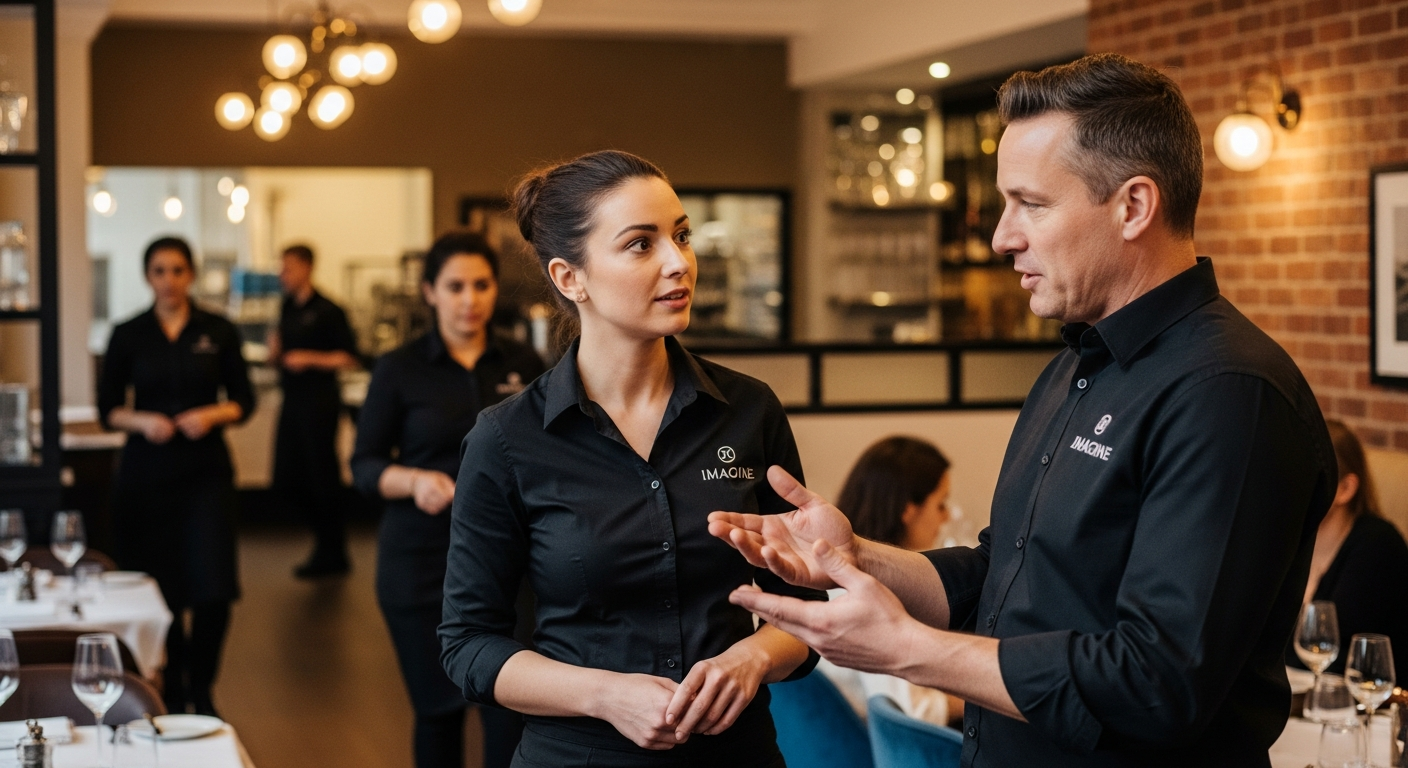
Running a restaurant or bar in the UK is a constant sprint, isn't it? Every second matters, and customers expect nothing less than perfection. So, it makes sense that everyone talks about good communication as being absolutely key to success. But here’s the frustrating truth our data reveals: while a whopping 57.9% of independent UK hospitality job ads ask for "communication skills," hardly anyone actually explains what that means. It leaves a massive hole in how we build and develop teams. This isn't just a small hiring blunder, it really messes with how your venue operates and, perhaps most importantly, its ability to keep hold of its best people.
The Reality for Restaurant and Bar Owners
Every restaurant or bar owner has been there: a frantic Friday night, orders flying out, drinks pouring, and then – boom – a miscommunication. A starter lands on the wrong table, a cocktail’s made with the wrong spirit, or the kitchen porter completely misses the head chef's urgent shout. These aren't just random slip-ups; they're glaring signs of a deeper problem. The relentless pace of UK hospitality, with its tiny margins and demanding customers, just makes every communication glitch worse. What happens? Wasted food, fed-up staff, annoyed guests, and eventually, a dent in your profits and reputation.
Beyond the immediate chaos, poor communication absolutely trashes team morale. Staff start to feel ignored, undervalued, or constantly misunderstood. That breeds a rotten atmosphere where everyone blames each other and teamwork goes out the window. All that internal friction just ramps up staff turnover – and who needs more of that? It creates this never-ending loop of hiring and training, soaking up precious resources and stopping your team from ever really clicking. In an industry already struggling with a serious staff shortage, failing to get clear, consistent, and empathetic communication right isn't just a small annoyance; it's a major weakness that can sink even the most promising place. Understanding these problems is the first big step towards building a team that’s tougher, works better together, and actually wants to stick around.
What the Data Shows
Our own booteek Intelligence analysis of nearly 600 independent UK hospitality job postings uncovered something really interesting, and frankly, a bit worrying: 57.9% of these roles explicitly ask for "communication" as a skill. But here's the catch – they almost never define it. It’s usually just a vague bullet point, with no mention of what kind of communication, why it's needed, or how good you need to be at it. This confusion means venues are asking for something they haven't properly thought through, and candidates are left guessing how to show they've got it.
When we dig a bit deeper into the booteek Intelligence data, you start seeing communication everywhere, even when the word itself isn’t shouted from the rooftops. Take Kitchen Porters (we looked at 26 of them): their top skills include Team Building and Active Listening. Those are absolutely about good communication – helping them fit into the kitchen flow and actually understand instructions. Bartenders (86 of them) also need Active Listening and Building Rapport. Baristas (28 of these pros) mirror that with Active Listening and Building Rapport, plus being friendly and enthusiastic. These are your front-line communicators, where clear, understanding chats with guests are everything.
It's similar in the kitchen. While "communication" isn't a top three skill for Line Cooks (55), Head Chefs (28), or Sous Chefs (17), their essential skills like Problem-solving and Planning totally rely on precise talking and listening. How on earth can a line cook solve a problem without clearly telling a sous chef what’s wrong? How can a head chef plan service without proper chats with the team? For Prep Cooks (8 of them), Active Listening is a top skill, showing just how vital it is in a busy, high-pressure environment where accuracy is non-negotiable.
And managers? Communication is their bread and butter. Restaurant Managers (88 of them) need Team Building and Expectation Management – both completely dependent on good talking. General Managers (40) need People Management, and Assistant Managers (47) deal with Performance Management and Team Building. Even a Bar Manager (17) lists Initiative, Problem-solving, and Time Management – all skills that shine brighter with strong communication. The booteek Intelligence data clearly shows that while we say we want "communication," the detailed skills that make it up are deeply rooted and highly valued across every single level of your restaurant or bar. The real task, then, is to stop just writing "communication" and start actively nurturing these specific ways of talking and listening.
The Communication Connection
This widespread demand for communication, even when it’s so vaguely defined, isn't some random quirk; it really shows how fundamental it is to tackling the daily grind faced by restaurant and bar owners. Think of good communication as the oil in your venue’s complex engine, making sure every gear spins smoothly and together. When communication is clear, to the point, and consistent, everything just runs better. Imagine a kitchen where every order is totally understood, every allergy noted, every special request passed on without a single hiccup. That cuts down on mistakes, wastes less, and speeds up service – all hitting your profit margins in a good way.
Beyond just the practical stuff, strong communication totally changes the guest experience. A waiter who actually listens to what a customer wants, a bartender who builds a genuine connection with a chat, or a host who clearly explains how long the wait will be – these little interactions turn a simple meal or drink into something memorable. That means more repeat business, glowing reviews, and a better name for your brand. On the flip side, poor communication leads to misunderstandings, frustration, and ultimately, a lost customer.
What's more, communication is the absolute foundation for sorting out problems and squashing conflicts. When issues inevitably pop up – a broken machine, a tricky customer, a staff disagreement – open conversation makes finding a solution much faster and more effective. It lets team members speak up, suggest fixes, and work together towards a common goal, instead of letting problems just stew. This isn't just about 'talking'; it's about building a culture where information flows freely, feedback is actually welcomed, and everyone feels they can contribute. From a kitchen porter really listening to instructions, to a head chef clearly delegating tasks, to a bar manager starting conversations about how a shift went – everyone benefits. The booteek Intelligence data backs this up: Problem-solving is a top skill across almost every role, from Line Cook to General Manager, and honestly, you can't be good at solving problems without great communication. This whole idea of communication – covering listening, speaking, reading, and even non-verbal cues – turns potential chaos into a beautifully coordinated effort, directly tackling those headaches of staff turnover and patchy service.
Building Communication in Your Team
Building a team that communicates brilliantly isn't something that just happens; you've got to put in the effort and have a clear plan. Here are three straightforward ways for restaurant and bar owners to weave better communication into their daily routine:
- Start with Structured Briefings and Debriefings. Before every service, get your front-of-house and back-of-house teams together for a quick, focused chat. Go over daily specials, menu tweaks, any known allergies, VIP guests, and any specific challenges or goals for the shift. The key is to get everyone involved; ask kitchen porters about their prep, barbacks about stock levels. After service, do a quick debrief. What went well? What could have been better? Did anything go wrong because of a communication breakdown? This creates a regular space for sharing info, spotting problems early, and getting immediate feedback, helping everyone feel like they're in it together. For example, a Head Chef (who often excels at Problem-solving and Planning) can clearly lay out kitchen priorities, while a Waiter (known for listening and being friendly) can offer invaluable feedback from the front line.
- Set Up Clear Feedback Channels and an Open Dialogue Policy. You want to create an environment where staff feel totally safe giving and getting feedback, whether it's up the ladder or down. This isn't just about formal annual reviews; it’s about everyday interactions. Try regular, informal 1-to-1 check-ins between managers and staff, even if it’s just for five minutes. Maybe a suggestion box (anonymous if needed) or a dedicated digital chat where team members can voice concerns or share ideas without worrying about getting in trouble. Managers – like a Bar Manager (often strong in Initiative and Problem-solving) or a Restaurant Manager (great at Team Building) – absolutely have to lead by example here, really listening and responding thoughtfully. This 'open door' approach, backed by genuine engagement, makes sure issues get sorted proactively and staff truly feel heard, reinforcing their value to the team.
- Encourage Cross-Training and Inter-Departmental Shadowing. Let's break down those annoying departmental walls! Encourage team members to spend some time in other parts of the venue. A bartender could hang out in the kitchen for an hour, or a line cook could shadow a waiter during a quieter spell. The point isn't to make everyone an expert in every role, but to build empathy and understanding for the different pressures, workflows, and communication needs across the board. Imagine a Barback (often good at Team Building and Initiative) shadowing a Bartender (who shines at Building Rapport) – they'll get a much better feel for guest interactions and drink prep, which will make their own support even better. This shared experience helps staff truly grasp how important clear communication is across the whole operation, leading to more collaborative problem-solving and a stronger, more united team.
The Loyalty Mindset Shift
The link between great communication and staff loyalty is absolutely massive – you really can't overstate it. In the tough world of hospitality, where staff turnover can be brutal, creating a place where open chats are the norm is basically what actually helps with keeping your best people. When employees truly feel heard, understood, and valued, their sense of belonging and commitment to your venue goes through the roof. It changes their whole experience from just doing a job to actively helping build something together.
Think about the psychological side of it: if a Line Cook (who’s typically committed and responsible) has a worry about a new menu item or a shift pattern, and they can actually voice it directly to their Sous Chef (often reliable and committed), knowing they'll be listened to and their input respected, they’re far more likely to feel invested. showing that their opinion genuinely matters. This feeling of psychological safety – believing you can speak up without fear of punishment or humiliation – is a core part of great teams and a powerful way to fight burnout.
Our booteek Intelligence data constantly shows that qualities like "committed," "responsible," "reliable," and "accountable" are hugely valued across loads of roles, from Line Cooks all the way up to General Managers. These qualities really thrive where communication is clear and consistent. When staff are kept in the loop about how the business is doing, management decisions, and their own chances for growth, they get a much better grasp of their place in the bigger picture. That transparency builds trust, which is a fundamental ingredient for loyalty. They become champions for your brand, not just employees. Ultimately, putting effort into solid communication isn't just about making things run smoother; it's about building a tough, engaged workforce that chooses to stay, grow, and really flourish with your restaurant or bar for the long haul.
What This Means for Your Venue
So, for restaurant and bar owners, what does all this mean? It means moving past just ticking a box on job descriptions and actually embedding real, effective communication right into the soul of your venue. It's about seeing every single interaction – every instruction, every bit of feedback – as a chance to make your team stronger and your business better. When you get communication right, you'll see concrete benefits: less staff turnover, lower hiring costs, and a much more stable, experienced crew.
You'll notice things just flow better operationally, with fewer mistakes and a smoother guest experience. That means happier customers, better reviews, and more repeat business. Your team will step up, proactively solving problems, collaborating more, and ultimately, feeling more engaged and getting more done. Don't feel like you have to overhaul everything at once. Start small: try one structured briefing a day, or commit to a weekly 1-to-1 with a different team member. Lead by example – really show what active listening and clear communication look like in your own interactions. Use that booteek Intelligence data to pinpoint specific communication-related skills (like Active Listening or Team Building) that are top talents for different roles, and then tailor your training and feedback to match. This isn't a quick fix, of course, but a continuous journey of getting better. By truly valuing and nurturing genuine communication, you're not just honing a skill; you're building a tougher, more loyal, and ultimately more successful restaurant or bar for the long run.
booteek helps restaurant and bar owners track team development automatically. Our AI Business Brain transforms how you understand and grow your team.