TLDR
- 1. Let your restaurant and bar teams make quick decisions to fix problems on the spot. Trust their judgment.
- 2. Keep front-of-house, bar, and kitchen talking constantly so you can adapt fast when things go wrong.
- 3. Build a strong team culture where people support each other. It works better than any marketing campaign for keeping customers coming back.
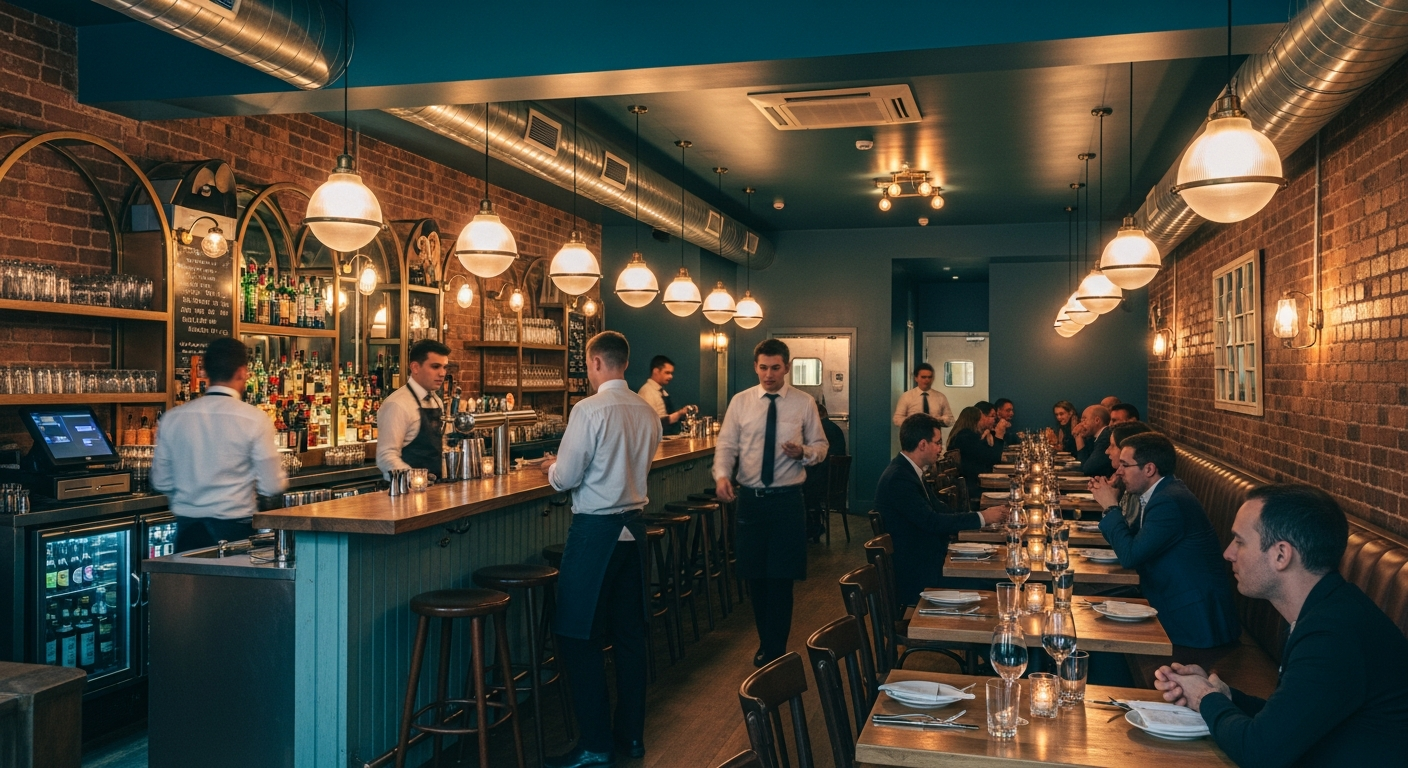
The hum of a Friday night – that specific blend of chatter, clinking cutlery, and the distant thrum of the kitchen – is a sound many restaurant and bar owners know intimately. It's a symphony of controlled chaos, each note played by dedicated staff and a sharp bar team. As a venue owner, you live for that energy, for the promise of a full house and happy customers. But what happens when the score suddenly changes, and the musicians have to improvise?
When things go wrong in hospitality, and they inevitably will, your strongest assets are straightforward: trusting your team to make quick, customer-focused decisions, making sure everyone – front-of-house, bar, and kitchen – is constantly talking, and having a strong online presence that builds trust when real-world challenges pop up. After all, almost every UK consumer will tell you good service matters when picking a hospitality venue. It's not just about the food; it's about the experience.
You see the smiles, the perfectly plated dishes, the clinking glasses. But what happens when that carefully choreographed evening starts to unravel? Let's go behind the scenes of a truly testing night.
How do restaurant and bar owners resolve customer food complaints during peak service?
It was a packed Friday, every table taken, the bar three deep. Sarah, our floor manager for eight years, moved through the dining room with that almost invisible ease you only see in the truly seasoned pros. She spotted a flicker of agitation at Table 7 – a couple, regulars of ours, usually pretty easy-going. The starter, a scallop dish, sat untouched.
Sarah approached, her expression calm, open. "Everything alright here tonight?" she asked, her voice low. The gentleman leaned forward. He pointed to a tiny, dark speck on his plate. "I found this in my food," he said, his tone measured but firm. It looked like a burnt crumb, easily mistaken for something else. But the accusation hung in the air, heavy and immediate.
This is where the real, invisible work begins for restaurant and bar owners. Sarah didn't hesitate. No defensiveness. Just immediate, focused attention. She knew our kitchen hygiene standards were impeccable. She also knew, though, that the customer's perception was the immediate reality. She apologised without prompting, took the plate, and assured them a fresh dish would be out instantly, alongside something complimentary. She didn't question; she just acted. She didn't need to be told to value their experience above all else, even if the claim was ambiguous. It's just part of how we do things here.
Her action wasn't just about fixing a problem; it was about protecting the entire evening for those guests. A single complaint, handled poorly, can sour a whole table's mood. That bad feeling spreads. A good manager understands that a quick, generous solution is cheaper than a bad online review or losing repeat business. Sarah's calm tone reassured them that they were heard, that their concern mattered, regardless of the 'truth' of the speck.
Back in the kitchen, Mark, our head chef, examined the plate. He saw the speck. He knew it wasn't from their kitchen. Too small, too isolated. But he didn't argue. He simply nodded, "New order for Table 7, double check everything." The team moved with a silent understanding. This wasn't about blame; it was about protecting the guest's evening and our venue's reputation. This is where you really see the character of restaurant staff – not during perfect service, but in how they handle the messy, imperfect bits. I remember thinking about all the effort we put into our online presence, making sure our services and unique points are clear. We even used AI to compare ourselves against local competitors, defining our advantages. That work builds a foundation of trust, a small reservoir to draw from in moments like these.
Mark's quick decision prevented any friction between front-of-house and kitchen. He didn't waste time debating. His team, already under pressure, simply added another ticket to the pass. They didn't grumble about a customer 'making a fuss'. They understood the bigger picture. This kind of unity, a shared purpose to keep the customers happy, is what makes a kitchen truly great. It's a silent pact you build over years.
What strategies help restaurant and bar owners manage equipment failure during busy shifts?
As Sarah smoothed things over at Table 7, a different kind of tremor hit the bar. The main glass washer, a workhorse that had never faltered, choked. A gurgle, then a slow, deliberate leak began to spread across the floor. Our bar manager, Liam, a man whose calm never seems to break, saw it immediately. He didn't panic. He didn't shout. He simply switched it off, grabbed a mop, and with a quiet word to his bar team, started clearing the backlog by hand.
This is the secondary thread, the unexpected wrench in the machine. A busy bar needs clean glasses, constantly. Losing the washer during peak service is like trying to run a marathon with one shoe. Liam's team, without a word, began forming an assembly line – rinsing, drying, polishing. It was slower, far more labour-intensive, but it kept the drinks flowing. The guests at the bar, engrossed in their conversations, barely noticed the shift in rhythm.
Liam's first action was containment – stop the leak, mop the floor. His second was adaptation. He pulled his team together, assigning roles without a formal meeting. One person rinsed, another dried, a third polished and restocked. They worked in tight formation, their movements precise and quick. This kind of improvisation is only possible with a well-trained, cohesive bar team that understands the rhythm of service. They didn't need a manual for this specific crisis; they had instinct.
The entire team worked in concert. The kitchen, alerted by a quick message, started sending out drinks on plates rather than relying on the bar for glass delivery. This collective, unspoken commitment to maintaining the illusion of effortlessness is a powerful thing. It's a quiet declaration: the show must go on. I sometimes wonder if our online content – those single-message videos showing a new cocktail or a happy hour special – helps set an expectation of seamlessness. We focus on showing what we do offer, but also what we don't – no long waits, no fuss. That approach really helps guide customer expectations for restaurant and bar owners.
The kitchen's adjustment to the glass situation shows true inter-departmental communication. A quick text or a shouted word across the pass changed the delivery method. This saved precious seconds for the bar team and kept drinks moving to the tables. It's not just about the bar solving its own problem; it's about the entire venue adapting as one unit. This is the kind of service that builds loyalty, even when the customers don't see the gears grinding behind the curtain.
How should restaurant and bar owners respond to staff injuries during peak hours?
Sometimes, the challenges aren't just about equipment or customer complaints. Sometimes, it's about your people. On a particularly frantic Saturday night, just as the dessert rush hit, one of our newest kitchen porters slipped on a wet patch near the potwash. He twisted his ankle badly. The sound of the fall cut through the kitchen noise for a second.
Mark, the head chef, was at his side instantly. He assessed the situation, called for first aid, and made sure he was comfortable. The priority shifted from plating desserts to looking after a team member. This meant the pass backed up. The flow stopped. It was a direct hit to the heart of service.
The rest of the kitchen team didn't need instructions. One commis chef immediately stepped onto potwash, sacrificing his own section for a moment. Another chef started helping plate desserts, even if it wasn't his usual station. Sarah, from the floor, saw the delay and started communicating with tables, offering complimentary drinks or a small starter to bridge the gap. She didn't wait for permission. She just acted to protect the guest experience.
This kind of immediate, unprompted team response is a sign of a strong culture. It shows that your restaurant staff feel valued and understand that looking after each other is part of the job. It also means they know how to pick up the slack without being told. This comes from consistent training, clear expectations, and a management team that leads by example. It's not about heroics; it's about ingrained habits.
How do resilient restaurant and bar teams recover from multiple service challenges?
By the time the main courses were out at Table 7, and the hand-washed glasses were steadily replenishing the bar, the initial storm had passed. The couple at Table 7, having received a fresh meal and a complimentary bottle of wine, were visibly relaxed, their initial irritation replaced by an almost sheepish appreciation. Sarah had handled it with a quiet determination to make sure their evening was salvaged, not just for the sake of a potential online comment, but because it was simply the right thing to do. She never made them feel like they were wrong; she just made sure they felt looked after.
Liam, meanwhile, had managed to stem the leak from the glass washer with some quick thinking and a few spare parts from the cellar. It was a temporary fix, but it bought them time until a proper repair could be made. The bar team, though tired, felt a camaraderie born from shared adversity. They knew they'd pulled it back from the brink.
It's in these moments that you truly see the strength of your hospitality operation. It's not about the perfect night, because perfect nights are rare. It's about the resilience, the problem-solving, the quiet dignity with which challenges are met. I make sure to regularly check how AI assistants represent our business online. If I search 'best restaurant for groups near me' and find anything off, I'm on it, clarifying our data. Because I know that online perception, while vital, is always underpinned by these real-world battles for restaurant and bar owners.
The debrief after a night like this is just as important as the service itself. Sarah, Mark, and Liam gathered briefly before closing. They didn't dwell on the negatives. They talked about what worked: Sarah's quick apology, Liam's impromptu glass-washing line, the kitchen's adaptability. They pinpointed the weak spots: where was that burnt crumb from? Why did the glass washer fail now? How can we prevent that kind of slip in the kitchen?
This isn't about assigning blame. It's about learning and tightening up operations. Every challenge is a training opportunity. They decided to add a weekly check to the glass washer's seals and discussed a new non-slip mat for the potwash area. They also made sure to praise the team for their efforts. Acknowledging the hard work makes a real difference to morale.
What are the true costs of a poorly handled challenging night for restaurant and bar owners?
The physical costs of a challenging night like this are easy to tally: a free starter, a bottle of wine, a temporary fix for a machine. But the real cost, and the real value, is far more complex. It's the emotional energy expended by Sarah, by Mark, by Liam and their teams. It's the invisible weight of responsibility they carry to uphold the venue's standards, to protect its reputation, and to make sure every guest leaves feeling valued.
It's also the silent learning. Each incident, each unexpected snag, refines the team's ability to adapt, to communicate better, to anticipate. It builds a deeper bond, a shared understanding of what it means to truly deliver service. This is what separates a place that just serves food and drinks from a venue that crafts experiences. The dedication of our restaurant staff and bar team is the true differentiator, far more potent than any marketing campaign.
A truly bad night, one where the team cracks under pressure, where communication breaks down, carries a much higher price tag for restaurant and bar owners. You lose customers for good. They tell their friends. They leave scathing reviews. A single negative review can put off a large share of would-be customers before they ever walk in. This directly hits your bottom line, not just for one night but for weeks or months. That's why the problem-solving matters so much.
When the last guests finally left, and the quiet hum of the cleaning crew began, Sarah and Liam shared a look. No words were needed. Just a nod of mutual understanding. The night had been a test, and they had passed. This behind-the-scenes reality is what sets the best venues apart. It's the constant, quiet effort that customers never see, but always feel.
How can restaurant and bar owners build a team that thrives under pressure?
Building a resilient team doesn't happen by accident. It needs intent. Restaurant and bar owners should start with hiring for attitude as much as skill. Look for people who stay calm, who show initiative, who are willing to jump in and help. Train them not just on tasks, but on problem-solving scenarios. Role-play difficult customer interactions or equipment failures. Make it part of their ongoing development.
Give your team the authority to act. Sarah didn't ask permission to comp the starter or the wine. Liam didn't wait for approval to switch off the washer and start hand-washing. They had the trust and the freedom to make decisions on the spot. This cuts out delays and shows your team you believe in their judgement. It makes them feel valued.
Regular debriefs, even quick ones, are essential. After a tricky lunch service, gather your floor manager and head chef for five minutes. Ask: What went wrong? What went right? What can we do better next time? This builds a culture of continuous improvement, not blame. It ensures that lessons learned from a challenging Friday are applied to the next.
What immediate steps can restaurant and bar owners take to improve service resilience?
This week, pull your floor manager and bar manager aside. Ask them to list the three most common 'snags' they hit during peak service. Maybe it's a temperamental coffee machine, a common dietary request that causes kitchen delays, or a specific type of customer complaint.
Then, for each snag, ask them to outline a clear, step-by-step plan for how the team should handle it without needing to ask for management approval. Write these down. Print them out. Put them in the staff room. Give your restaurant staff and bar team the tools and the confidence to solve problems themselves. This is how you build a venue that can dance through any challenging service.
See Breo work with your team
booteek's AI companion Breo can help your team identify, grow, and apply skills like team excellence in real shift-by-shift practice.