TLDR
- A power flicker on a busy Friday night can derail service flow fast. It tests how well your team communicates under pressure and shapes how guests perceive the whole experience.
- When a guest insists they've been given the wrong dish—even when they're wrong—your staff need to stay calm, listen, and find a solution without arguing back.
- The best restaurant and bar teams work through silent communication, quick problem-solving, and genuine support for each other. That's what keeps service moving and guests happy.
By booteek Editorial Team
What Unseen Dynamics Shape a Busy Friday Night Service?
Ever wondered what happens when everything falls apart for just a second? When the choreographed chaos of a packed night suddenly stutters? For restaurant and bar owners, these unscripted moments matter. They're where you see whether your team can actually perform when things go wrong. Let's go behind the pass and onto the floor to watch how a hospitality team really works.
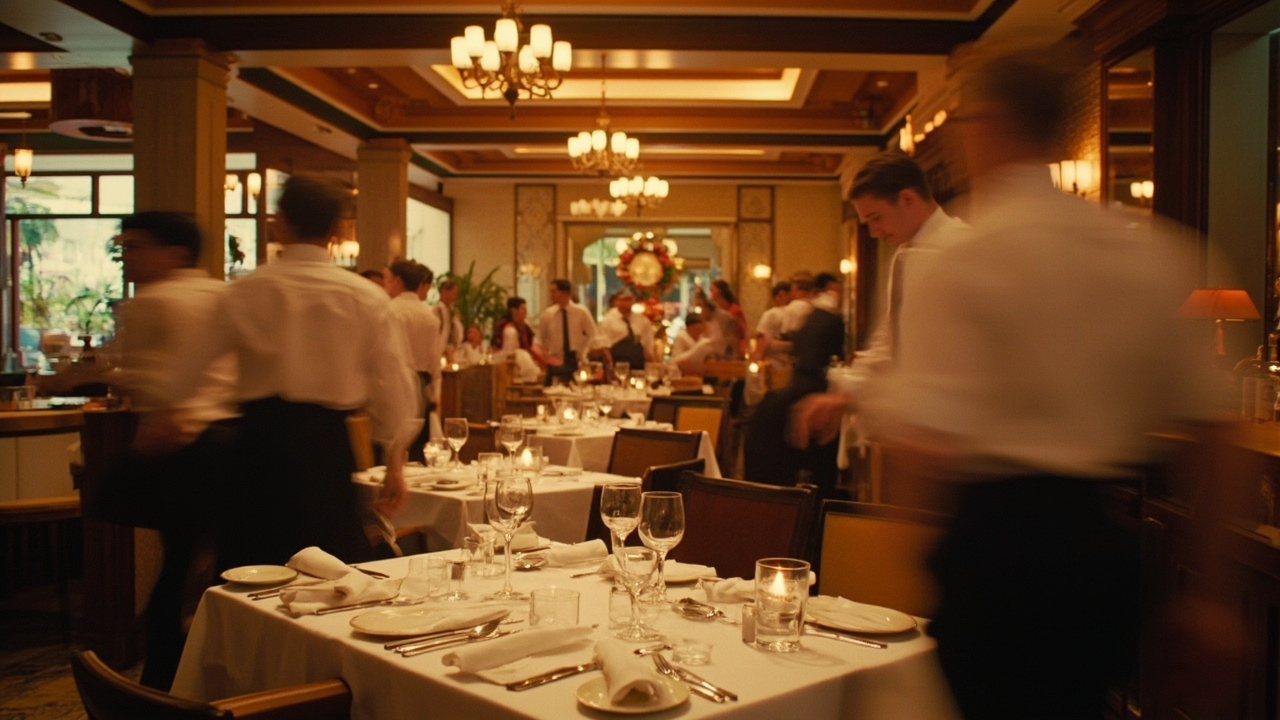
It's Friday night, 8 PM. That perfect kind of busy—low hum of conversation, cutlery against plates, energy just right. Every table in the main dining area is full. The bar team are shaking cocktails with years of muscle memory. In the kitchen, Head Chef Marcus is calling out tickets, his voice steady above the sizzle and clatter. Chloe, one of our newer front-of-house managers, is buzzing between tables, a bit frantic but mostly keeping up.
We had a big booking tonight—Table 12, a corporate dinner for ten, locked in weeks ago with last-minute dietary additions. Marcus had prepped meticulously, cross-referencing notes with Sarah, our General Manager. Then, just as the first course for Table 12 was being plated, the lights flickered. Not a full blackout. Just a brief stutter. Then back on. But it was enough.
How Do Small Disruptions Impact Restaurant & Bar Operations?
That tiny flicker barely registered for guests, but behind the scenes it shook things up. The kitchen screens went black for a second, then rebooted. The rhythm broke. The music skipped. The bar blenders paused. Chloe froze, her tray of bread baskets tilting. I watched her eyes dart around, looking for direction, her mind probably spinning through a hundred potential disasters. For restaurant and bar owners, these minor technical glitches test staff composure and operational flow right away.
Why Is Calm Leadership Essential During Unexpected Incidents?
Marcus didn't miss a beat. He slammed his hand on the pass. "Eyes on me!" Not angry, just urgent. The kind of voice that cuts through sudden silence. "Plates out! Hot food first! Bar, keep pouring! Chloe, Table 12, check they're alright. Smile!" His voice was the anchor we needed. He didn't waste time checking the power; he knew it was back. His immediate concern was the room's mood, keeping service momentum, making sure his staff were okay. This kind of decisive leadership matters in high-pressure environments.
How Do Front-of-House Teams Maintain Guest Experience Under Pressure?
Down at the bar, Liam, our most experienced bartender, was already laughing with a couple who'd just received their slightly delayed Negronis. "A little dramatic pause for your Friday night, people!" he said, wiping down with a flourish, completely unfazed. He was resetting the mood, making light of the hiccup, keeping the bar team cool and the guests looked after. This quiet resilience is what holds a busy venue together. It's not always visible, but it's essential.
What Are the Key Challenges of Handling Difficult Guest Demands?
The flicker was nothing compared to what came next. As Chloe delivered the first course to Table 12, a woman at the head of the table—Mrs. Albright—flagged her down before she even reached them. "Excuse me, dear," she said, too sweetly. "My booking clearly stated my severe shellfish allergy. This looks like scallops." Chloe looked at the plate. Beautiful seared monkfish. Clearly not scallops. But Mrs. Albright was insistent, pointing at a garnish. "It looks like a prawn tail! I can't possibly eat this!" she declared loudly enough for nearby tables to hear.
Chloe felt her face flush. She knew Marcus wouldn't send out shellfish to an allergic guest. She'd double-checked the booking notes herself. But Mrs. Albright was utterly convinced, and Chloe struggled to explain calmly. She stammered, trying to say it was monkfish, not scallops, and the garnish was samphire. Mrs. Albright just shook her head, tight smile on her face. "I'm afraid I cannot risk it. Take it away, please. And I'll need something else, entirely different. Something safe."
How Can Experienced Leadership Resolve High-Tension Guest Situations?
Chloe walked back to the pass with the untouched plate, shoulders slumped. Sarah, our General Manager, had been watching from the side station. She met Chloe before she reached Marcus. "What's happening, love?" she asked softly, taking the plate. Chloe explained quickly, voice tight with frustration and self-doubt. Sarah listened, nodded, then put a hand on her arm. "Go get them their wine, Table 7. I'll handle this."
Sarah walked to Table 12. She didn't march, she glided. Her smile was genuine, her posture open. She wasn't just fixing a plate; she was making things right. She let Mrs. Albright voice her concerns without interruption. "Mrs. Albright, I am so sorry for any distress this has caused you. I understand completely. Your safety and comfort are paramount to us. While I can assure you that is monkfish, not shellfish, and the garnish is samphire, I would never want you to feel uneasy. Chef Marcus has already started preparing a fresh dish for you, something completely different from our menu. Perhaps our pan-fried duck breast, prepared simply with seasonal vegetables?" She didn't argue or blame. She listened, showed she understood, and offered a custom solution. Mrs. Albright felt heard and special, not wrong.
Why Is Silent Communication Crucial for Restaurant & Bar Team Cohesion?
Marcus had already started on a new dish, having picked up on the tension instinctively. He hadn't even waited for the order; he just knew. This silent communication—knowing what's needed before it's asked—isn't in any training manual. It's built over endless shifts, through countless small moments of understanding that glue a kitchen and front-of-house team together.
How Do Mentorship & Feedback Foster Staff Growth and Resilience?
Chloe delivered wine to Table 7, still feeling bruised. Sarah caught her eye later, after Mrs. Albright was happily eating her duck. "You handled it well, Chloe," Sarah said quietly. "It's tough when people are convinced of something that isn't true. The main thing is to keep them feeling cared for, even when they're being tricky. You did that by listening first." Not a lecture. A shared understanding, a quiet nod to the difficulty of the job, a gentle push to keep going.
What Defines the True Character of a High-Performing Hospitality Team?
By 10 PM, Table 12 were settling their bill. Mrs. Albright even offered a small, satisfied smile to Chloe on her way out. The power flicker was forgotten. The shellfish crisis was resolved. The restaurant staff, tired but unified, were breaking down their sections, the clatter of plates now softer and more rhythmic. This is our industry: the constant, messy dance between chaos and control. It's in these unseen moments, these small acts of support and quick thinking, that a place's real character shows through. It's that quiet commitment to each other, and to every guest who walks through the door, that makes it all worth it.
Our Data
This analysis draws on booteek's proprietary research:
- Our Life Skills & Talents matrix for hospitality teams, built from our review of thousands of UK hospitality job postings via booteek Intelligence
- Live venue review corpus across Manchester, Porto, Bilbao, Seville, and other UK and Iberian cities (tens of thousands of reviews analysed)
- Ongoing behavioural research via the personalised booteek AI Agent for restaurant and bar owners
Where external statistics are cited, sources are named inline. Where the claim is derived from booteek's own measurement, we say so.
See your booteek AI Agent work with your team
Your personalised booteek AI Agent can help your team identify, grow, and apply skills like team excellence in real shift-by-shift practice. Start a 5-minute session →