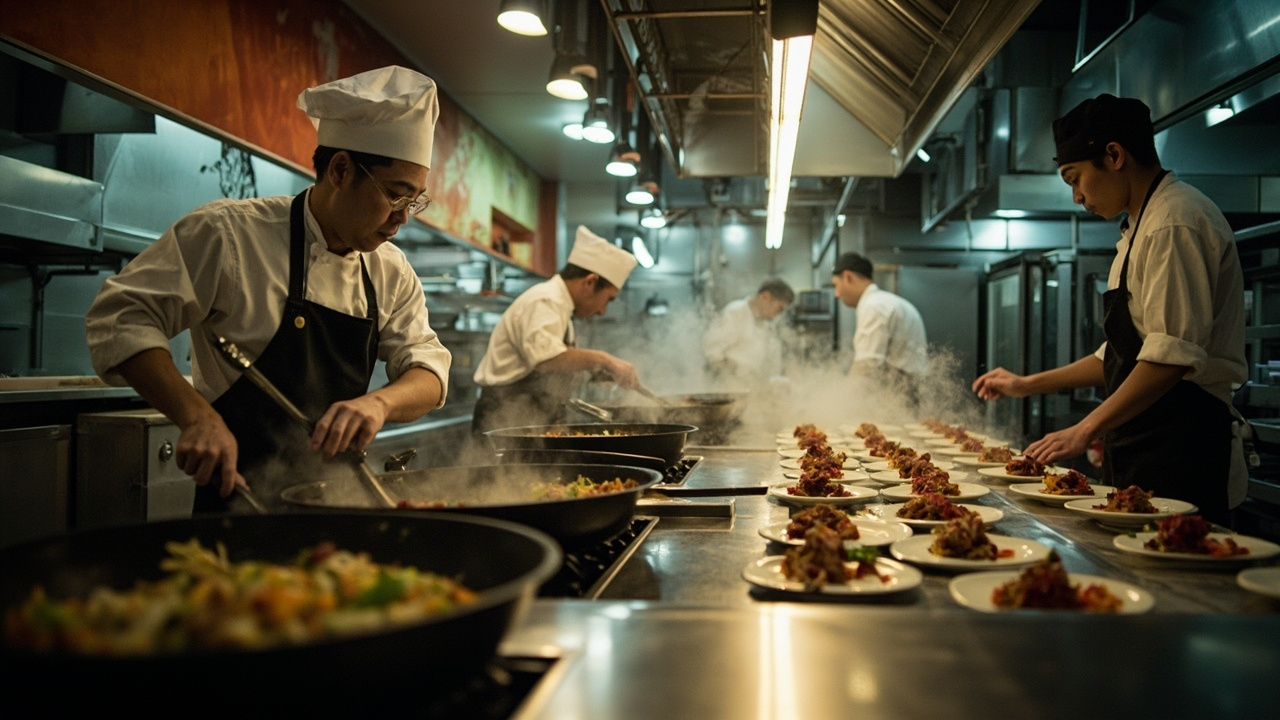
I remember the night like it was yesterday: a full house, a buzzing bar, and then the unmistakable smell of burning plastic from the kitchen. Everything stopped. That was the start of it – the story of how we faced a catastrophic service failure and the messy, unglamorous path we took to rebuild.
If you’ve ever run a hospitality business, you know the feeling. The constant tightrope walk, the endless plates spinning. I learned some brutal truths that might just help you too. First, don't ignore the small cracks. A single big failure usually exposes a whole network of tiny, ignored weaknesses in your operations. Second, listen to your people. Your kitchen and bar teams see things you don't; their insights are pure gold when you're trying to fix what's broken. And finally, recovery isn’t some overnight miracle. It's a marathon of small, consistent, often tedious steps.
What happens when your core service crumbles?
It was a Friday night, prime time for our little venue in South London. Every table booked, the bar three deep, the kitchen humming with that organised chaos of a busy service. I was out front, soaking up that familiar buzz, the kind that makes all the long hours feel worth it. We had a great team that night. Liam, our Head Chef, was an absolute rock, moving through the kitchen with muscle memory. Sarah, my front-of-house manager, was a master at weaving through the crowd, making everyone feel looked after.
Then came the smell. Not the rich aroma of roasting lamb or sizzling garlic, but something acrid, metallic, and utterly wrong. It started subtly, a faint whiff, then grew. Liam appeared at the pass, his face pale, eyes wide. "Oven's gone," he said, his voice tight. "Main hob array too. Looks like an electrical short. Smoke's coming from the back."
My stomach dropped like a stone. The main oven and six-burner hob were the absolute heart of our kitchen. Without them, we could boil a few things, maybe toast some bread, but a full menu? Impossible. I went through to see it myself. The air was thick with the smell, and a thin wisp of grey smoke curled from behind the unit. It was dead. Completely.
Panic isn't a strategy, but that’s exactly what I felt. We had forty covers still waiting for mains, another twenty in the bar area ordering food. Liam, ever the professional, was already trying to salvage what he could, moving pans to a small, auxiliary induction hob. But it was like trying to empty the Thames with a teacup.
Sarah, meanwhile, was doing her best out front. I watched her explain to a table of four that their rib-eye would be a considerable wait, then apologise to another couple whose starter had vanished into the ether of a dying kitchen. The bar team, usually so fluid, looked like deer in headlights. Orders were piling up, drinks were being made, but the rhythm was utterly broken.
I made the call. We couldn't do it. Not properly, not honestly. We started apologising, offering free drinks, cancelling orders, and eventually, just telling people we had to close the kitchen. The shame was a physical weight. I walked through the restaurant, past the disappointed faces, past my own staff looking defeated. The bar team tried to keep spirits up, but the energy was gone. By 10 PM, the place was empty, save for the lingering smell of burnt plastic and the quiet clatter of Liam cleaning a kitchen that wouldn't cook again that night.
The real kicker came the next morning. Our emergency supplier, meant to deliver a temporary hob unit and some pre-cooked components, called to say their van had broken down. No backup. Just us, a dead kitchen, and a mountain of lost revenue and a battered reputation. I sat alone in the silent venue, the morning light making the previous night's disaster feel even more stark. I felt utterly, completely broken.
How do you even begin to pick up the pieces after a big hit?
The days that followed were a grim blur. The repair quote for the oven and hob was eye-watering, far more than I had in immediate cash flow. The lost bookings for the weekend, the refunds, the stock waste – it all added up to a serious financial blow. For a moment, I honestly considered just walking away. It would have been easier.
But I didn't. I had a team, however battered, and a venue that was more than just bricks and mortar to me. My first step wasn't about finding a quick fix; it was about facing the ugly truth. I needed to understand everything that went wrong, not just the obvious oven failure.
I sat down with Liam first. Not to blame, but to listen. He was exhausted, frustrated. He told me about the intermittent power surges he'd noticed, the flickering lights, the way the oven had been temperamental for weeks. Things he'd mentioned in passing, but which I, caught in the daily grind, hadn't prioritised. He also admitted he hadn't formally logged these issues, partly because he knew how stretched we were.
Then I spoke with Sarah. She recounted the customer complaints, the difficulties in communicating kitchen delays, the pressure on the bar team when food orders backed up. She pointed out that our usual system for checking stock and deliveries was too reliant on one person, which had been brutally exposed when the emergency delivery failed.
What came out of those conversations wasn't pretty, but it was real. We had been running too lean, too close to the edge. Our equipment was old, our communication channels weren't strong, and our reliance on single points of failure was a ticking time bomb. The 'big hit' wasn't just the oven; it was the culmination of a hundred small compromises.
My immediate action was to get a temporary, smaller hob and oven installed, just enough to offer a limited menu. It wasn't glorious, and it certainly wasn't what our customers were used to, but it allowed us to open, to make some money, and to show our customers we hadn't given up. It felt like crawling when I wanted to sprint, but it was movement.
What changes when you rebuild from the ground up?
Rebuilding wasn't about grand gestures; it was about grinding through the small, unglamorous details. We needed to make sure a night like that never happened again, and that meant looking at how we did everything.
First, the kitchen. The old oven was gone, replaced by a strong, modern unit. This wasn't just a like-for-like swap. Liam and I spent hours looking at kitchen workflow. Where were the bottlenecks? Could we arrange the prep stations differently? Could we make better use of vertical space? We ended up with a slightly different layout, one that felt more intuitive, less prone to collisions during peak service. We also invested in a smaller, but powerful, backup induction hob that could be easily deployed if the main unit ever faltered again. It was an extra cost, but the peace of mind was absolutely worth it.
We implemented a rigorous equipment check system. Every morning, Liam or a senior chef would go through a checklist: temperatures, power connections, signs of wear. Any issue, no matter how minor, had to be logged immediately. Not just verbally, but in a shared digital document. This meant I, as the owner, had visibility, and we could address issues before they became crises.
Supplier relationships became another focus. I didn't just have one primary supplier anymore. I cultivated relationships with two, sometimes three, for critical items. I also started keeping a small, emergency stock of non-perishable staples. It tied up a bit of capital, but it meant we wouldn't be caught out by a single broken-down delivery van again. We also set up clearer communication protocols with our suppliers – confirmation calls, delivery windows, and designated contact people for emergencies.
Out front, Sarah took the lead. We developed new service protocols for busy periods. This included a 'red flag' system between the kitchen and front of house. If the kitchen was genuinely struggling, a red flag went up, and the front-of-house team knew to manage expectations proactively, perhaps offering a complimentary drink or a small starter to waiting tables. This wasn't about giving things away; it was about acknowledging the situation and showing customers we valued their patience.
We also spent time training our bar team on these new protocols. They learned how to read the room, how to calmly explain delays, and how to offer alternatives without making it sound like an excuse. We helped them to make small decisions on the spot – a free soft drink for a child, a coffee on the house for a long wait – without needing to find Sarah or me for approval. It made them feel more in control and reduced the pressure on management during a busy service.
How do you get your restaurant staff and bar team back on track?
Rebuilding the physical venue and its processes was one thing; rebuilding the morale of the restaurant and bar team was another. They'd been through a hellish night, and the subsequent weeks of limited menus and cautious service were draining.
I started by being completely open with them. I explained the financial hit, the repairs, the loans I'd taken out. But I also told them I believed in them, and in our venue. I didn't offer false promises of instant success, but a commitment to doing the hard work together.
We started having short, ten-minute huddles before every service, not just for specials, but for quick check-ins. How was everyone feeling? Any potential issues with bookings? Any personal challenges affecting their shift? It created a space for everyone to voice concerns, to feel heard. Liam, who was usually quiet, started sharing insights about kitchen prep, and Sarah used it to highlight potential challenges with specific tables or large groups.
I made sure I was visible, often jumping in to wash dishes, clear tables, or pour drinks. It wasn't about heroics; it was about showing I was in the trenches with them. When a customer left a positive comment, I made sure to share it with the whole team, specifically naming who had contributed to that good experience. It sounds small, but those little victories were vital.
We also made a point of celebrating small successes. A smooth, fully booked Saturday night, a particularly glowing online review, a new dish that proved popular. These weren't grand parties, but sincere acknowledgements of the collective effort. Liam and Sarah were instrumental in this. They became my eyes and ears, identifying who needed a word of encouragement, who was excelling, and who might be struggling.
There were still bad days, of course. A forgotten order, a grumpy customer, a new piece of equipment that developed a minor fault. But the difference was how we handled them. Instead of devolving into panic or blame, there was a quiet determination to fix it, to learn from it, and to move on. The restaurant and bar team weren't just employees; they were a unit that had faced adversity and come out, if not stronger, then certainly more unified in their purpose.
Is it ever truly "over"?
Recovery isn't a finish line you cross; it's a new way of operating. We never returned to being the exact same venue we were before that Friday night. We were, in many ways, better. More resilient. Wiser.
The initial financial strain took a long time to ease, but it did. Our reputation slowly rebuilt, one good meal, one friendly interaction, one sincere apology at a time. The venue wasn't just buzzing with customers again; it was buzzing with a different kind of energy – one of quiet competence and mutual support.
I still get a knot in my stomach on busy Friday nights, a ghost of that burning smell. But now, I know we have systems in place. I trust my team, not just to perform, but to communicate when things go wrong. And I know that even when things inevitably go sideways again – because this is hospitality, and they always do – we'll face it with open eyes and a practical approach, ready to work through the mess, step by painful step. That's the real recovery.
Our Data
This analysis draws on booteek's proprietary research:
- Our proprietary Life Skills & Talents matrix for hospitality teams, built from our review of thousands of UK hospitality job postings via booteek Intelligence
- Live venue review corpus across Manchester, Porto, Bilbao, Seville, and other UK/Iberian cities (tens of thousands of reviews analysed)
- Ongoing behavioural research via booteek Breo, our AI companion for restaurant AND bar owners
Where external statistics are cited, sources are named inline. Where the claim is derived from booteek's own measurement, we say so.
See Breo work with your team
booteek's AI companion Breo can help your team identify, grow, and apply skills like team excellence in real shift-by-shift practice. Start a 5-minute Breo session →