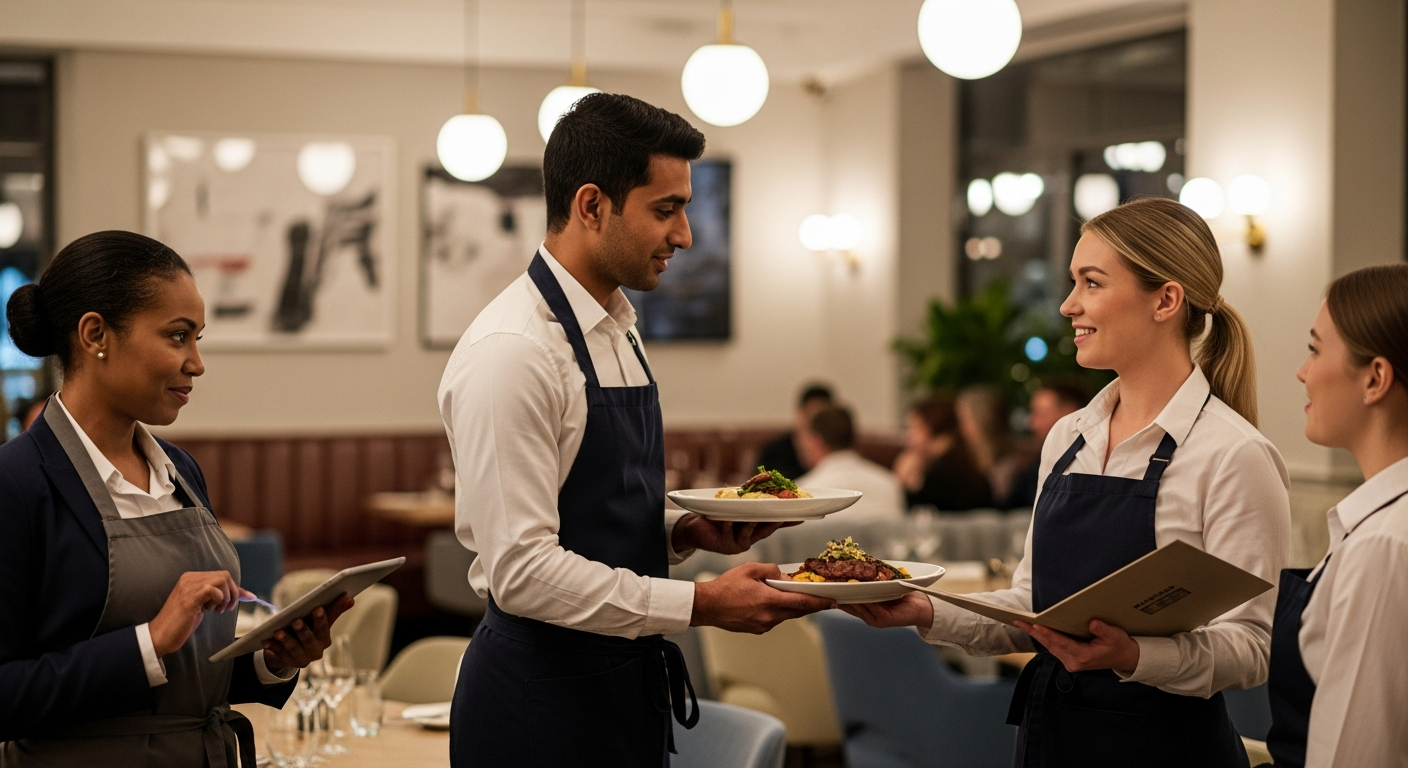
The UK hospitality sector faces unprecedented challenges, from persistent staff shortages to escalating operational costs. With margins tighter than ever, finding competitive edges isn't just about cutting expenses; it's about maximising the value of your most precious asset: your people.
The Reality for Restaurant AND Bar Owners
Every day, restaurant AND bar owners grapple with a complex tapestry of operational hurdles. High staff turnover continues to plague the industry, with many venues struggling to retain talent in a competitive market. This constant churn isn't just a headache; it’s a significant financial drain, costing thousands in recruitment fees, training new hires, and lost productivity. Beyond the revolving door of staff, there’s the relentless pressure to maintain impeccable service standards, manage inventory, navigate supply chain disruptions, and keep customers coming back.
The consequence of these pressures often manifests in fragmented teams, where individuals operate in silos rather than as a cohesive unit. A busy Friday night can quickly descend into chaos if the kitchen and front-of-house aren't in sync, or if bar staff aren't communicating effectively with their colleagues. This lack of fluid communication and mutual support impacts everything from order accuracy and speed of service to the overall guest experience. Ultimately, it erodes staff morale, increases stress levels, and makes it harder to build a loyal, high-performing team. The quest for efficiency and excellence feels like an uphill battle when your team isn't working as one.
Actionable Takeaway: Recognise that disconnected teams are a primary root cause of many operational and retention challenges in your venue.
What the Data Shows
While the benefits of teamwork are intuitively understood, the financial impact of collaboration is often underestimated. booteek Intelligence analysis of nearly 600 independent UK hospitality job postings reveals a stark disconnect: despite evidence of a significant financial premium, only 21.4% of job descriptions explicitly mention "collaboration" as a required skill. This oversight is puzzling when you consider that booteek Intelligence data indicates that roles where collaboration is a key component command a salary premium of up to +40%. This isn't just a soft skill; it's a monetisable asset.
Our proprietary research delves deeper, examining the skills and talents present across various roles. For instance, kitchen porters (n=26) list "Team Building" as a top skill, alongside "Active Listening" and "Planning." Similarly, line cooks (n=55) value "Team Building" highly, complementing "Problem-solving" and "Planning." In front-of-house, barbacks (n=10) champion "Team Building" and "Active Listening," while general managers (n=40) list "Team Building" and "People Management" as crucial. Even individual-focused roles like pastry chef (n=10) show "Planning" and "Problem-solving" as top skills, which are foundational for effective collaboration.
What's clear from booteek Intelligence data is that while the word "collaboration" might be missing from job ads, the underlying skills and talents that enable it are highly prevalent and valued by staff themselves. Talents like being "responsible," "organised," "committed," and "reliable" appear consistently across roles, from kitchen porters to bar managers. These aren't just individual traits; they are the bedrock upon which effective team collaboration is built. The opportunity lies in recognising and nurturing these existing attributes to explicitly foster a collaborative environment, translating inherent individual strengths into collective team success.
Actionable Takeaway: Review your job descriptions and internal training programmes to explicitly highlight and develop collaboration skills, recognising their significant financial return.
The Collaboration Connection
The direct link between robust collaboration and resolving the industry's pain points is undeniable. When teams work cohesively, operations become smoother, mistakes are minimised, and efficiency soars. Imagine a busy restaurant kitchen where the head chef (top skills: Problem-solving, Planning) seamlessly communicates with the sous chef (top skills: Problem-solving, Planning, Team Building) and line cooks (top skills: Problem-solving, Team Building). Orders flow, prep is organised, and dishes leave the pass without unnecessary delays or re-fires. This isn't just about individual skill; it’s about collective synchronicity.
In a bar setting, effective collaboration means bartenders (top skills: Problem-solving, Active Listening) can rely on barbacks (top skills: Team Building, Initiative) to restock without being asked, anticipating needs and ensuring service never falters. It extends to the front-of-house team too: a waiter (top skills: Time Management, Building Rapport) who communicates a customer's specific dietary need directly to the kitchen, preventing errors and enhancing the guest experience. This proactive, shared responsibility reduces stress, boosts productivity, and directly impacts your bottom line by increasing table turns and customer satisfaction.
Moreover, booteek Intelligence highlights that roles like restaurant manager (top skills: Team Building, Problem-solving) and bar manager (top skills: Initiative, Problem-solving) are inherently collaborative, requiring them to orchestrate diverse personalities and tasks. When these leaders actively champion collaboration, it trickles down, transforming individual efforts into a unified force. It empowers staff to take initiative, share knowledge, and collectively overcome challenges, fostering a dynamic environment where everyone feels invested in the venue's success. This collective problem-solving capability is invaluable, especially when navigating unexpected rushes or service disruptions.
Actionable Takeaway: Actively promote and reward collaborative behaviours to unlock operational efficiencies and elevate the overall guest experience in your venue.
Building Collaboration in Your Team
Cultivating a collaborative culture isn't a passive process; it requires deliberate, strategic effort from restaurant AND bar owners. Here are three actionable tips to integrate collaboration into the very fabric of your venue:
- Implement Cross-Training and Role Swaps: Encourage team members to understand the responsibilities and challenges of other roles. For example, have a kitchen porter spend an hour observing the pass during a quieter service, or a bartender shadow a waiter for a shift. This builds empathy and appreciation for different perspectives, helping staff anticipate needs and offer support proactively. A prep cook (top skills: Active Listening, Self-accountability) learning a basic bar setup can assist during a sudden rush, while a barista (top talents: friendly, enthusiastic) understanding kitchen flow can better manage customer expectations during delays. This shared understanding breaks down silos and creates a more agile, mutually supportive team.
- Establish Structured Communication Channels: Effective collaboration hinges on clear and consistent communication. Introduce daily pre-shift huddles for all staff – kitchen, bar, and front-of-house – to discuss specials, potential issues, and specific customer requirements. Utilise a shared digital communication platform (e.g., a WhatsApp group or dedicated app) for real-time updates and questions, ensuring everyone is on the same page. A host (top skills: Active Listening, Conversation) can quickly relay crucial information about a large booking to the kitchen, preventing last-minute stress. Regular, structured dialogue ensures that information flows freely, preventing misunderstandings and fostering a sense of collective awareness and responsibility.
- Foster a Culture of Shared Responsibility and Recognition: Shift the focus from individual heroics to collective achievements. Implement team-based incentives for hitting service targets, reducing waste, or achieving high customer satisfaction scores. Regularly celebrate collective successes, perhaps with a "Team of the Month" award or a shared meal to recognise outstanding collaborative efforts. Encourage peer-to-peer feedback and mentorship, where experienced staff openly share knowledge and support newer colleagues. General managers (top talents: responsible, accountable, organised) should lead by example, demonstrating how collaboration enhances their own effectiveness. When staff feel their individual contributions are valued within a successful team, their commitment and loyalty deepen significantly.
The Loyalty Mindset Shift
Embracing a team-first culture isn't just about operational efficiency; it’s the cornerstone of building retention and fostering deep loyalty among your staff. When collaboration is actively encouraged and celebrated, it transforms the workplace from a collection of individuals performing tasks into a supportive community working towards a shared vision. Staff feel a greater sense of belonging and purpose, knowing their efforts are part of something larger. This psychological shift is incredibly powerful in an industry often characterised by transient employment.
booteek Intelligence consistently shows that employees are more likely to stay in roles where they feel valued, supported, and part of a cohesive unit. A collaborative environment cultivates mutual respect and trust, reducing workplace stress and burnout. When a line cook feels comfortable asking a sous chef for help, or a bartender knows their barback will proactively cover their station, it builds a robust support network. This reduces the likelihood of staff feeling overwhelmed and isolated, key factors contributing to high turnover. Roles like assistant manager (top talents: responsible, reliable, accountable) thrive in such environments, as their ability to manage performance and build teams is amplified.
This loyalty mindset extends beyond simply keeping staff in their roles; it creates advocates for your brand. Happy, engaged employees provide better service, contribute positively to the atmosphere, and are more likely to recommend your venue as both a place to work and a place to visit. It’s a virtuous cycle: a collaborative culture leads to higher retention, which in turn leads to a more experienced, skilled, and stable workforce. This stability translates directly into consistent service quality and a stronger, more resilient business, significantly reducing the financial and emotional burden of constant recruitment.
Actionable Takeaway: Prioritise building a team-first culture through collaborative practices to dramatically improve staff retention and create a more positive, productive work environment.
What This Means for Your Venue
For restaurant AND bar owners, understanding that collaboration pays a premium—up to +40% according to booteek Intelligence—isn't just an interesting statistic; it's a strategic imperative. By actively nurturing and rewarding collaborative skills within your team, you're not just improving morale; you're directly impacting your venue's profitability and long-term sustainability. A collaborative team is more efficient, makes fewer mistakes, and delivers a superior customer experience, leading to higher revenues and stronger brand loyalty.
Imagine a venue where problem-solving is a collective effort, where initiative is shared, and where every team member feels accountable for the overall success. This is the power of collaboration in action. It means your bar manager (top skills: Planning, Problem-solving, People Management) can delegate with confidence, knowing their team will execute flawlessly. It means your restaurant manager (top talents: responsible, organised, enthusiastic) can focus on strategic growth, rather than constantly firefighting. By investing in collaboration, you are investing in a more resilient, adaptable, and ultimately more successful business model.
Leverage insights from booteek Intelligence to identify existing collaborative strengths within your team and pinpoint areas for development. By making collaboration a core value, not just a buzzword, you’ll unlock the untapped potential of your staff, transforming your venue into a magnet for both talent and loyal customers. This isn't just about staying competitive; it's about thriving in an ever-evolving market.
Actionable Takeaway: Make collaboration a measurable priority in your venue's operational strategy, leveraging data to build a high-performing, loyal team that directly contributes to your bottom line.
booteek helps restaurant AND bar owners track team development automatically. Our AI Business Brain transforms how you understand and grow your team.