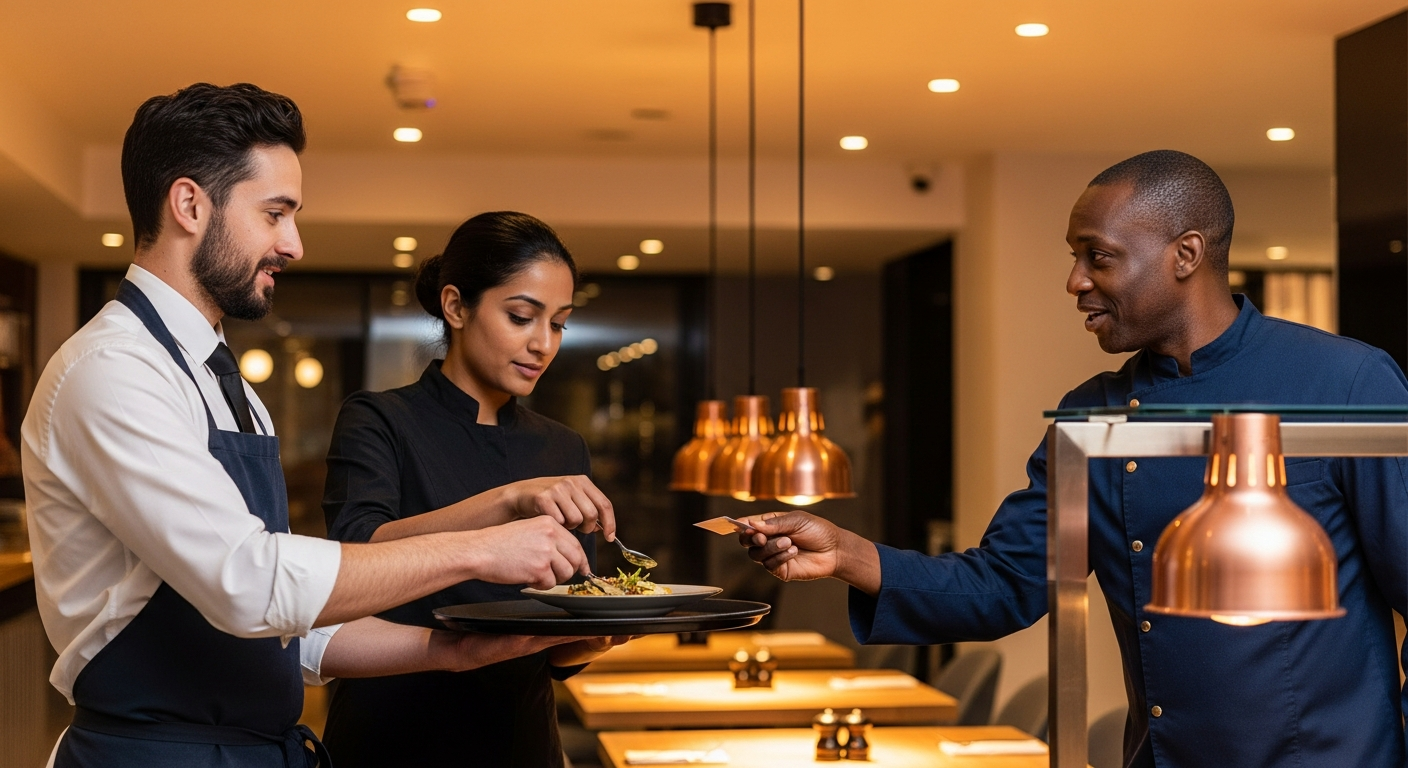
The UK hospitality sector faces persistent challenges, from escalating operational costs to a fiercely competitive labour market. In this demanding landscape, where every penny and every team member counts, restaurant AND bar owners are constantly seeking an edge. The solution isn't always found in cutting-edge tech or complex marketing strategies; sometimes, it lies in cultivating a fundamental human skill that booteek Intelligence data reveals can command a substantial salary premium, yet remains shockingly undervalued in job descriptions.
The Reality for Restaurant AND Bar Owners
Running a successful restaurant or bar in the current climate is a masterclass in resilience. You navigate rising food and drink costs, energy price hikes, and the ever-present pressure of customer expectations. Perhaps the most acute pain point, however, is staffing. High turnover rates are endemic, leading to a constant cycle of recruitment, training, and the inevitable dip in service quality as new staff get up to speed. This churn isn't just a logistical headache; it’s a significant financial drain, impacting everything from your profit margins to your team's morale.
Consider the ripple effect: a new hire takes time to integrate, requiring supervision that pulls experienced staff away from their core duties. An understaffed kitchen can lead to slower service and increased stress for line cooks and sous chefs, potentially affecting food quality. In a busy bar, a lack of seamless teamwork between bartenders and barbacks can result in long queues and frustrated customers. These operational inefficiencies directly erode customer satisfaction, damage your venue's reputation, and ultimately hit your bottom line. Owners are not just looking for bodies to fill shifts; they need cohesive teams that can perform under pressure, adapt to challenges, and consistently deliver exceptional experiences.
The constant pressure on staff can also lead to burnout, further exacerbating retention issues. When team members feel unsupported or overwhelmed, even the most passionate individuals can become disengaged. Owners need to foster environments where staff feel valued, empowered, and equipped to handle the demands of the job together. Without this foundational support, the cycle of high turnover and operational strain continues, making sustained growth an uphill battle.
What the Data Shows
Despite its clear operational benefits, collaboration as a named skill is surprisingly underrepresented in job postings. booteek Intelligence analysis of nearly 600 independent UK hospitality job postings reveals that only 21.4% explicitly mention 'collaboration' or 'teamwork' as a required skill. This is a stark contrast to its value: booteek Intelligence data indicates that individuals proficient in collaboration command a remarkable +40% salary premium. This discrepancy highlights a significant blind spot in the industry’s approach to talent acquisition and development.
This isn't to say that collaborative skills aren't present or valued implicitly within your teams. Our proprietary research uncovers a wealth of underlying skills and talents across various roles that are foundational to effective collaboration, even if the term itself isn't used. For instance, Line Cooks (n=55) rank Team Building as a top skill, alongside Problem-solving and Planning, demonstrating an inherent understanding of collective effort in the kitchen. Kitchen Porters (n=26) also list Team Building and Active Listening among their top skills, crucial for seamless back-of-house operations. Similarly, Sous Chefs (n=17) frequently exhibit Problem-solving, Planning, and Team Building. These roles, often the backbone of kitchen efficiency, clearly depend on coordinated action.
Moving to the front of house and bar operations, the picture is equally compelling. Bartenders (n=86) and Baristas (n=28) both rank Active Listening, Problem-solving, and Building Rapport as top skills. These are not solitary talents; they are inherently interactive and collaborative, ensuring smooth customer interactions and effective communication with colleagues. Barbacks (n=10) show Team Building, Initiative, and Active Listening as key skills, underlining their supportive, collaborative role within a busy bar environment. Even management roles, such as Restaurant Managers (n=88) and Assistant Managers (n=47), consistently list Team Building and Problem-solving as critical, reflecting their responsibility for fostering a cohesive unit.
The data suggests that while the word 'collaboration' might not appear frequently in job descriptions, the ingredients for it are abundant. Talents like 'committed', 'responsible', 'organised' (common among Line Cooks and Head Chefs), 'reliable', 'relational' (seen in Barbacks and Waiters), and 'listening' (prominent in Bartenders and Waiters) all contribute to a collaborative mindset. The challenge for restaurant AND bar owners is to recognise these existing strengths and deliberately cultivate a culture where they can flourish, translating implicit potential into explicit, high-value teamwork. This means moving beyond simply hiring for technical skills and actively seeking and developing collaborative capabilities within your workforce.
The Collaboration Connection
So, how does this hidden gem of collaboration directly address the pressing challenges faced by restaurant AND bar owners? It acts as the grease in the operational machine, reducing friction, enhancing efficiency, and ultimately elevating the entire customer experience. When your team collaborates effectively, communication flows seamlessly, problems are solved quicker, and the entire venue operates with a synchronised rhythm.
Consider a bustling Friday night service. In the kitchen, a Head Chef (top skills: Problem-solving, Planning, Initiative) relies on their Sous Chef (top skills: Problem-solving, Planning, Team Building) and Line Cooks (top skills: Problem-solving, Team Building, Planning) to execute orders precisely and efficiently. If a specific ingredient runs low, a collaborative kitchen means the Prep Cook (top skills: Active Listening, Self-accountability, Growth Mindset) or Kitchen Porter (top skills: Team Building, Active Listening) can proactively communicate this, preventing delays. Instead of individual silos, they operate as a single unit, anticipating needs and supporting each other. This collective effort minimises errors, reduces food waste, and ensures dishes leave the pass at the right time and temperature.
Out on the floor, Waiters (top skills: Time Management, Building Rapport, Problem-solving) and Hosts (top skills: Active Listening, Conversation, Initiative) work in tandem to manage table turns, seating, and customer requests. A waiter noticing a table is nearing the end of their meal can communicate this to the host, who can then anticipate incoming guests. If a customer has a specific dietary requirement, the waiter’s clear communication with the kitchen – and the kitchen’s collaborative response – ensures a smooth, safe, and satisfying experience. This proactive, coordinated approach elevates service from merely functional to truly exceptional, fostering customer loyalty.
At the bar, Bartenders (top skills: Problem-solving, Active Listening, Building Rapport) and Baristas (top skills: Active Listening, Problem-solving, Building Rapport) are constantly interacting with customers. But behind the scenes, their collaboration with Barbacks (top skills: Team Building, Initiative, Active Listening) is crucial. A barback proactively restocking ice, glasses, or specific spirits allows the bartender to focus on crafting drinks and interacting with guests, without interruption. When a large order comes in, a quick, collaborative assessment between bartenders ensures it's fulfilled quickly and accurately, preventing bottlenecks and maintaining a vibrant atmosphere. For Bar Managers (top skills: Initiative, Problem-solving, Time Management, People Management), fostering this teamwork is paramount to managing inventory, staff rotas, and customer flow effectively.
Beyond day-to-day operations, collaboration fuels innovation. A Pastry Chef (top skills: Planning, Problem-solving, Self-accountability) might collaborate with the Head Chef on seasonal dessert menus, leveraging collective creativity. A General Manager (top skills: Problem-solving, People Management, Initiative) encouraging cross-departmental feedback fosters a culture where new ideas, whether for a marketing campaign or a new service process, are welcomed and refined collectively. This creates a dynamic environment where the entire team feels invested in the venue's success, leading to continuous improvement and a stronger competitive edge.
Building Collaboration in Your Team
Cultivating a collaborative environment isn't about grand gestures; it's about embedding specific practices into your daily operations. Here are three actionable tips to foster stronger teamwork in your restaurant AND bar:
- Implement Cross-Training and Shadowing Programmes:
- Regular, Structured Communication Huddles:
- Establish Joint Problem-Solving Initiatives:
The Loyalty Mindset Shift
At its heart, cultivating collaboration is about building a "team-first" culture, which, according to booteek Intelligence, is directly linked to improved staff retention. When employees feel they are part of a cohesive unit, working towards a shared goal, their sense of belonging and loyalty dramatically increases. This isn't just about being friendly; it's about creating an environment where mutual respect, support, and shared accountability are the norm.
Consider the psychological impact: in a truly collaborative setting, the burden of a difficult shift or a challenging customer is shared. A Sous Chef supporting a struggling Line Cook, a Barback anticipating a Bartender's needs, or a Restaurant Manager (top talent: responsible, organised, enthusiastic) actively listening to a Waiter's feedback – these interactions build trust and reduce individual stress. When staff feel supported and know their colleagues have their back, they are less likely to experience burnout and more likely to feel committed to their roles and the venue. This directly combats the high turnover rates plaguing the UK hospitality sector, saving owners significant recruitment and training costs.
Furthermore, a collaborative culture naturally encourages skill development. Junior staff learn from experienced peers, not just through formal training but through daily interaction and shared problem-solving. A Prep Cook with a Growth Mindset talent will thrive in an environment where they can learn from a Head Chef's planning skills. This organic learning environment supports career progression, making staff feel invested in their future at your venue. The +40% salary premium associated with collaboration isn't just about a higher pay cheque; it reflects the higher value and greater opportunities that come with being a highly effective team player. When staff see a clear path for growth and feel valued for their contributions, their loyalty deepens.
This loyalty mindset shift also extends to the employer-employee relationship. By demonstrating a commitment to fostering teamwork, owners signal that they value their staff as more than just cogs in a machine. This positive perception of management, built on trust and mutual respect, creates a virtuous cycle: happy, loyal staff provide better service, leading to happier customers, and ultimately, a more profitable and sustainable business. It's an investment in your people that pays dividends in reduced attrition and a stronger, more resilient workforce.
What This Means for Your Venue
For restaurant AND bar owners, embracing collaboration isn't merely a touchy-feely ideal; it's a strategic imperative with tangible benefits for your bottom line and long-term sustainability. By actively cultivating collaborative skills and a team-first culture, you are directly addressing the industry's most pressing pain points.
Firstly, enhanced collaboration leads to operational excellence. Faster service, fewer errors, and smoother transitions between shifts and departments directly translate into higher efficiency and reduced waste. This means ingredients are used more effectively, staff time is optimised, and your venue can handle peak periods with greater ease, leading to increased revenue potential.
Secondly, a collaborative environment significantly elevates the customer experience. When your front of house and back of house teams work in seamless harmony, customers notice the difference. Orders are accurate, service is attentive, and any issues are resolved quickly and discreetly. This leads to higher customer satisfaction, repeat business, and positive word-of-mouth recommendations – the lifeblood of any successful hospitality venture.
Finally, and perhaps most crucially, fostering collaboration transforms your team into a loyal, high-performing asset. By investing in a culture where staff feel valued, supported, and empowered to work together, you drastically reduce turnover rates. This saves immense costs associated with recruitment and training, allowing you to retain institutional knowledge and build a consistent, experienced workforce. A team that collaborates effectively is a resilient team, better equipped to adapt to challenges, innovate, and drive your venue's success. Prioritising collaboration isn't just about being a "nice" employer; it's a strategic imperative for sustained success in the competitive UK hospitality market.
booteek helps restaurant AND bar owners track team development automatically. Our AI Business Brain transforms how you understand and grow your team.