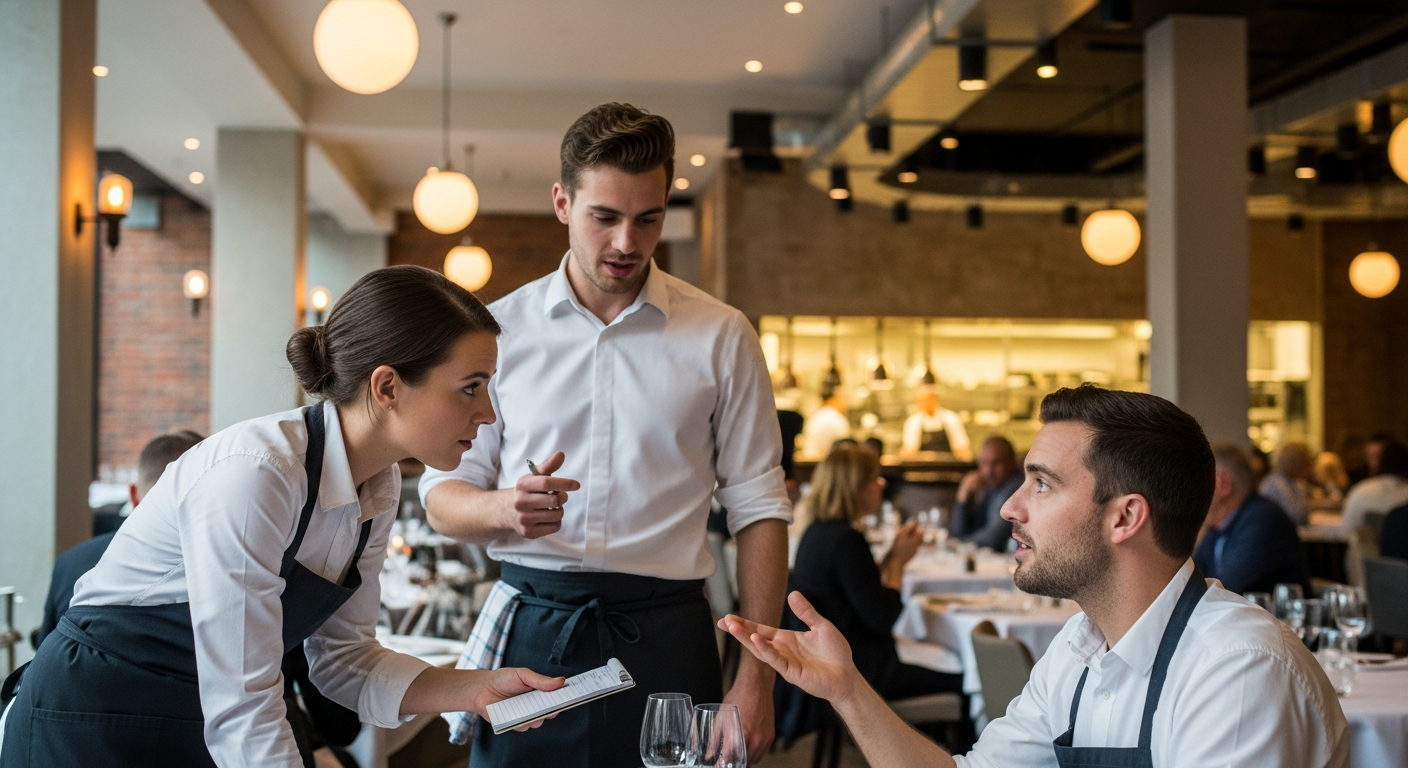
In the fast-paced world of UK restaurants and bars, the constant hum of activity often overshadows a silent but critical challenge: communication. While business owners grapple with rising costs, staff shortages, and evolving customer expectations, the bedrock of a thriving operation – how teams connect, collaborate, and convey information – frequently goes unexamined. This oversight isn't just a minor inefficiency; it's a significant contributor to the industry's persistent high turnover and can silently erode profitability and morale.
The Reality for Restaurant AND Bar Owners
Every restaurant and bar owner in the UK understands the relentless pressure of the industry. From the morning prep to the late-night close, your teams are constantly in motion, making split-second decisions and juggling multiple tasks. This high-octane environment, while exhilarating, also creates fertile ground for miscommunication. A missed order, a misunderstood instruction, a forgotten special – these aren't isolated incidents; they're symptoms of a deeper systemic issue.
The consequences are tangible and costly. High staff turnover, for instance, isn't just about recruitment headaches; it's a drain on resources, training budgets, and institutional knowledge. When staff feel unheard, undervalued, or constantly frustrated by a lack of clarity, their loyalty wanes. They seek opportunities where their contributions are recognised and where the daily grind is made smoother by effective teamwork. This isn't a luxury; it's a fundamental expectation that directly impacts your bottom line.
Beyond staff retention, poor communication manifests in inconsistent service quality, frustrated customers, and a general atmosphere of stress. Kitchens become cauldrons of tension, front-of-house teams struggle to manage expectations, and the overall guest experience suffers. For restaurant AND bar owners, addressing this isn't just about improving efficiency; it's about safeguarding your brand, fostering a positive work culture, and ultimately, ensuring the long-term success and profitability of your venue.
What the Data Shows
Despite its undeniable importance, communication often remains an elusive skill within the hospitality sector. booteek Intelligence analysis of nearly 600 independent UK hospitality job postings reveals a striking paradox: while 57.9% of these postings implicitly or explicitly demand strong communication skills, they are often poorly defined or overlooked in the specific skill requirements. This disconnect means businesses are looking for it, but not effectively articulating what it actually entails or how to assess it.
Our analysis of specific roles further illuminates this. For instance, customer-facing roles naturally highlight communication. Bartenders (n=86) list "Active Listening" and "Building Rapport" as top skills, alongside "listening" as a top talent. Similarly, Baristas (n=28) prioritise "Active Listening" and "Building Rapport," complemented by "friendly" and "enthusiastic" talents. Hosts (n=4) explicitly list "Active Listening" and "Conversation," while Waiters (n=7) value "Building Rapport" and "listening" as a top talent. These roles demonstrate a clear, direct need for interpersonal communication.
However, the picture is more nuanced in other areas. Kitchen Porters (n=26) surprisingly list "Active Listening" as a top skill, alongside "Team Building," indicating that even foundational roles require careful attention and collaborative effort. Prep Cooks (n=8) also rank "Active Listening" highly, coupled with a "Growth Mindset," which necessitates an openness to feedback and clear instruction. While roles like Line Cooks (n=55) and Head Chefs (n=28) primarily list "Problem-solving" and "Planning" as top skills, effective execution of these relies heavily on precise communication within the kitchen brigade. A head chef's "Initiative" or a sous chef's "Team Building" talent is only as effective as their ability to communicate their vision or coordinate their team.
The data from booteek Intelligence suggests that communication is often an underlying, foundational skill that underpins many other critical competencies. It's the silent enabler of "Problem-solving," the lubricant for "Team Building," and the foundation for "Planning." Yet, because it's not always explicitly listed or clearly defined, it often gets left to chance, creating the very friction and inefficiencies that venues are trying to avoid. Recognising this pervasive, yet often unstated, demand is the first step towards building a more cohesive and productive team.
The Communication Connection
The communication paradox isn't just a statistical anomaly; it's a direct contributor to the operational challenges faced by restaurant AND bar owners. When communication is vague, inconsistent, or non-existent, it creates a ripple effect across your entire operation. Think about the common frustrations: a busy bartender running out of a key ingredient because the barback wasn't informed, or a waiter promising a dish the kitchen can't deliver because they weren't updated on stock levels. These aren't just minor hiccups; they impact customer satisfaction, team morale, and ultimately, your venue's reputation.
Effective communication directly addresses these pain points by fostering clarity, reducing errors, and improving overall efficiency. It's about ensuring that information flows freely and accurately, both vertically (from management to staff and vice versa) and horizontally (between FOH and BOH, or between different FOH roles). This involves more than just talking; it encompasses active listening, clear written instructions, and understanding non-verbal cues. For example, a Line Cook's "Problem-solving" skill is significantly enhanced when they can clearly communicate an issue to the Head Chef and receive precise instructions in return. Similarly, a Bar Manager's "Initiative" thrives in an environment where they can openly discuss new ideas and receive constructive feedback.
When communication is prioritised, your team functions as a well-oiled machine. Reduced misunderstandings mean fewer wasted ingredients, less re-work, and faster service. Staff feel more confident in their roles because they have the information they need to perform effectively. This confidence translates directly into improved customer service, as staff are better equipped to answer questions, handle complaints, and create a positive experience. Ultimately, strong communication isn't just a 'soft skill'; it's a hard business asset that drives operational excellence and fosters a more harmonious working environment, directly impacting your bottom line.
Building Communication in Your Team
Transforming communication within your venue requires a proactive and consistent approach. It’s not about grand gestures, but about embedding practical habits into daily operations.
- Implement Structured Daily Briefings and Debriefings:
- Action: Start each shift with a brief huddle for both FOH and BOH teams, and end with a quick debrief.
- Example: For FOH, discuss daily specials, expected busy periods, any VIPs, and potential issues from the previous shift. For BOH, review prep lists, discuss any menu changes, and highlight critical stock levels. The debrief should cover what went well, what could improve, and any outstanding issues for the next team. This ensures everyone starts and finishes with the same vital information, reducing assumptions and fostering a collective sense of responsibility. It directly supports roles like Restaurant Manager (n=88) with "Team Building" and Bar General (n=3) with "Learning from Experience."
- Cultivate an Active Listening and Feedback Culture:
- Action: Encourage and train staff in active listening, and establish clear, safe channels for feedback.
- Example: During training, incorporate exercises where staff practice paraphrasing and asking clarifying questions. Managers should model active listening by truly hearing concerns and suggestions from their teams, rather than just waiting to speak. Implement anonymous suggestion boxes or regular one-to-one check-ins where staff feel comfortable sharing feedback without fear of reprisal. This empowers roles like Kitchen Porters and Bartenders, who already value "Active Listening," to utilise it more effectively and feel valued for their input. It also supports talents like "relational" (Barback, Waiter) and "listening" (Bartender, Waiter) by giving them a purpose.
- Standardise Communication Channels and Tools:
- Action: Define specific methods for different types of communication and leverage technology where appropriate.
- Example: Instead of shouting across the pass, use a clear, consistent verbal shorthand and a well-placed ticket system for order modifications. For internal announcements, shift changes, or policy updates, use a dedicated digital platform or a physical communication board that everyone checks. Avoid relying on word-of-mouth for critical information. This ensures that everyone, from the Sous Chef (n=17) with their "Planning" skill to the Barback (n=10) who needs "reliable" information, receives consistent and accurate messages, reducing errors and improving operational flow.
The Loyalty Mindset Shift
The connection between open dialogue and staff retention is profound, yet often underestimated by restaurant AND bar owners. When you foster a culture of transparent, respectful communication, you're not just improving operations; you're building a foundation of trust and psychological safety. Employees who feel genuinely heard, understood, and involved are far more likely to develop a deep sense of loyalty to your venue. This isn't just about monetary compensation; it’s about creating an environment where people feel valued as individuals, not just cogs in a machine.
Open dialogue means that a Line Cook (n=55) can voice a concern about equipment without fear, or a Barista (n=28) can suggest a new menu item knowing their idea will be considered. It means managers are approachable, feedback is a two-way street, and mistakes are viewed as learning opportunities rather than grounds for blame. This kind of environment cultivates talents like "committed" (Line Cook, Sous Chef, Prep Cook) and "responsible" (across almost all roles) because staff feel empowered and accountable. They are more likely to take ownership of their work and actively contribute to solutions, rather than simply following instructions.
This loyalty mindset shift also ties directly into career progression and personal growth. When communication channels are open, staff can clearly articulate their ambitions, and management can provide tailored feedback and development opportunities. This proactive approach to talent development, underpinned by consistent communication, signals to employees that you are invested in their future. It transforms your venue into more than just a workplace; it becomes a community where people want to grow, contribute, and stay for the long term, significantly reducing the costly cycle of recruitment and training.
What This Means for Your Venue
Implementing a robust communication strategy isn't merely about ticking a box; it's a strategic investment that will yield significant returns for your restaurant AND bar. Firstly, you’ll see a tangible reduction in staff turnover. When your team feels connected, heard, and valued through consistent, clear communication, they are far more likely to remain loyal. This translates directly into lower recruitment costs, less time spent on training new hires, and the preservation of vital institutional knowledge within your team.
Secondly, your operational efficiency will dramatically improve. Fewer misunderstandings mean less waste, faster service, and a smoother flow between FOH and BOH. This directly impacts your profitability and allows your teams to focus on delivering exceptional experiences rather than troubleshooting preventable issues. Imagine a Head Chef (n=28) whose "Planning" and "Problem-solving" skills are fully leveraged because communication channels are crystal clear, or a Restaurant Manager (n=88) who can truly excel at "Team Building" because everyone is on the same page.
Finally, a strong communication culture enhances your venue's reputation, both internally and externally. Happy, well-informed staff provide better service, creating a positive atmosphere that guests will notice and appreciate. Word spreads, attracting not only more customers but also higher-calibre talent who want to work in an environment that prioritises respect and clarity. By addressing the communication paradox head-on, you're not just fixing a problem; you're building a resilient, thriving business ready to face the future of hospitality.
booteek helps restaurant AND bar owners track team development automatically. Our AI Business Brain transforms how you understand and grow your team.