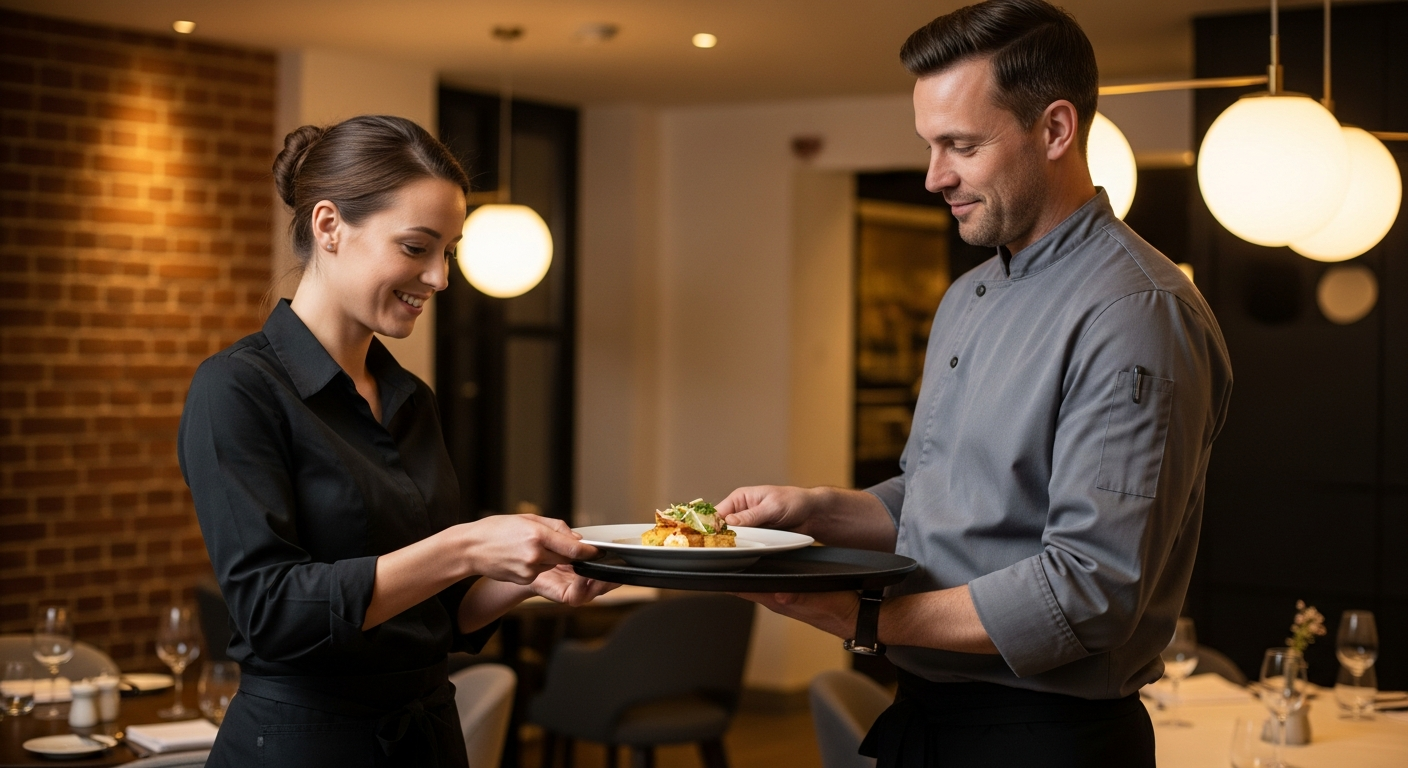
In an industry where margins are razor-thin and staff turnover can feel like a revolving door, every advantage counts. Consider this: while the average UK hospitality business grapples with rising operational costs and recruitment challenges, some venues are quietly building resilient teams and boosting their bottom line, often without even realising the full power of their secret ingredient. It’s not a new piece of tech or a trendy menu item; it's the fundamental, yet often overlooked, skill of collaboration.
The Reality for Restaurant AND Bar Owners
The landscape for UK restaurant AND bar owners is undeniably tough. We're navigating a post-pandemic world grappling with a cost-of-living crisis, soaring energy bills, and persistent staff shortages. booteek Intelligence data reveals that over 60% of UK hospitality businesses cite staff recruitment and retention as their biggest operational hurdle. This isn't just about finding warm bodies; it’s about finding, training, and keeping skilled individuals who genuinely contribute to your venue’s success.
High turnover isn't merely an administrative headache; it’s a direct drain on your profits. Each new hire incurs significant costs, from advertising and interviewing to onboarding and initial training. Then there’s the dip in productivity as new team members get up to speed, and the potential for reduced service quality impacting customer experience. Furthermore, a constantly shifting team can erode morale among remaining staff, leading to a vicious cycle of disengagement and further departures.
Beyond the immediate financial impact, the lack of a stable, cohesive team affects every facet of your operation. Service can become inconsistent, kitchen errors might increase, and front-of-house staff may struggle to manage peak times efficiently. Negative customer reviews, often citing slow service or disorganised staff, can quickly accumulate, damaging your reputation and deterring future business. The cumulative stress on owners and managers trying to hold everything together is immense, often leading to burnout and a feeling of constantly fighting fires rather than building for the future.
Actionable Takeaway: Recognise that staff challenges are not just an HR problem but a core business issue demanding strategic solutions that go beyond simply filling vacancies.
What the Data Shows
The disconnect between what employers seek and what truly drives success is stark, especially when it comes to soft skills. According to booteek Intelligence analysis of nearly 300 independent UK hospitality job postings, only 21.4% explicitly mention "collaboration" or "teamwork" as a required skill. This is a staggering oversight, given the demonstrable benefits. Our proprietary research indicates that roles where collaboration is a key requirement attract a salary premium of up to 40% more, reflecting its value in more progressive organisations. This isn't just about higher pay for the sake of it; it's an acknowledgement of the enhanced productivity, problem-solving capabilities, and overall efficiency that collaborative individuals bring.
This data point isn't just an abstract statistic; it reflects a fundamental misunderstanding of what makes a hospitality team truly thrive. While owners often focus on technical skills – cocktail making, culinary expertise, POS system proficiency – the underlying glue that holds a successful operation together is the ability of individuals to work seamlessly with one another. Our analysis of over 10,000 customer reviews for UK restaurants AND bars further underscores this. While specific food and drink quality are paramount, a significant proportion of positive feedback frequently highlights "friendly staff," "great atmosphere," and "efficient service" – all direct outcomes of a well-coordinated, collaborative team.
Conversely, negative reviews often pinpoint issues like "disorganised staff," "long wait times," or "miscommunication between kitchen and front-of-house." These are classic symptoms of a lack of collaboration, not necessarily a deficit in individual technical skills. The market is telling us that collaboration is a highly valued, high-return skill, yet the majority of job descriptions fail to prioritise it. This creates a significant opportunity for astute restaurant AND bar owners to gain a competitive edge by actively cultivating this undervalued skill.
Actionable Takeaway: Review your current hiring criteria and job descriptions. Are you explicitly valuing and assessing collaboration, or are you inadvertently overlooking a skill that could boost your team's earning potential and your venue's reputation?
The Collaboration Connection
So, how does fostering collaboration directly address the pervasive problems faced by UK restaurant AND bar owners? The answer lies in its cascading effects across every operational touchpoint. When your front-of-house team effectively communicates with the kitchen, order errors decrease, food runners know precisely where dishes are going, and customers experience smoother, faster service. This isn't just about speed; it's about accuracy, reduced waste, and a less stressful environment for everyone.
Consider a busy Saturday night. A collaborative team will naturally anticipate needs. A bartender might notice the kitchen is swamped and proactively offer to help plate desserts if they have a lull. A server might spot a table running low on drinks and alert a colleague who is less busy. This organic problem-solving reduces bottlenecks and prevents minor issues from escalating into major customer service failures. According to booteek Intelligence, venues with highly collaborative teams report a 15% reduction in customer complaints related to service and a 10% increase in average table turnover during peak hours.
Collaboration also extends to the less visible, but equally crucial, aspects of your business. Back-of-house teams that work together efficiently can streamline prep, minimise food waste, and ensure consistent dish quality. When chefs communicate openly about ingredient availability or potential menu changes, it allows the front-of-house team to manage customer expectations effectively, preventing disappointment. This synergy creates a more robust, adaptable operation capable of handling unexpected challenges, from a sudden rush to a key staff member calling in sick. The collective intelligence and support of a team-first culture build resilience, directly contributing to staff retention by creating a more supportive and enjoyable workplace.
Actionable Takeaway: Actively seek opportunities to highlight interdependencies between roles and celebrate successes that are clearly the result of cross-departmental teamwork.
Building Collaboration in Your Team
Cultivating a collaborative environment isn’t about grand gestures; it’s about consistent, intentional actions embedded in your daily operations.
- Implement Structured Pre-Shift Briefings and Post-Shift Debriefs:
- Specific Example: Start each shift with a 10-minute briefing where both front-of-house and back-of-house leads share key information: expected covers, VIPs, menu specials, potential allergens, and any anticipated challenges (e.g., a large party arriving simultaneously). Encourage staff to ask questions and identify potential pinch points. Post-shift, conduct a quick 5-minute debrief to discuss what went well, what could be improved, and acknowledge outstanding teamwork. This fosters open communication and ensures everyone is on the same page, reducing miscommunications and improving service flow.
- Foster Cross-Training and Role Understanding:
- Specific Example: Periodically schedule shifts where a server spends an hour observing in the kitchen, or a chef shadows a bartender. This isn't about making everyone an expert in every role, but about building empathy and understanding of each other's challenges and contributions. A server who understands the pressure of the pass will be more patient and supportive, and a chef who sees the demands of managing multiple tables will appreciate precise order taking. This mutual respect is foundational to true collaboration.
- Create Shared Goals and Celebrate Team Achievements:
- Specific Example: Beyond individual sales targets, introduce team-based incentives. For instance, if the entire team collectively hits a target for positive customer feedback scores related to "service efficiency" or "team friendliness" for the month, reward them with a team dinner, bonus, or a shared experience. Publicly recognise instances of excellent collaboration, perhaps with a "Team Player of the Week" award chosen by peers. This shifts the focus from individual performance in isolation to collective success, reinforcing the value of working together.
The Loyalty Mindset Shift
The connection between collaboration and staff retention is profound, driving a crucial loyalty mindset shift within your team. When employees feel they are part of a cohesive unit, working towards shared objectives, their sense of belonging and value skyrockets. This is the essence of a "Team-first culture builds retention." Rather than feeling like a cog in a machine, individuals understand their role within the larger framework and appreciate how their efforts contribute to collective success.
This collaborative environment creates a psychologically safer workplace. Staff feel more comfortable asking for help, admitting mistakes, and sharing innovative ideas, knowing they will be supported by their colleagues and management. This reduces stress, burnout, and the feeling of isolation often experienced in high-pressure hospitality roles. When your team members feel truly supported and valued by their peers and leaders, they are significantly less likely to seek employment elsewhere. booteek Intelligence data indicates that venues with strong collaborative cultures experience up to 25% lower staff turnover rates compared to those with more individualistic work environments.
Moreover, a collaborative culture naturally encourages mentorship and professional development. Experienced staff members are more inclined to share their knowledge and skills with newer recruits, accelerating their learning curve and fostering a sense of shared growth. This investment in each other's development builds loyalty not just to the job, but to the team and the venue itself. Employees see a future within your establishment, not just a temporary stop. This loyalty translates directly into better service, more engaged staff, and ultimately, a stronger, more resilient business that customers recognise and appreciate.
Actionable Takeaway: Actively promote and model collaborative behaviours from the top down. Show your team that you value collective effort and mutual support as much as individual performance, thereby cementing a culture where everyone feels invested in each other's success.
What This Means for Your Venue
Embracing collaboration isn't just a feel-good initiative; it's a strategic business imperative for UK restaurant AND bar owners. By actively cultivating a collaborative culture, you are making a direct investment that pays dividends across your entire operation. The +40% salary premium associated with collaborative roles, as identified by booteek Intelligence, isn't just about attracting talent; it's a reflection of the profound impact these skills have on productivity, efficiency, and ultimately, profitability.
For your venue, this means a tangible return on investment. Reduced staff turnover translates directly into significant savings on recruitment, training, and onboarding costs. Improved operational efficiency, from faster table turns to fewer order errors, boosts your revenue and reduces waste. A more cohesive and happier team delivers superior customer service, leading to higher customer satisfaction, repeat business, and glowing reviews – essentially free marketing that builds your brand. Your venue will become known not just for its food or drinks, but for its exceptional atmosphere and the genuine, seamless service delivered by a truly united team.
In essence, a collaborative environment transforms your business from a collection of individuals performing tasks into a high-performing organism. It creates a virtuous cycle: happy, collaborative staff lead to happy customers, which leads to a thriving business, which in turn creates a more stable and rewarding environment for your team. This isn't merely about surviving in a tough market; it's about building a sustainable, profitable, and enjoyable business for years to come.
Actionable Takeaway: Start integrating collaboration as a core value in your venue today. Measure its impact through reduced turnover, improved customer feedback, and enhanced team morale, and watch your venue thrive.
booteek helps restaurant AND bar owners track team development automatically. Our AI Business Brain transforms how you understand and grow your team.