TLDR
- The Milburn review, published on 17 November 2026, says: "You cannot call youth employment a national priority while making young people harder or more expensive to hire." We agree, and we think the review stops short.
- Its fix is a promise without a date: double the point where employers start paying National Insurance for 21 to 24 year olds, over five years, "when fiscal conditions allow".
- Employers already pay no National Insurance on under-21s up to £50,270 a year (HMRC). The review says around half of employers don't know. Check your payroll records.
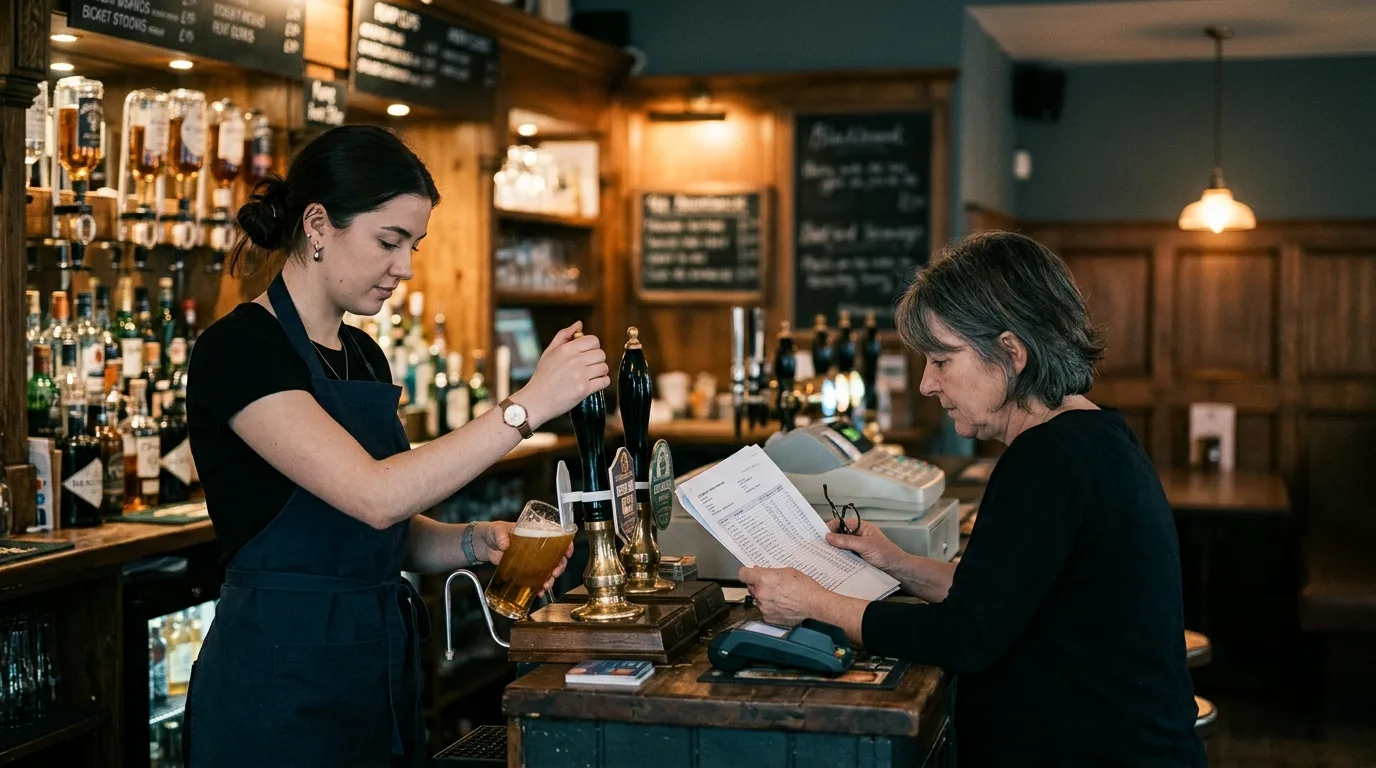
- A first job in a restaurant or bar shows what no degree can: how a young person actually works. That is the case for keeping the first rung affordable.
On 17 November 2026 Alan Milburn told a press conference that "you cannot call youth employment a national priority while making young people harder or more expensive to hire", as the Telegraph reported. The report behind that line counts nearly one million young people not in education, employment or training (NEET), one in eight. It says that across Europe only Romania has a higher NEET rate than the UK (paragraphs 6 and 9).
That is the independent reviewer the government asked for, writing that employers have told him higher payroll costs have made recruitment harder. You are the people who do the hiring the whole report depends on. So the question for restaurant and bar owners is simple: what does the Milburn review change for your next young hire, and what should you be asking government for now?
What did the Milburn review say about employer National Insurance?
It proposes, "when fiscal conditions allow", a five-year glide path that doubles the point at which employers start paying National Insurance for 21 to 24 year olds, from £5,000 to £10,000. Retail and hospitality go first, because together they provide 37% of jobs for young people aged 16 to 24 (paragraph 50).
The review turned down a full exemption for 21 to 24 year olds. Resolution Foundation modelling in the report puts that at about £5.1bn for about 38,000 extra jobs, more than £130k a job (paragraph 268). We think that reasoning is fair. We also think it leaves you waiting on a condition.
There is no start date. The pace is set "at each fiscal event", and if the Treasury skips a rise it has to explain why (paragraph 271). UKHospitality's chief executive, Allen Simpson, wants it sooner: "I would urge the government to implement this change in April", he told The Caterer. Nothing in the report is law. It is advice to government.
Is hiring an under-21 already cheaper than your payroll says?
For employer National Insurance, yes. HMRC's 2026 to 2027 rates show employers pay none on an under-21's pay up to £50k a year. The review says around half of employers don't know the exemption exists. In its words: "A tax relief nobody knows about will not change a hiring decision." (paragraph 273)
So ask your payroll provider one question: is every under-21 on your books marked as category M? Don't assume your software did it for you. Check your payroll records, or ask your provider.
What did move for 18 to 20 year olds is the wage. The rate is £10.85 from April (GOV.UK rates; our minimum wage guide has the full table), and the review says the wage cost of an 18 to 20 year old on the minimum wage is up 65% in five years (paragraph 263). The National Insurance promise doesn't touch that. It is the squeeze on the first rung.
What happens on your rota when the first rung costs nearly the same as the tenth?
The young person loses out, and your experienced people fill the gap. The review says the first half in its own words: "If the cost to the employer is almost identical, too often the young person will lose out" (paragraph 284). Milburn also writes that employers "have consistently told me" higher payroll costs have made recruitment harder, with hospitality named (paragraph 267). UKHospitality says the sector has lost 100,000 jobs in two years, as the Telegraph reports.
Here is where we go further than the report. When a venue can't afford the first rung, the work doesn't disappear. Someone still clears the glasses, preps the veg and runs the plates out. It becomes the job of your most experienced people, on their own pay, on their feet, in a room that is already short. That is our argument. It isn't a measurement: no study of ours records who ends up doing entry-level work.
Flexibility is the other half of it. The review asks that the effect on youth employment be "a primary consideration" when the Guaranteed Hours rules are settled, with a cautionary principle for seasonal and temporary work (paragraph 53). We think that is where owners should push hardest. Our zero hours contract guide covers what the rules say today.
What should owners ask government for after the Milburn review?
Three things, in this order.
- A date, not a condition. "When fiscal conditions allow" is not a date. Ask for the first step of the threshold change in April, as UKHospitality has.
- A stop on the stack now. The review calls for "a commitment not to increase the costs on employers of hiring young people still further", and a Youth Employment Cost Index every two years that itemises what each government decision adds (paragraph 49). Ask for the commitment before the next fiscal event, not after it.
- Flexibility written into law. Test the Guaranteed Hours rules against youth jobs before they land, not after.
On the minimum wage, we aren't asking for a lower floor. The review asks the Low Pay Commission to judge the pace of the 18 to 20 rate against the goal of protecting youth employment (paragraph 49). That is a fair request, and owners should say so loudly.
What would the higher threshold be worth to a restaurant or bar?
It depends on one number: your total employer National Insurance bill against the £10,500 Employment Allowance.
Take a Leeds gastropub as an example, not a real venue. One 22-year-old works 30 hours a week at £12.71 for 52 weeks, which is £19,828 a year. Employer National Insurance is 15% of pay above the threshold, so it costs £2,224 a year at today's threshold and £1,474 at the new one (HMRC rates). The difference is £750. That matches UKHospitality's own estimate of £750 per eligible full-time employee (The Caterer), because it is 15% of a £5k step.
Now give the pub six of them. Before the allowance that is £4,500 saved. But the Employment Allowance takes up to £10.5k off the whole bill. Six at today's threshold cost £13,345, so the pub pays £2,845 after the allowance. At the new threshold they cost £8,845, so the pub pays nothing. The saving is £2.8k, not £4.5k.
If your allowance already covers your bill, a higher threshold saves you nothing. If your bill sits well above it, you gain the full £750 a head. Your bill includes everyone on the payroll, not only the young ones, so work out where you stand before you plan around any of this. A 21 year old on a 15-hour Saturday contract would pay no employer National Insurance at all at the new threshold (paragraph 270).
Why does a first job in a restaurant or bar matter more than the pay?
Because a shift gives a young person the one thing a degree can't: proof of how they actually work.
The review says six in ten young people who are NEET have never had a job (paragraph 6). One 17 year old described the trap it quotes: "It's like, they want experience for a part-time job, so I can't get experience to get a job to get experience to get a job." (paragraph 196)
It isn't only the young people who struggled at school. The review heard from graduates "who had done what the system asked of them, gained qualifications and still could not secure a suitable first job" (paragraph 204). It says higher education has been steered towards competing for students "rather than a much stronger focus on employability" (paragraph 480). And in its survey of teachers, 73% agreed the curriculum gives too little focus to teaching soft skills for employment (paragraph 415).
Here is what we believe, and we'll say it plainly. A degree tells an employer what someone studied. It doesn't tell them how that person behaves on a full Friday, how they treat the colleague beside them, or what they do when a ticket goes wrong. A young person with a degree and no job history has nothing to put in that gap. The first job fills it. Within weeks an owner can see someone's attitude to work, to a team, to responsibility, to a guest who has had a bad night. Those are the life skills that decide whether a person stays and grows, and they only show when someone is given the shift.
That is the case for keeping the first rung cheap enough to exist. The qualification gets the interview. The shift shows the person.
It is also why booteek has set itself an aim around life skills: to make a young person's talents visible to an owner from the first month, and to give the young person something real to show for it. It isn't a feature you can switch on today, and the product described below does one narrower job.
Do guests notice who you hire?
They write about them. Across 25,903 Google reviews of 1,088 UK independent restaurants and bars, 46% talk about the staff, and that is a floor. About 1 in 9 name a person. The study has no age field and shows correlation only, so it says nothing about young staff in particular. It says guests write about whoever stands in front of them, which makes a first hire a front-of-house decision and not only a payroll line.
And where does booteek help?
When a guest writes about your new starter, booteek Pro drafts the reply on the review in front of you. You edit it and post it, and the thanks reaches the person who earned it. Pro works through your Google Business Profile (GBP). It doesn't hire for you, lower a National Insurance bill, or tell you what you qualify for. For that, ask your payroll provider and read the GOV.UK pages linked above. See booteek Pro.
The review wants a first rung that's worth the climb. booteek's part is small and real: the reply to the guest, drafted for you to approve.
Check the payroll, claim what's due, and keep the first rung in view.
Where do these figures come from?
- Quotes and the review's figures: the final report, "From a Welfare State to a Working State", DWP, 17 November 2026, paragraphs cited in the text. Read in full on 17 November 2026.
- The press conference quote and the 100k jobs figure: The Telegraph, republished by Yahoo, 17 November 2026. One article. Check it against the live page.
- UKHospitality's April request and £750 estimate: The Caterer, 16 November 2026.
- Employer National Insurance rate, thresholds and Employment Allowance: HMRC rates and thresholds for employers 2026 to 2027, updated 1 September 2026. Minimum wage rates: GOV.UK.
- The worked example is our arithmetic: one 22 year old, 30 hours a week, £12.71 an hour, 52 weeks, 15% above the secondary threshold, Employment Allowance £10.5k. It ignores who is eligible for the allowance, so check that on GOV.UK before you rely on it.
- Staff in reviews: booteek staff-mention study, 26k English-language Google reviews of 1.1k UK independent restaurants and bars, 1 January 2025 to 5 October 2026. The shares are floors and the link between praise and stars is correlation only.