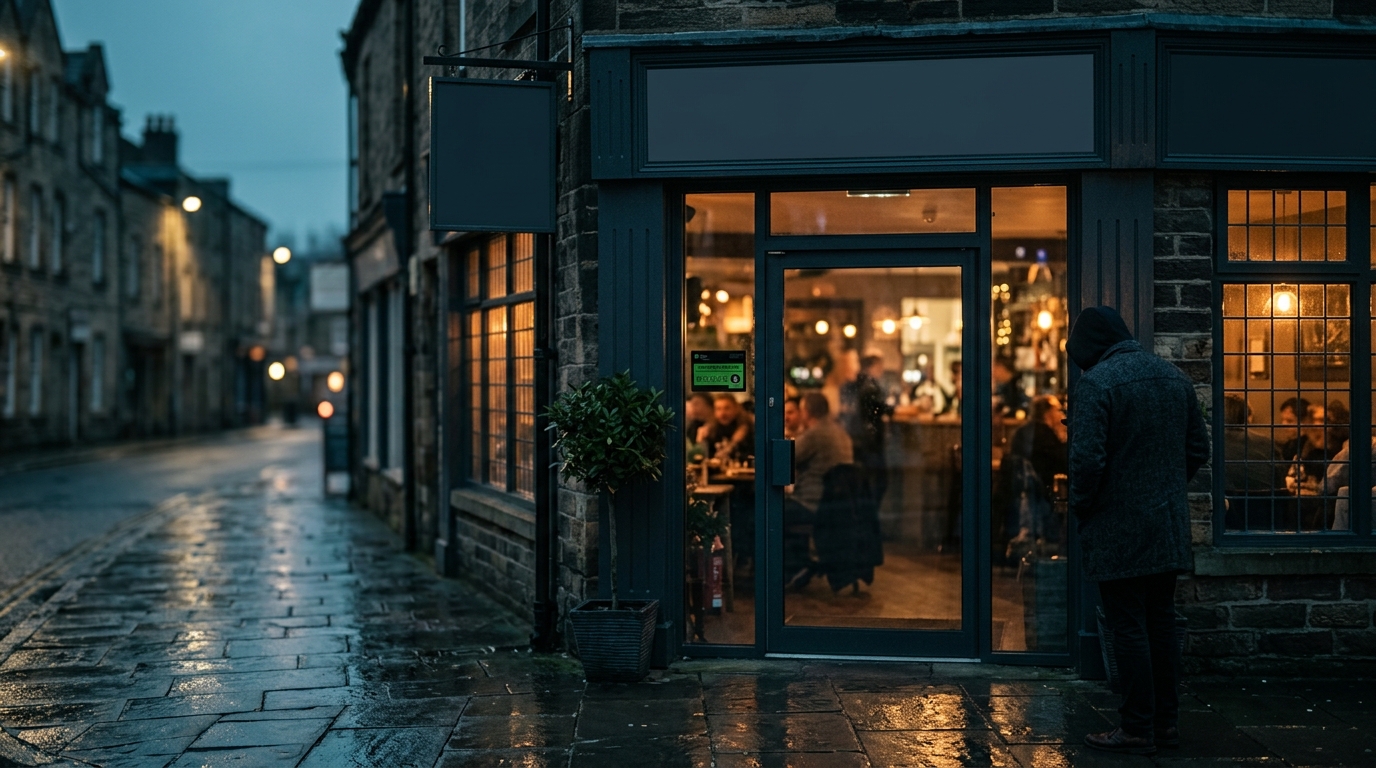
TLDR
- A food hygiene rating is a score from 0 to 5 that a council gives your restaurant or bar after a food safety officer inspects it. It applies in England, Wales and Northern Ireland. Scotland runs a different scheme, with two outcomes: Pass or Improvement Required.
- Displaying the sticker is a legal duty in Wales and Northern Ireland and voluntary in England. If you disagree with a rating, you have 21 days from being told to appeal. You can also reply publicly, or ask for a revisit once you have fixed what the officer found.
- Guests write about hygiene on Google too. In the UK Google reviews booteek holds (measured October 2026), reviews that describe a hygiene problem average 1.8 stars, against 4.6 for all the reviews we hold.
In the UK reviews we hold, one guest left a one-star Google review that says nothing except that the venue has a one-star hygiene rating. Another left five stars and praised the venue's five-star hygiene rating. Those are two reviews, not a trend. They do show that some guests read the council's number and carry it into their review.
Here is what your food hygiene rating is, how it is decided, what you can do about a rating you disagree with, and what guests write on Google when something goes wrong.
What is a food hygiene rating?
A food hygiene rating is the score a council gives a food business after inspecting it, from 0 (urgent improvement necessary) to 5 (very good). It runs in England, Wales and Northern Ireland, and the Food Standards Agency (FSA) operates it with local councils. The scheme exists to help people choose where to eat and drink, or buy food (GOV.UK). GOV.UK's overview lists restaurants, pubs and bars among the businesses councils rate.
Anyone can look yours up on the FSA's ratings search, by name, street, town or postcode. The same page says plainly that "the food hygiene rating is not a guide to food quality". It describes the inspection day, not the plate.
Scotland has its own scheme. Under the Food Hygiene Information Scheme, run by Food Standards Scotland with local authorities, a business gets a "Pass" if it broadly met the legal requirements or "Improvement Required" if it did not (Food Standards Scotland). The rest of this post is about the 0 to 5 scheme.
How is a food hygiene rating decided?
The officer scores three things, and the weakest of the three can pull your whole rating down. The FSA's guidance for businesses names them: how hygienically food is handled, the physical condition of the premises, and how the business manages food safety. The FSA's Brand Standard, the guidance councils in England follow, adds that each of the three is given a number, and the lower the numbers, the higher the rating.
The three numbers are added up. The Brand Standard then sets a second test, the "additional scoring factor": no single number may be above a limit for that rating. This is its mapping:
| Total of the three scores | Highest single score allowed | Rating |
|---|---|---|
| 0 to 15 | 5 | 5, very good |
| 20 | 10 | 4, good |
| 25 to 30 | 10 | 3, generally satisfactory |
| 35 to 40 | 15 | 2, improvement necessary |
| 45 to 50 | 20 | 1, major improvement necessary |
| Over 50 | no limit | 0, urgent improvement necessary |
So one weak area drops the rating even when the total looks fine. The Brand Standard's own example is scores of 5, 5 and 20: the total is 30, which would be a 3, but the 20 is over the limit for a 3, so the rating is 1. Another of its examples, scores of 0, 5 and 10, totals 15 but has a 10, so it is a 4 instead of a 5.
The FSA says any business can reach the top rating. The FSA's Sarah Mitchell-Baker told the Morning Advertiser: "All food businesses can achieve the top rating of five simply by complying with hygiene requirements".
How often are you inspected? It depends on risk, from every six months for the highest-risk businesses to every two years for lower-risk ones, and some very low-risk businesses wait longer. You must be told your rating in writing, at the inspection or within 14 days.
Do you have to display your food hygiene rating?
It depends on where you trade. In England, display is voluntary: the guidance says you "do not have to display" it but are encouraged to. In Wales and Northern Ireland, it is a legal requirement.
- England: voluntary.
- Wales: the sticker must be displayed at or near each customer entrance, where customers can read it before they go in. The duty is in section 7 of the Food Hygiene Rating (Wales) Act 2013, and starts only once the 21-day appeal period has ended or an appeal has been decided. The Act's sections 9, 20 and 21 cover offences, penalties and fixed penalty notices. You must also give the rating to anyone who asks, in person or by phone.
- Northern Ireland: the sticker must be displayed at or near each customer entrance where it can be readily seen, and you must give the rating verbally on request.
These come from the FSA's guidance for businesses and the scheme's own guidance document. Is your sticker where a guest walking in could read it? If a guest rang and asked, could everyone on shift tell them your rating?
When does a food hygiene rating go public, and how do you appeal it?
A rating of 5 is published as soon as the council uploads it. A rating from 0 to 4 is published three to five weeks after the inspection, which leaves room to appeal. You appeal in writing to the local authority, within 21 days of being told your rating, and that count includes weekends and public holidays (FSA guidance).
Talk to your food safety officer first, to understand how the rating was reached. Then appeal if you believe it does not reflect your standards on the day of the inspection (GOV.UK). While the appeal is open, the online rating shows as "awaiting publication".
The officer who gave the rating does not review it. The council's lead officer for food, a deputy, or an officer from another scheme authority does, and you are told the outcome within 21 days of the council receiving your appeal. If you are still unhappy, the guidance points to the council's complaints procedure, the Local Government Ombudsman (England and Wales), the Public Services Ombudsman (Northern Ireland) and judicial review. The rating stays published while a challenge runs.
What is the right to reply?
The right to reply lets you put your side next to the rating, in public. You write to the officer who inspected you, using a form, a letter or an email, to explain the improvements you have made or unusual circumstances on the day. The council may edit remarks that are offensive, defamatory, clearly inaccurate or irrelevant. Your comments are published alongside the rating and stay until a new rating is issued, and there is no deadline to send them (GOV.UK).
It sits beside an appeal, not instead of it. An appeal asks for the rating to change. A right to reply leaves the rating alone and gives a guest the context.
How do you ask for a revisit?
You can ask for a re-rating inspection once you have made the improvements, and the new rating can go up, down or stay the same. You can ask only if your rating is below 5, you have accepted it, and you have completed the improvements the officer recommended at the last planned inspection. You send details of what you did with supporting evidence, such as receipts or photographs.
Fees and timing depend on where you trade:
- England: some councils charge and some do not. Without a fee, you get one revisit between planned inspections. It usually does not happen in the first three months after the rating: ask in that window and expect a visit within six months, ask later and expect one within three. With a fee, there is no limit on requests and you should expect a visit within three months.
- Wales and Northern Ireland: every council charges a fee, and the visit should follow within three months of your written request. Any appeal must be settled first, your current sticker must be on display, and you must agree to the inspector's access.
The new rating is given at the visit or within 14 days, and you can appeal it or reply to it, like any other. Source: the FSA's guidance for businesses.
What happens if your food hygiene rating is low?
A low rating means you must make urgent or major improvements, and the officer sets the deadline. The guidance says the officer can use "several enforcement options" and will give advice. Where hygiene is very poor and food may be unsafe to eat, the officer must act, which can mean stopping part of the business or closing it until it is safe to reopen.
If your last officer's letter listed improvements, which of them would your team say are done?
What do guests write about hygiene on Google?
Some guests describe a hygiene problem in a Google review, and those reviews are low. In booteek's own review study (measured October 2026), 148 of the 53,022 UK Google reviews with text that we hold describe a hygiene problem with the venue's food or premises. They average 1.8 stars, against 4.6 for all the reviews we hold. About 3 in 4 of them are one- or two-star, against fewer than 1 in 12 of all reviews.
The problems fall into four groups. The largest is dirty premises or tableware: sticky tables, dirty toilets and floors, dirty glasses and cutlery (92 reviews). Then illness the guest blames on the food (33 reviews, of which 31 are one- or two-star), a hair or other object in the food (18) and a pest (6). One review fits two groups.
A hygiene rating in a review is rarer. Across all the reviews we hold, only 9 mention a hygiene rating, environmental health or the FSA. Five of those cite a venue's own rating: two praise a five, and three, all one-star reviews, point to a low one. The other four name environmental health or the FSA as a place to report to, or cite the guest's own food hygiene certificate.
The limits matter. This is the sample of reviews booteek holds for UK restaurants and bars in the cities we track, chains included, and it leans on Manchester. It counts the reviews our detector found, so it is a floor: a guest who describes a problem in other words is not in it. It shows how guests describe a visit. It does not show whether the claim was true, how often venues have a problem, or how those venues were rated by their council, because we did not match the two.
Where can booteek help with hygiene reviews?
And that is where booteek helps. booteek, the AI agent for independent restaurant and bar owners, works through your Google Business Profile with you, in conversation, to keep it complete and current, and booteek Pro drafts a reply on the review in front of you: you edit it, and you post it. When a guest writes about a hair in the food or a dirty table, that gives you a calm first draft in your own voice. booteek does not inspect your kitchen, change your official rating, or contact the council or the FSA. It cannot promise a better score, and your inspection result stays with your food safety officer. See what booteek Pro covers.
Where do these figures come from?
The scheme rules come from the GOV.UK pages linked above (the guidance for businesses, the scheme's own guidance document, the appeal page and the scheme page), all read on 12 October 2026. The score table is from the FSA's Brand Standard, Revision 8, June 2023 (Tables 3 and 4), which is guidance for councils in England; the Welsh duty is section 7 of the 2013 Act, the Scottish scheme is from Food Standards Scotland, and the Sarah Mitchell-Baker quote is from the Morning Advertiser, 9 October 2024.
The review figures are from booteek's own study, measured on 12 October 2026: all the Google reviews with text that we hold at 2,481 UK venues in the cities booteek tracks, chains included, about half of them in Manchester, each review counted once. The reviews were captured in 2026 and published between 2011 and October 2026. A review counts when the guest writes a phrase about illness blamed on the food (such as food poisoning), a hair or fingernail in the food, a pest, or dirty, sticky or unclean tables, toilets, floors, glasses or cutlery. The detector matched 157 reviews. We read all 157 and kept the 148 where a guest describes a hygiene problem with the venue's food or premises. We dropped nine: a guest who had food poisoning from somewhere else the day before, four about dirty plates or glasses left uncleared on a table, a dirty knife dropped on a dress, a sticky drink glass, an allegation of a laxative put in food, and an accommodation bathroom. It is a sample, not every review a venue has. It shows how guests describe a visit, not whether a venue had a hygiene problem, and it does not show that the problem caused the low score. booteek's hygiene-complaint script checks that its detector works before it counts anything. There is no public page for it yet.
The council sets your rating and you write your replies. booteek helps you keep the Google side current and answered.
A calm reply on the page, the facts right on your profile: every guest sees the care you take.