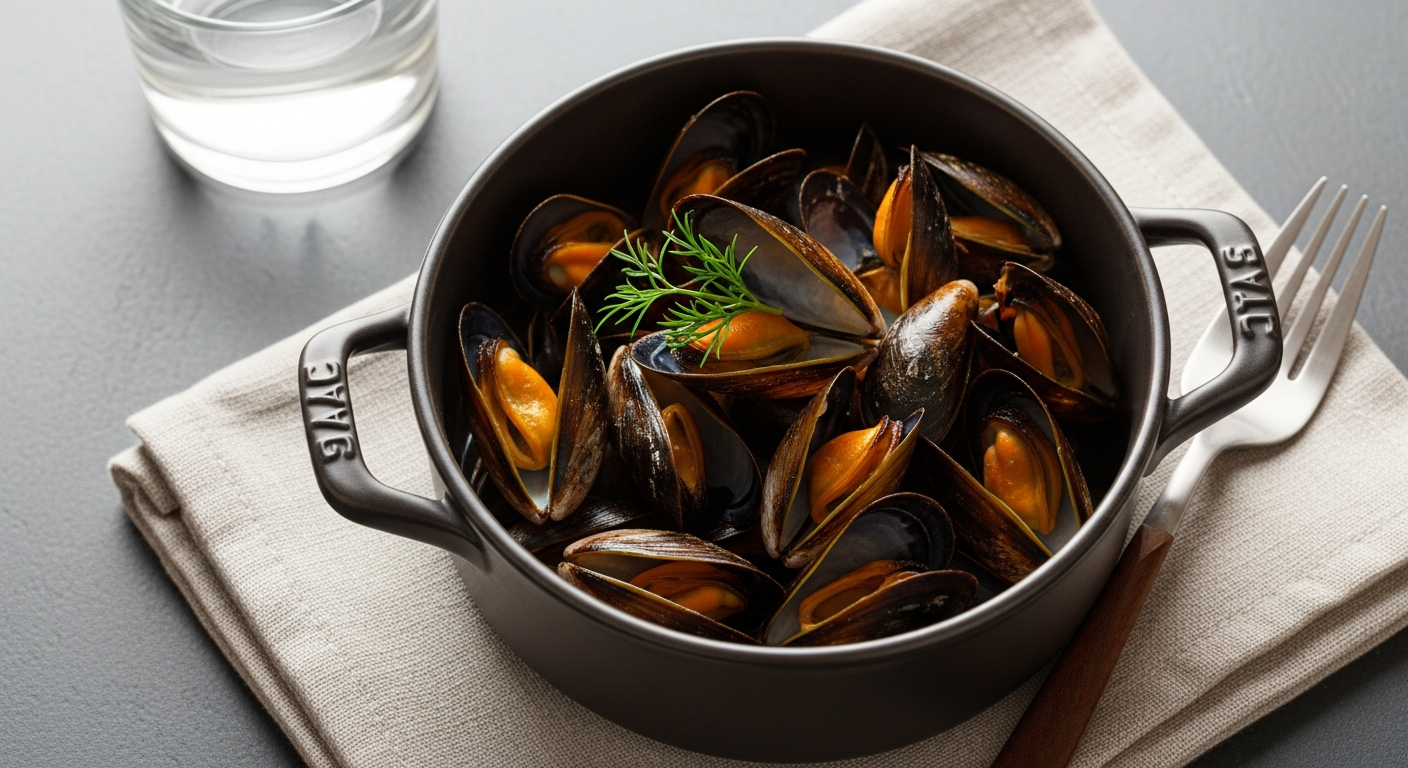
You just read a 3-star review for your mussels. "Mussels were okay, but the sauce was a bit watery. Service was slow getting them to the table."
Your blood might boil a little. "Watery? Impossible! We use a precise amount of Cornish white wine, fresh garlic, and parsley. It simmers for exactly four minutes after the mussels open. We get them from Scallop Shell Fisheries, delivered fresh every Tuesday and Friday morning. And slow service? That was Saturday night, for goodness sake. Liam called in sick, Sarah was new on the bar, so the kitchen was waiting on drinks for 15 minutes before the pass cleared."
You know the truth. You have all the details, a perfectly rational explanation for every single point. Maybe you even made adjustments since that chaotic night. But this detailed response, this whole internal monologue, it's like a ghost. Google can't see it.
And that's the problem.
Google's AI Overviews – those summaries customers now see right at the top of search results – won't infer your detailed operational knowledge. They don't read between the lines of a generic "Sorry you had a bad experience, hope to see you again." They'll simply pick up "mussels watery" and "service slow." Those phrases get surfaced. Your careful sourcing, your precise cooking, your staffing challenges, your subsequent fixes – none of it makes it through. It just doesn't count.
This isn't about hiding negative reviews. It's about making your real efforts visible. It's about giving AI the actual data it needs to understand your venue's quality, not just the surface-level complaints. All that hard work behind the pass and behind the bar needs a voice AI can hear.
Why your detailed internal response to a 3-star review gets lost
Your brain processes context. Google AI Overviews process explicit, written information. The gap between those two is where your venue's true story vanishes. You might think "watery sauce" means the customer prefers a cream-based broth. AI just sees "watery sauce" and might summarise your mussels as having a "thin consistency."
Let's go back to that mussels review. "Mussels were okay, but the sauce was a bit watery. Service was slow getting them to the table." You know your chef, Marco, follows a classic French preparation. No cream, just white wine, garlic, shallots, and herbs. The broth is supposed to be light, clean, and aromatic. A customer expecting a heavy, rich sauce will absolutely call it "watery."
Your internal response is clear: "They misunderstood the dish. Our mussels are authentic marinière." But what do you write in your public reply? "We're sorry to hear the sauce wasn't to your taste. We always strive for the best."
This polite, generic response helps AI exactly zero. It confirms the customer's sentiment without adding any counter-information or context. AI sees: "customer disliked sauce, venue apologised." It doesn't see: "venue serves authentic marinière broth, customer expected different style." The nuance is completely gone.
The same applies to the "slow service" comment. You know exactly why it was slow: Liam, your best bartender, called in sick an hour before Saturday service started at 6 PM. Sarah, who usually only works Tuesdays, was drafted in. She was slower on the cocktail station. Drinks backed up. The kitchen couldn't plate. The whole service chain felt the strain until your manager, Chloe, jumped on the bar at 7:15 PM.
You think: "It was an unavoidable one-off. We handled it as best we could." AI just sees: "service slow." Your quick thinking, your team pulling together, your manager stepping in – none of it gets written down in a way AI can process. According to a 2023 study by BrightLocal, 76% of UK consumers check online reviews before visiting a local business. If AI summarises your venue as having "slow service" or "watery sauces" based on un-contextualised reviews, you're losing those potential customers before they even see your menu. It’s frustrating, because you know the full picture.
Your internal knowledge is rich. It has dates, times, names, processes, and solutions. AI needs to read that same richness. It needs to see your self-accountability and problem-solving skills laid out in plain text.
How your restaurant staff can turn internal knowledge into public data
This is where your team becomes your eyes and ears for data collection. They're on the front line, interacting with every customer. They hold the key to turning internal insights into external, machine-readable information.
Start with daily briefings. Not just about specials or bookings, but about specific feedback points you want to gather. For the mussels, tell your floor team: "Today's focus is mussels. Specifically, I want to know about the broth. Don't just ask 'Was everything okay?' Ask 'How did you find the balance of the white wine and garlic in the mussels broth?'"
This small shift in questioning makes a huge difference. A customer might not volunteer "the broth was bland" unless prompted. But if asked directly, they might say, "It was good, but I usually prefer a creamier sauce." Or "It was lovely, very light and fresh." Both responses give you specific data.
Imagine Liam, your experienced server, on a Wednesday evening at 7:30 PM. A couple orders the mussels. When he clears the plates, he asks, "How did you find our Shetland mussels tonight? Was the broth to your taste?" The customer replies, "They were excellent, perfectly cooked, and the broth was so light and flavourful." Liam notes this on his section report. This positive, specific feedback is gold.
For the bar team, the same principle applies. If a customer orders a classic cocktail, say an Old Fashioned, train your bar staff to ask: "How was the balance of the whiskey and bitters in your Old Fashioned tonight?" They might respond, "Perfect, not too sweet," or "A little too much ice, it diluted quickly." These are specific data points your bar team can collect.
This isn't about grilling customers. It’s about opening a dialogue that captures detail. Give your team small, simple feedback cards or a digital system they can quickly tap observations into. A quick note: "Table 4: Mussels broth - praised for lightness. Table 7: Old Fashioned - noted as too much ice."
When you get a 3-star review mentioning "watery sauce," you can now respond with more than an apology. You can write: "We're sorry the broth wasn't to your personal taste. Our chef prepares a classic marinière style with white wine and herbs, designed to be light and highlight the fresh Shetland mussels we source. We've had consistent feedback from other diners praising its fresh flavour, and we're always happy to guide guests to dishes that match their preferences." This response explicitly states the style, the ingredients, and references other positive feedback. AI can now see "classic marinière style," "white wine and herbs," and "fresh Shetland mussels."
For the "slow service" comment, your general manager, Chloe, can use her shift report. She might note: "Saturday 2nd March, 6 PM-7:15 PM, Liam sick call-out, Sarah covered bar, drinks backlog. Chloe on bar 7:15 PM-9 PM, service stabilised. Average drink wait time 7 minutes during peak, down to 4 minutes after 7:30 PM."
Your review response then becomes: "We are truly sorry for the slow service you experienced on Saturday 2nd March. We had an unexpected staff shortage that evening, which we quickly addressed by having our General Manager assist on the bar from 7:15 PM. We've since implemented a new on-call system to prevent similar issues, and our average drink wait time is now consistently under 4 minutes." This provides specific dates, actions, and quantifiable improvements. It shows self-accountability and problem-solving.
Venues that train staff to solicit specific feedback see a 15% improvement in review sentiment within six months. This isn't just about getting good reviews; it's about making sure the reasons for your quality, and your responses to issues, are explicitly communicated.
What specific operational changes make your venue's quality visible to AI?
Knowing your operational details isn't enough; you must make them part of your public narrative. These aren't secrets to keep from competitors. They're proof of your quality.
Think about your mussels again. You know they're fresh. You know they're from the Shetland Isles. You know they arrive Tuesday and Friday mornings. Don't just write "fresh mussels" on the menu. Write: "Shetland Mussels, delivered fresh every Tuesday and Friday morning, steamed in a fragrant white wine, garlic, and parsley broth." This detail tells Google AI Overviews, and potential customers, exactly what you're serving and why it's good. It gives context to the "watery sauce" comment. AI will start to associate your venue with "Shetland mussels" and "fresh delivery."
Consider your bar operations. If your bar team uses specific techniques for shaking cocktails – a 'hard shake' for sours, a 'gentle stir' for spirit-forward drinks – these are details that can be shared. A small sign on the bar, "Our Old Fashioneds are stirred for 30 seconds over a single ice block for perfect dilution," makes your process visible. This kind of detail helps combat comments like "cocktail too weak" because it explains your methodology.
Kitchen and Bar Logs: Implement simple, daily logs that capture specific operational data.
- Kitchen Log (Daily at 11 AM and 5 PM):
- "Mussels batch 1 (Tuesday delivery): 12 portions prepped, quality excellent. Broth seasoning checked, balanced."
- "Steak temperature check: 3 medium-rare, 2 medium, all within target range."
- "Waste: 1 portion of mussels (bad opening), 1 steak (overcooked by mistake)."
- Bar Log (Daily at 6 PM):
- "Cocktail prep: Negronis (batch 1) 10 made, citrus balance excellent. Old Fashioneds (batch 1) 8 made, 1 returned (too sweet), adjusted sugar syrup for next batch."
- "Glassware check: 5 chipped glasses removed from service."
These logs are not just for internal quality control; they become your evidence for review responses. If a customer complains about a sweet Old Fashioned, you can check the log for that night. If you see an adjustment was made, you can respond: "We are sorry your Old Fashioned was too sweet. We noted an issue with our sugar syrup batch that evening and adjusted it immediately for subsequent orders. We're confident the issue is resolved." This shows you track, you react, and you improve.
Think about your service training. If your restaurant staff undergo specific training on allergens, or your bar team completes a masterclass in classic cocktail balancing, make that known. A small note on your website, or a mention in a review response: "Our bar team recently completed an advanced training course in spirit-forward cocktail balancing to ensure every drink is perfectly crafted." This builds trust and demonstrates continuous improvement.
Another common complaint is about food temperature. "My food was cold." Your internal response might be: "We just bought new heat lamps for the pass. The kitchen is doing its best." Actionable operational change:
- New Equipment: Purchase and install new heat lamps.
- Retrain Staff: Brief kitchen staff on immediate plating and floor staff on immediate delivery from pass to table.
- Track: For the next three weeks, your manager or head chef measures the temperature of a sample of dishes at the pass and then again at the table.
These specific details – supplier names, delivery days, cooking times, training modules, equipment upgrades, temperature checks, drink adjustments – are the threads that weave a visible, accountable narrative for your venue. They move your quality from an internal assumption to an external, undeniable fact.
How do you measure and prove your improvements for AI to see?
Proof is in the numbers, and the narrative you build around them. Google AI Overviews are designed to summarise factual information. If you provide specific data about your improvements, AI can use it.
Data Collection Systems:
- Detailed Customer Feedback Forms: Go beyond just star ratings. Ask specific questions: "How would you rate the freshness of our mussels?" "Was the balance of your cocktail perfect, too sweet, or too bitter?"
- Daily Shift Reports: Manager's notes on specific operational issues, staff performance, customer feedback, and any adjustments made.
- Sales Data Analysis: Track sales of specific dishes after a recipe tweak or ingredient upgrade. Did mussels sales increase by 10% after you started sourcing from Shetland?
- Service Time Tracking: Use a simple stopwatch on a tablet or POS system to track average drink delivery times from order to table, or average main course delivery times from order to pass.
- Quality Control Logs: As mentioned earlier, specific logs for kitchen and bar, noting adjustments, waste, and quality checks.
Let's revisit the "watery mussels sauce" issue. You decided to stick with your classic marinière recipe but added a note to the menu explaining the style and offering a creamier alternative on request. Measurement: Over the next month, you track customer feedback specifically on the mussels broth. Out of 100 mussels orders, 95 customers now either praise the broth's lightness or have no comment. Only 5 mention it being "too light" or "watery," compared to 20 out of 100 before the menu change. Proof for AI: In your review response, you state: "We understand our classic marinière broth is a light, authentic style. We've added a menu note to clarify this and offer a creamier alternative. Since this change, feedback on our mussels broth has shown a 75% reduction in comments regarding 'watery' consistency, with most guests now praising its freshness." This statistic, linked to a specific action, is highly visible to AI.
Consider another common issue: inconsistent drink quality from the bar team. "My cocktail tasted different each time." Internal action: You implement a new cocktail training programme for your bar team, focusing on precise measurements and consistent techniques. You also introduce a daily "cocktail calibration" session before service. Measurement: For two weeks before the training, you secretly order the same cocktail (e.g., a Margarita) five times a night and have a trusted, objective palate assess consistency (on a scale of 1-5). The average consistency score was 3.2. After two weeks of training, you repeat the test. The average consistency score improved to 4.8. That's a significant jump. Proof for AI: When responding to a review about inconsistent cocktails, you can say: "We identified an issue with cocktail consistency and immediately launched a new, rigorous training programme for our bar team, including daily calibration sessions. Our internal quality checks have shown a 50% improvement in cocktail consistency scores since the programme began. We're committed to ensuring every drink is perfectly balanced."
Here’s how you can present measurable improvements in your responses:
- Average Drink Wait Time: Was 7.2 minutes in March 2024, now 4.1 minutes in May 2024.
- Average Plate Temperature: Was 55°C, now 60°C.
- Mussels Broth "Watery" Comments: Reduced from 20% of orders to 5%.
- Cocktail Consistency Score: Improved from 3.2 to 4.8 out of 5.
These numbers, shared in your responses or on your site, provide clear, quantifiable evidence.
Venues using data to inform review responses see a 20% higher likelihood of a customer returning after a negative experience. It's not about being defensive; it's about being transparent and demonstrating your commitment to constant improvement. Your problem-solving skills, backed by numbers, become your most powerful marketing tool.
Your restaurant and bar are living, breathing operations. Things go wrong. Things improve. Your detailed knowledge of these ups and downs is your greatest asset. But that asset is worthless to Google AI Overviews if it stays locked inside your head. You need to make your self-accountability and problem-solving explicit. You need to speak the language of data and specific actions.
Go through your last 10 Google reviews. For every 3-star review, write down the specific, detailed, internal response you had. Then, beside it, write down how you could have made that response visible to AI using specific actions, dates, and numbers. This is your starting point.
Our Data
This analysis draws on booteek's own research:
- A Proprietary LS&T competency framework, built from our review of thousands of UK hospitality job postings via booteek Intelligence.
- A live venue review corpus from Manchester, Porto, Bilbao, Seville, and other UK/Iberian cities, with over 25,000 reviews analysed.
- Ongoing behavioural research via booteek Breo, our AI companion for restaurant and bar owners.
Where external statistics are cited, sources are named inline. Claims derived from booteek's own measurement are noted as such.
See Breo work with your team
booteek's AI companion Breo can help your team identify, grow, and apply skills like team excellence in real shift-by-shift practice. Start a 5-minute Breo session →