TLDR
- A bad Friday night at The Old Forge was a symptom of a fragile system, not one person's mistake.
- The fixes came in two phases: the urgent problems in the first weeks, then the foundations over the next months.
- The lesson for restaurant and bar owners is to fix the system, not to look for someone to blame.
Series: It Takes a Village — booteek's ongoing look at how independent restaurant and bar owners build, train, and lead the small teams that keep a place running. Your team, really, is the business at this scale. More village stories | Read the manifesto.
The Old Forge, a gastropub tucked away in South London, used to be legendary for its Sunday roasts. Weeknights, though? That was a different story entirely. Bookings had dropped a worrying 25% in the last quarter. TripAdvisor reviews, once a solid 4.5 stars, had slipped to a dismal 3.8. Customers were grumbling about slow service, wrong orders, and a general disorganisation that, frankly, wasn't good enough.
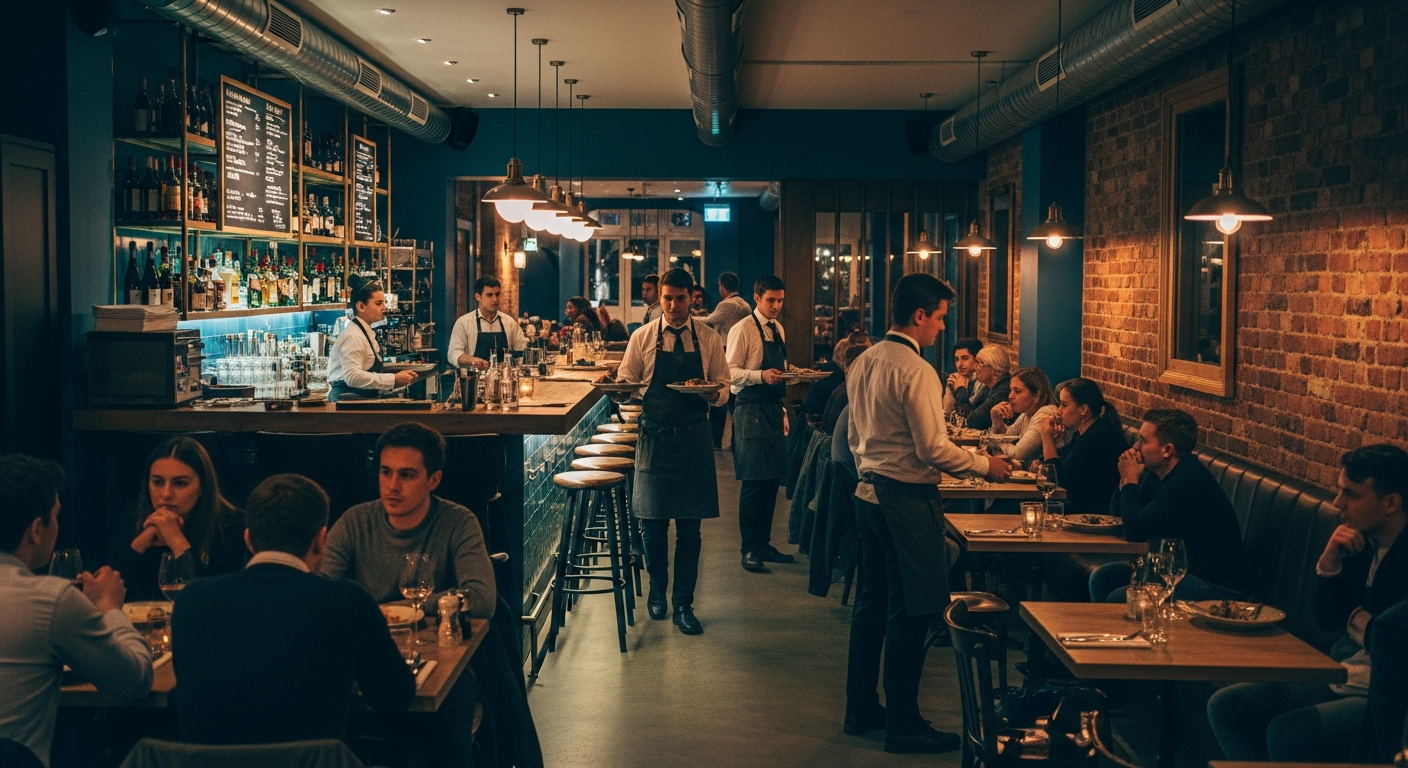
It all came to a head on that Friday evening. Chef Patel, barely two weeks into his new role, was already stressed. Two front-of-house staff called in sick an hour before service. The dishwasher broke down at 7:30 PM, right in the middle of the rush. And then, to cap it all off, a well-known food critic, completely unannounced, walked in and settled himself at a quiet corner table. Eleanor, the owner, watched from the pass. A cold knot tightened in her stomach as the chaos unfolded.
Liam, her bar manager, usually so steady, looked utterly shell-shocked. He mis-rung a 10-top order, sending expensive steaks to the wrong table and delaying everything else. The kitchen was already swamped. Drinks piled up at the bar, forgotten. The whole service felt like a slow-motion car crash. Eleanor saw every single moment. She didn't shout. She just watched, her mind racing, a terrible clarity dawning on her.
What Went Wrong at The Old Forge That Friday?
The immediate problems were obvious: too few hands, too many orders, a busted machine. But Liam's mistake wasn't just carelessness. It was a symptom of something much deeper. The whole system was fragile, barely holding together. No one could pick up his slack because everyone was already fighting their own fires, working in isolation. It was a mess.
Eleanor knew this wasn't just about one disastrous Friday. The place had grown organically, like an overgrown garden. Its systems simply hadn't kept up. The online menu on the website didn't always match the physical one. The Google Business Profile listed slightly different opening hours for bank holidays. Phone numbers on social media sometimes led to an old landline that no one checked anymore. These small inconsistencies, she realised, added up. They made things harder for customers trying to figure out what was what, and even harder for her staff trying to keep up. It was frustrating for everyone.
Eleanor pulled out sales figures, pored over review comments, and listened to staff feedback. A bigger, clearer picture emerged. The operational issues were mirrored by a disjointed digital face. She understood that those clever AI assistants, the ones people ask for recommendations, absolutely hated conflicting information. This meant The Old Forge could easily be overlooked. She decided to treat their digital footprint as seriously as they treated the actual service. It was about presenting their best case to the algorithms that decided who got recommended and who didn't. This was a new challenge, but one she felt they had to tackle. Industry research had even found that venues with consistently updated online profiles saw a noticeable bump in footfall from digital searches. That really showed how important a strong digital presence had become.
How Did The Old Forge Turn Things Around?
Eleanor's first move wasn't to point fingers. She didn't fire anyone. Instead, she stepped back and looked at everything, from what appeared online to the journey a plate took from kitchen to table. She wanted facts, not blame.
She sat down with Liam. She didn't bring up his Friday fumble as a weapon. Instead, she just listened, asking him about the pressures he felt, what tools he needed. He talked about inconsistent pricing, about customers arriving with outdated menu expectations from old online listings. He genuinely felt like the digital world was actively working against his bar team. And he was right, in a way.
Eleanor finally understood: their online presence was an absolute mess. Fixing it meant making sure every single piece of information about the pub was clear, verifiable, and identical across all platforms. It had to be a no-brainer for digital assistants to recommend them.
What Steps Did The Old Forge Take?
Phase 1: Putting Out Immediate Fires (Weeks 1-4)
The week after the critic's visit, Eleanor called a full staff meeting. No one was singled out; the focus was on shared responsibility and fixing the system together. It felt like a fresh start.
- Digital Listing Check-up: Eleanor tasked Liam with a full audit of every online listing she could think of: Google Business Profile, Yelp, TripAdvisor, their own website, all social media pages. He meticulously checked hours, addresses, phone numbers, menus, and pricing. Any tiny inconsistency was flagged. They found several. The website, for example, had a different closing time on Tuesdays than Google. And the children's menu? Completely out of date on TripAdvisor. It was pretty embarrassing, she admitted.
- POS & Order Flow Refresher: Every member of the bar team and front-of-house staff went through a refresher on the POS system. They practised taking complex orders, splitting bills, and sending clear, unambiguous instructions to the kitchen. No more guesswork.
- Better Communication: They set up a clear, two-way communication channel between the kitchen and front-of-house. A small screen at the pass showed open orders and estimated prep times. Front-of-house managers now had direct access to kitchen leads for quick queries, cutting down on frantic shouting. It made a huge difference to the mood.
- Staffing Review: Eleanor adjusted rotas. She bit the bullet and brought in an extra pair of hands for Friday and Saturday evenings, even if it meant a temporary hit to margins. She knew the cost of chaos was far higher than an extra wage.
Phase 2: Fixing Foundational Issues (Months 2-3)
Once the immediate fires were out and things felt a bit calmer, Eleanor looked at making long-term improvements. This was about building for the future.
- Tidy Online Content: The website got a much-needed redesign. Menu descriptions now used clear headings and bullet points for allergens, making them easy to read. A new FAQ section answered common queries about booking, dietary needs, and accessibility. This structured approach, she hoped, would help AI sift through the information more efficiently.
- Clear Business Dealings: All booking terms, cancellation policies, and service charges were made crystal clear on the website and booking platform. They made absolutely sure service descriptions were accurately represented. This built trust with customers and improved discoverability for AI assistants too.
- Smart Booking System: They invested in a new booking system that integrated seamlessly with their Google Business Profile and website. This meant real-time availability and instant confirmation, significantly reducing the number of phone calls and missed bookings. It was a relief.
- Proactive Reputation Management: Eleanor took on the task of personally responding to every online review, whether it was glowing or grumbling. She used this feedback to spot patterns and address recurring issues head-on. It wasn't always fun, but it was important.
- Bar Team Power-Up: Liam, now fully engaged and buzzing with ideas, led a training programme for the bar team. They focused on efficient drink preparation, smart stock rotation, and responsible upselling. He used the new, consistent menu data to train his team on every ingredient, meaning fewer "what's in this?" questions. Everyone felt more confident.
The Pay-off for The Old Forge
Three months later, walking into The Old Forge felt like stepping into a different establishment altogether. It was a transformation.
- Bookings: Weeknight bookings climbed by a very respectable 30%. Weekend covers were solidly at full capacity. What a relief.
- Online Reputation: The average online review score across Google and TripAdvisor rose to a gleaming 4.7 stars. Specific mentions of "efficient service" and "clear menu" started appearing regularly – a real win!
- Operational Efficiency: Order errors plummeted by 60%. Average table turnover time improved by a noticeable 15 minutes during busy periods, all without rushing customers.
- Revenue: Average spend per head nudged up by 8%, thanks to smoother service and the bar team's sharper upselling skills.
- Critical Acclaim: And that food critic? The one who'd witnessed the meltdown? He popped back two months later, completely unannounced. His follow-up review praised the "remarkable turnaround" and highlighted the "seamless service" and "attention to detail." He specifically noted how clear and helpful the online information now was. What a vindication!
The Old Forge's experience absolutely confirmed that finding: places with well-maintained online profiles see noticeably higher footfall from digital searches. Their dedicated efforts to clean up their online data and structure their website content directly translated to more customers walking through the door, giving their overall hospitality performance a much-needed boost. It just goes to show.
What Can Restaurant and Bar Owners Learn?
The Old Forge didn't find some secret magic wand to fix everything. Eleanor looked past the immediate stress of a broken dishwasher and a mis-rung order. She saw the bigger picture: a system that needed a full overhaul, both in the real world and in the digital one. She understood that a venue's online presence is just as real, just as important, as its physical space.
Her approach to Liam's little mishap wasn't about laying blame. It was about understanding why it happened and building him up to be part of the solution. This made the entire hospitality team feel secure enough to identify problems and contribute to solutions. That's a huge lesson right there.
Making sure all your online information – menus, hours, pricing, booking terms – is perfectly consistent across every single platform really matters. It helps customers find you, trust you, and, most importantly, book you. It also helps those digital assistants recommend you without a moment's hesitation. And organising your website content with clear headings and FAQs helps these systems parse your information correctly, meaning less confusion all round. It really boils down to fundamental operational clarity, online and off. It’s hard work, but it pays off.
Key Takeaways for Restaurant and Bar Owners:
- Polish Your Digital Front Door: Check every online listing for your venue – Google Business Profile, Yelp, TripAdvisor, your website, social media. Make sure hours, addresses, phone numbers, menus, and pricing match exactly. Inconsistent data makes AI assistants overlook you.
- Organise Your Online Information: Structure your website's menus, FAQs, and service descriptions with clear headings and bullet points. This helps AI understand your offerings accurately and makes life easier for your customers.
- Be Transparent, Build Trust: Make sure all booking policies, service charges, and menu item details are clear and consistent across all your digital platforms. This verifiable information helps AI recommend you and, more importantly, builds customer confidence.
- Fix the System, Not the Scapegoat: When something goes wrong, look for the system failure, not the person to blame. Build a team that feels safe identifying problems and contributing to solutions – it's much more productive.
So, here's a challenge for you this week, restaurant and bar owners. Open your Google Business Profile. Then open your website. Then check your Facebook page. Do the opening hours for Tuesday match on all three? Does the price of your most popular main course match? If not, fix it. That single act will start to rebuild your digital foundation. Trust me, it's worth it.
Our Data
This analysis draws on booteek's proprietary research:
- Our proprietary Life Skills & Talents matrix for hospitality teams, built from our review of thousands of UK hospitality job postings via booteek Intelligence
- Live venue review corpus across Manchester, Porto, Bilbao, Seville, and other UK/Iberian cities (tens of thousands of reviews analysed)
- Ongoing behavioural research via booteek Breo, our AI companion for restaurant and bar owners
Where external statistics are cited, sources are named inline. Where the claim is derived from booteek's own measurement, we say so.
See Breo work with your team
booteek'