TLDR
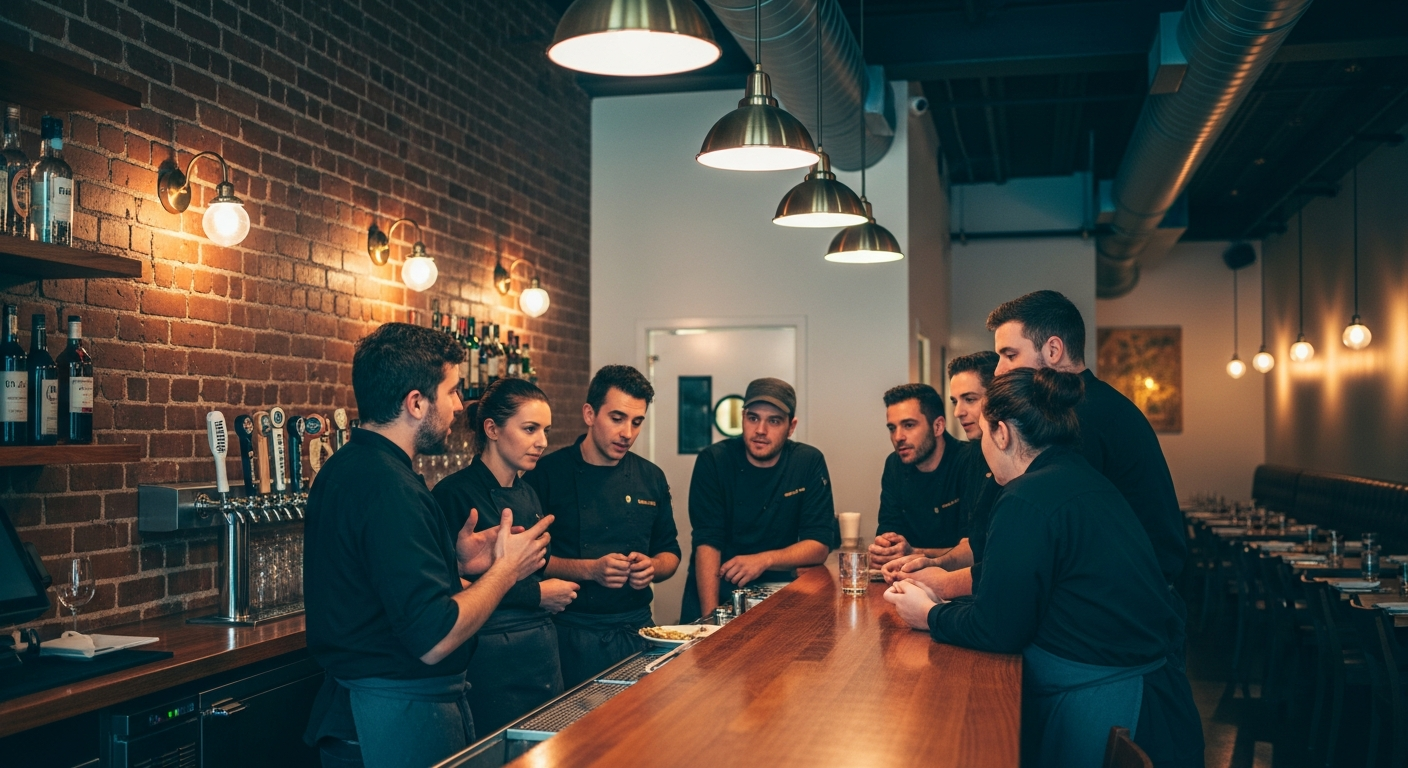
- Talk to your team first, from head chefs to dishwashers, to gather practical insights.
- Update every online platform with consistent, accurate descriptions of your changes.
- Plan for issues by giving staff the tools and permission to fix problems instantly.
TLDR
- 1. Talk to your team first – your head chef, bar manager, and even the dishwasher who notices everything. Their practical insights will save you from expensive mistakes.
- 2. Update every online platform – website, Google Business Profile, booking apps, social media – with consistent, accurate descriptions of what's changed. Be specific. Say "seasonal British small plates with local produce," not just "new menu."
- 3. Plan for things to break – because they will. Give your staff the tools, training, and permission to fix problems on the spot without waiting for a manager.
Running a successful restaurant or bar in the UK means constant change. You're always chasing something – a tweak that brings in more customers, a system that makes service smoother, or just a better place to work. Maybe you're overhauling the menu, installing a new booking system, or adding ambitious cocktails to the bar. These ideas feel exciting, full of potential.
But here's what I've seen happen over and over: owners get so excited about the idea that they skip the actual groundwork. They jump straight to implementation and wonder why everything falls apart. A poorly planned menu launch can waste 15% of your food stock in the first week. A new booking system that crashes on Saturday night loses covers you'll never recover. These aren't minor inconveniences. They hit your bottom line hard and damage your reputation. Before you commit to that next big decision, you need to do some essential checks first.
How can restaurant and bar owners assess their venue's readiness for change?
Before you print new menus or announce anything, sit down with the people who actually run your place every single day. Your head chef. Your bar manager. Your most experienced front-of-house supervisor. But also your most reliable dishwasher, the person who closes up, the part-time server who spots details no one else does. These are the people who handle the difficult moments during service, the ones who deliver when everything's chaotic. Their insights matter.
Say you're adding a complex new dish – a deconstructed venison wellington with specific plating requirements and precise cooking times. Have you actually talked to your head chef about prep time, new equipment, or how it affects kitchen flow? I worked with a client who wanted to add flaming Baked Alaska for dessert. Their head pastry chef immediately flagged that front-of-house staff needed specific fire safety training and the dish would add 10 minutes to the dessert course. Without that conversation, they might have faced a health and safety incident on a busy Saturday night.
What about the bar? If you're introducing complex cocktails – a smoked Old Fashioned, a clarified milk punch – have you really thought about how this affects service speed on a packed Friday? Each extra step, each new ingredient, each piece of specialist glassware takes time. A single bartender might lose 15-20 orders in a two-hour window if new drinks take an extra 45 seconds to prepare. That's real money. Research shows businesses with highly engaged teams see meaningfully higher profitability. This isn't just about morale; it's about tapping into practical wisdom that can make or break your change.
Your team sees the bottlenecks, the unexpected problems, customer reactions. That person who always steps up when you're short-staffed might spot a logistical issue you've missed. Maybe your new table layout blocks access to the coffee machine during Sunday brunch. Or your new wine list means staff walk an extra 10 feet to the cellar for every bottle – hours of wasted motion over a week. Your bar manager might know the Wi-Fi drops near the outside seating, making tablet orders impossible there. These small details become huge problems fast.
Ask them directly:
- "What's the biggest challenge you see with this change?"
- "How will this affect our busiest service period?"
- "What resources or training do we need?"
- "How does this impact inventory management? New suppliers?"
- "What will customers think – good or bad?"
- "Is there anything we're doing now that clashes with this?"
Their input lets you refine plans, spot problems early, and build buy-in. Skip this step and your staff feel disconnected and unprepared, which directly impacts service quality. You need them to feel like partners, not just people following orders. When your team feels heard, they become advocates for the change. Research has found organisations with high employee involvement report noticeably higher productivity. Your team makes the change work or they make it fail. Replacing a single front-of-house team member costs a UK venue over £3,000 when you factor in recruitment, training, and lost productivity. Getting changes right the first time, with staff input, keeps your best people.
Why must your online presence be consistent for major venue changes?
Once you've worked through the internal side, prepare your public face. Your online presence is often the first – sometimes the only – impression a potential customer gets. This goes far beyond a quick website update.
Every platform where your restaurant or bar is listed needs updating with precise, consistent information. Your website, Google Business Profile, third-party booking sites like OpenTable or Resy, Instagram, Facebook, and directories like Tripadvisor or Yelp. Imagine a customer sees "vegan options available" on your website but finds no specific vegan dishes on your Google Business Profile menu. That's a lost booking. Or your new bar opening time is 5 PM on Instagram but 6 PM on your booking platform. Confusion kills conversions and frustrates customers who show up at the wrong time, leading to negative reviews.
Use specific, descriptive language for new menu items and your venue's atmosphere. Don't just say "new menu" – say "seasonal British small plates, featuring locally sourced ingredients and a curated wine pairing list." Think about how an AI assistant reads this. "New menu" means nothing. "Seasonal British small plates, locally sourced" tells it exactly what to recommend to someone searching for "restaurants near me with local produce." For your bar, don't say "cocktails." Say "artisanal gin cocktails featuring botanicals from the Scottish Highlands" or "classic cocktails with a modern twist, using house-made syrups and infusions." Precision guides AI recommendations. Add numbers where possible: "seats 50," "open until 2 AM on weekends," "average wait time is 15 minutes at peak hours." Mention specific details like "dog-friendly patio" or "live jazz on Thursdays."
Your photos matter just as much. High-quality, recent images of new dishes, your updated interior, and your bar team in action are essential. AI systems analyse images for content, quality, and relevance. Old or blurry photos signal a venue that isn't current. AI will prioritise venues with fresh, clear visuals. Video content – short clips of a cocktail being made or a dish plated – captures attention and gives AI more context about your service and atmosphere. Venues with updated, high-quality visuals see up to 35% more engagement on their online profiles.
Industry research keeps finding that the clear majority of consumers now use social media to research venues before visiting. Inconsistent online information across platforms means you're losing customers before they walk through the door. AI systems are increasingly efficient at processing information. They prioritise rich, accurate, and clear details. If your online presence isn't exceptionally clear and consistent, AI won't understand your unique offering. You'll miss out on vital digital discovery. Fewer people will find you when they search for "best gastropub in Edinburgh" or "cocktail bar with live music in Manchester."
Before launch, create a checklist for every online touchpoint:
- Your website needs new menu descriptions, updated hours, and fresh photos. Make sure every page reflects the change, from "About Us" to contact details. Check for broken links. Add a prominent banner announcing the change.
- Your Google Business Profile must have accurate opening times, services, photos, and a menu link. Respond to recent reviews. Update your "Questions & Answers" section with common queries about your new offering. Post regular updates.
- Third-party booking and delivery apps – make sure pricing, descriptions, and availability match exactly. A discrepancy between your website and Deliveroo costs sales. Check minimum order values and delivery zones. Update your profile descriptions on these platforms.
- Update social media bios to reflect major changes. Pin a post announcing the change. Run targeted ads highlighting new dishes or drinks. Use relevant hashtags like #LondonBrunch or #VeganEatsUK.
- Consider a local press release or outreach to local food bloggers. Give them accurate details about your new direction.
Stay informed about search engine and AI algorithm updates. You'll need continuous adaptation to maintain visibility. Your online narrative must be truthful and consistent. AI assistants prioritise credible sources, making an honest online presence key for discovery and positive recommendations. Your digital shop window needs to be just as inviting and accurate as your physical one.
How do restaurant and bar owners prepare for unexpected service disruptions?
Even with thorough preparation, hospitality is wonderfully unpredictable. A supplier's lorry breaks down, delaying your fresh fish delivery. Your main oven fails halfway through Saturday dinner service. Two staff call in sick on a busy Tuesday lunch. These aren't "if" scenarios – they're "when" scenarios. The difference between a minor hiccup and a disaster comes down to how prepared you and your team are to react.
Think about a new menu launch. You've planned every dish, every ingredient. Then launch day arrives and your supplier calls: the specific heirloom tomato for your signature starter is unavailable. Do you have a backup ingredient? A substitute dish? Or does your head chef improvise on the fly, risking consistency and quality? A good plan includes contingency ingredients for your top 5-10 best-selling items.
What about equipment? Your new espresso machine fails during the morning rush. What's the plan? Do you have an older machine you can plug in? Is there a repair contact on speed dial who can come within the hour? Or do you just tell customers you can't serve coffee, losing sales and annoying regulars? Having emergency service numbers for critical equipment matters.
Staffing is another huge variable. You've trained everyone on the new booking system, but two servers call in sick on the same night. Who steps up? Is there a clear protocol for cross-training? Can a bar team member help with food orders, or can a kitchen porter help with table clearing? A venue with a cross-trained team absorbs these shocks better than one where everyone only knows their specific job. An empty shift costs more than just lost revenue – it stresses remaining staff and risks burnout.
Then there are customers. They're unpredictable too. A new dish might get surprising negative feedback. A new cocktail might be too strong or too weak. How do your staff handle this? Are they empowered to offer a replacement or discount without finding a manager? Or does every issue create a bottleneck? Giving your frontline team clear guidelines and a small budget to solve minor issues on the spot prevents bad experiences from becoming terrible reviews.
How Do You Prepare Your Team for Unexpected Problems?
Preparing your team isn't about memorising a manual. It's about building resilience and problem-solving skills. Start with training that goes beyond the "how-to" and moves into the "what-if."
Create a simple, one-page "emergency contact and procedure" sheet. Not a thick binder – one page. List emergency repair numbers, backup suppliers, and key management contacts. Outline basic steps for common issues: "Oven fails: switch to grill, inform head chef, manager contacts repair." "Till crashes: switch to manual order pads, note table numbers, manager resets system." Make sure everyone knows where this is and understands it.
Run low-stakes "what-if" scenarios during quiet periods. Don't just talk about it – act it out. "Sarah, the ice machine just broke. What do you do first? Who do you tell? How do we keep drink service going?" For the kitchen: "We're out of the special potatoes for tonight's roast. What's the alternative?" These quick drills build muscle memory for problem-solving without the pressure of real service.
Empower your team to make small decisions. Give front-of-house staff authority to offer a complimentary drink or dessert for minor issues, or remove an item from a bill if a dish isn't right. Let your bar team adjust a drink if a customer finds it too sweet or too sour. Set clear boundaries – for example, "up to £10 value without manager approval" – but let them act. This builds confidence and speeds up problem resolution. Research keeps finding that companies with highly engaged employees report higher productivity and stronger sales. Giving staff autonomy in problem-solving is a direct path to this engagement.
Set up clear communication channels for issues. When a problem arises, who needs to know? How do they communicate it? Is it a quick chat with the manager, a note on a whiteboard, or a message on a team app? Make sure everyone understands the escalation path. Clear chains of command prevent confusion and ensure problems are addressed quickly by the right person.
What is the best way to gather feedback after a major restaurant or bar change?
Launch day isn't the finish line – it's the starting gun. Real success comes from how you listen, adapt, and refine in the weeks and months that follow. Set up clear systems for collecting feedback from both your team and customers.
Start with your team. They experience the practical realities of your changes first. Hold short daily huddles for the first week after launch. Ask specific questions: "What was the biggest bottleneck today?" "Did any new dishes or drinks cause confusion?" "What's one thing we could do tomorrow to make this smoother?" Keep it brief, focused, and non-judgmental. Create a simple suggestion box or digital form for anonymous staff feedback. Show you're listening by acting on their practical suggestions.
Focus on your customers too. They'll tell you if your changes are working. Encourage feedback through comment cards on tables, a link on your digital menu, or by actively asking for opinions. Train your front-of-house staff to ask open-ended questions like, "What did you think of the new seasonal pasta?" or "How did you find the speed of service with our new booking system?" Don't just wait for online reviews. Proactively seeking feedback helps you catch issues early.
Analyse your sales data closely. Which new dishes or drinks are moving fast? Which barely sell? Is your average spend per head increasing or decreasing? Are table turn times affected? This data gives you hard numbers on what's working. If a new cocktail is popular but takes too long to make, you know where to focus efficiency training. If a new dessert isn't selling, adjust the recipe or remove it.
Be ready to make quick adjustments. Don't fall in love with an idea so much that you can't change it. If a new menu item isn't working after a couple of weeks, pull it. If a new service flow causes customer queues, tweak it. Hospitality moves fast. Your ability to adapt quickly, based on real feedback and data, makes the difference between success and costly mistakes. Schedule formal review periods – one week, one month, and three months. Use these to make bigger strategic decisions about your changes.
This ongoing process of listening, observing, and adjusting is how you truly embed a big change into your venue. It shows your team you value their input and shows customers you care about their experience. It builds a culture of continuous improvement, essential for any independent restaurant and bar owner in the UK market.
So here's what to do this week. Not next month.
Pick your quietest shift. Sit in the dining room for 20 minutes with a coffee. Watch your team work without them knowing you're watching. Write down 3 things you'd change.
Don't change them yet. Just write them down. That list is worth more than any consultancy report because it's YOUR venue, YOUR team, YOUR Tuesday afternoon.
Then grab your head chef or bar manager. Show them your list. Ask for their 3 things. See how many match. That first conversation is your real starting point for any big change.